
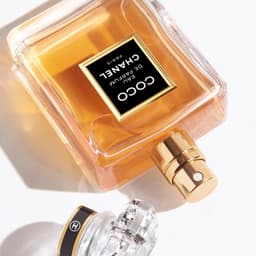
Coco is the eau de parfum Jacques Polge composed for Chanel in 1984, as a tribute to Gabrielle Chanel’s taste for the Baroque. The house describes it as an amber symphony: mandarin opens onto jasmine, ylang-ylang, and orange blossom, and patchouli, benzoin, and tonka bean hold the base.
An admiring reception: Angela of Now Smell This sees in it Chanel’s elegance grafted onto the wave of grand orientals launched by Opium, and Suzanna of Bois de Jasmin, reluctant at first, considers it a jewel of a perfume that has not aged.
What critics say
The Orient according to Chanel, for Now Smell This
On December 7, 2009, Angela of Now Smell This judged that in 1984 Jacques Polge wanted to marry Chanel’s elegance with the fashion for grand orientals launched by Yves Saint Laurent’s Opium. She finds in it the aldehydic top of the house’s classics, softened and thickened by orange.
A jewel of a perfume for Bois de Jasmin
In late July 2012, Suzanna, who writes for Bois de Jasmin, admitted she had first disliked Coco, which she now cannot part with. It is, she says, the perfume that has earned her the most compliments, and a good example of a perfume worth retesting.
Nearly thirty years after its creation, she does not find it dated: an assertive perfume from an era when women wore a signature scent as an accessory. She sees it as an adornment, the finishing touch to a silhouette.
A measured reformulation
In a comment, Victoria of Bois de Jasmin compared an older bottle with the current version that same year: the sandalwood accord seemed less creamy to her and the musk different, but it is still Coco, and she refuses to call it disfigured.
From the same line
- Coco Mademoiselle
- Coco Mademoiselle Eau de Toilette
- Coco Noir
- Coco Mademoiselle Intense
- Coco Mademoiselle L'Eau Privée
- Coco Mademoiselle Crush Absolu
- Coco Eau de Toilette
- Coco Noir Extrait
The whole line on the blog: Chanel’s Coco: the whole line, from 1984 to 2026
More perfumes from Chanel
Also composed by Jacques Polge
- La Vie est Belle par Lady PinkLancôme
- We Are All AlienThierry Mugler
- Diva Eau de ParfumEmanuel Ungaro
- Rive GaucheYves Saint Laurent
Similar perfumes
Similar notes and family, from other houses.
- AmberPrada
- Shalimar Souffle de LumièreGuerlain
- L'Instant de GuerlainGuerlain
- Péng LáiBerdoues
- Mon Guerlain Gold Edition LimitéeGuerlain
- L’Eau d’AmbreL'Artisan Parfumeur
- Le Parfum BridalElie Saab
- SamsaraGuerlain