
Chanel
Cuir de Russie
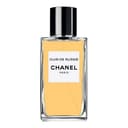
Ernest Beaux composed Cuir de Russie for Gabrielle Chanel, who launched it in 1927. Born of her affair with Grand Duke Dimitri and of the Paris of the Ballets Russes, it is sold today as an eau de parfum in Les Exclusifs de Chanel: an ambery, leathery floral made of birch wood, cistus labdanum, jasmine, and ylang-ylang.
Where to buy
No offer for this perfume at the moment.
Link to our partner shop.
Ernest Beaux composed Cuir de Russie for Gabrielle Chanel after N°5, N°22, Gardénia, and Bois des Îles. The house places its launch in 1927, as do Now Smell This and ÇaFleurBon; Perfume Shrine and Grain de Musc give 1924, and The Perfume Society notes that the date remains debated.
Grand Duke Dimitri and the Ballets Russes
The house links the fragrance to Gabrielle Chanel’s meeting with Grand Duke Dimitri, cousin of Tsar Nicholas II, who went into exile in Paris in 1920 carrying images of the white steppe and of furs. Their affair lasted from 1920 to 1923, Denyse Beaulieu writes.
Charmed by Byzantine splendor, Gabrielle Chanel then adorned her designs with folk motifs and gold embroidery. She moved in the circle of Igor Stravinsky, the dancer Serge Lifar, and Serge de Diaghilev, founder of the Ballets Russes, whose seasons left their mark on Paris from 1909 to 1929.
It was probably through the grand duke that she met Ernest Beaux, born in Moscow and trained at Rallet, perfumer to the imperial court. Her biographer Justine Picardie sees in Cuir de Russie the bottled essence of that affair.
A genre born in the 19th century
The name takes up an older genre: Guerlain and Rimmel each launched their own Russian leather in 1875, and nearly fifty perfumes of the kind appeared before the 1960s. Russian leather owed its smoky smell to the birch oil with which hides were impregnated after tanning.
Caron’s Tabac Blond had opened the way for feminine leathers as early as 1919. A material linked to motoring, aviation, and travel, leather became in the 1920s an emblem of women’s emancipation, one Chanel knowingly played on, according to Denyse Beaulieu.
From 1983 to Les Exclusifs
In 1983, Jacques Polge, the house perfumer, reorchestrated Cuir de Russie. Now Smell This and Perfume Shrine report that he softened the roughest side of the leather; Angela, of Now Smell This, adds that he boosted the iris.
In 2007, the fragrance entered Les Exclusifs de Chanel, a collection sold in the house’s boutiques and a few selected stores. It appeared there as a 200 ml eau de toilette, alongside a 30 ml extrait; ÇaFleurBon attributes the 2007 version to Jacques Polge.
Today’s eau de parfum
Launched as an eau de toilette, Cuir de Russie is sold today as an eau de parfum in 75 and 200 ml. The house calls it ambery, leathery, and floral, radical and carnal: the strength of birch wood paired with cistus labdanum, faceted by jasmine and illuminated by ylang-ylang.
The extrait belongs to the Les Extraits de Chanel collection, in a refillable 30 ml. The house presents it as an interpretation of its own, joining birch and cistus labdanum with jasmine, May rose, and blond tobacco.
Olfactory pyramid
- Heart notesThe heart of the perfume
- Base notesWhat lingers
Share your impressions
Create an account to keep your votes and find your notebook.
The advertising
A 1936 advertisement
In 1936, a Chanel sales text imagined the Cuir de Russie woman: a tall, slender brunette, a smoker and a traveler, in a suit even at midnight at the Savoy.
Richard Stamelman, in Perfume: Joy, Obsession, Scandal, Sin, cites a Chanel sales text dated 1936. There, Cuir de Russie becomes the perfume of travel, of the transatlantic cabin, and of the hotel room where one closes sumptuous suitcases.
The copy imagines a tall, slender brunette with confident gestures, used to giving orders, her fingers slightly browned by tobacco, in a suit even at midnight at the Savoy, who at the casino in Monaco throws down banknotes taken from a love letter tucked into her leather bag.
Denyse Beaulieu sees it as a sales pitch probably handed out to saleswomen. Stamelman also reproduces an advertisement published in Votre Beauté in November 1936, and a period ad warning that well-bred women might find it improper. No photographer or model is known for these campaigns.
More perfumes from Chanel
Similar perfumes
Similar notes and family, from other houses.
- Habit Rouge Eau de ToiletteGuerlain
- AlizarinPenhaligon's
- L'Ambre des Merveilles CalligraphieHermès
- Leather OudChristian Dior
- Musc CharnelRéminiscence
- Cuir CannageChristian Dior
- Tome 3 L'ÊtreZadig & Voltaire
- Bel AmiHermès