
L'Artisan Parfumeur
L’Eau d’Ambre
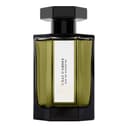
L’Eau d’Ambre opened the perfume line of L’Artisan Parfumeur in 1978, two years after the amber ball that made the house known. Four materials carry it, and the house names them all: benzoin, labdanum, patchouli and tonka bean. It sees in it an oriental perfume, and the tale of the Thousand and One Nights.
- Brand
- L'Artisan Parfumeur
- Launch year
- 1978
- Gender
- Unisex
- Olfactory family
- Oriental
- Concentration
- Eau de Toilette
Where to buy
L’Artisan Parfumeur opened in 1976 with an object rather than a bottle: a pierced terracotta ball, filled with amber crystals, which diffuses its smell without alcohol. The perfumes arrive two years later.
The first line
Six juices came out in 1978: Vétiver, Vanilia, Tubéreuse, Santal, Mûre et Musc, and L’Eau d’Ambre. The house pays tribute to the material that made it known, and of which it still says today that it is its note of choice.
The story holds to the Thousand and One Nights. The house invites you to learn which perfume intoxicated the great figures of the tale, and files the juice among its oldest creations.
Three names for a single juice
The house attributes L’Eau d’Ambre to its founder, Jean Laporte, master perfumer, who left the company in 1982 to found Maître Parfumeur et Gantier. That is the official version, and the only one its own pages carry.
Neil Chapman, of The Black Narcissus, attributes it to Jean-Claude Ellena and sees in it ground zero of the pure amber perfume. An excluded database credits Karine Dubreuil-Sereni and dates it to 1993. The confusion probably comes from L’Eau d’Ambre Extrême, a distinct juice from 2001 that several sources give to Ellena.
A whole collection
Amber has become a range apart at L’Artisan Parfumeur: the eau de toilette, an Extrême version in eau de parfum, a candle, a lotion, a hand cream and the original terracotta ball, still on sale.
Olfactory pyramid
- Base notesWhat lingers
Share your impressions
Create an account to keep your votes and find your notebook.