
Collection
Chanel’s Coco: the whole line, from 1984 to 2026
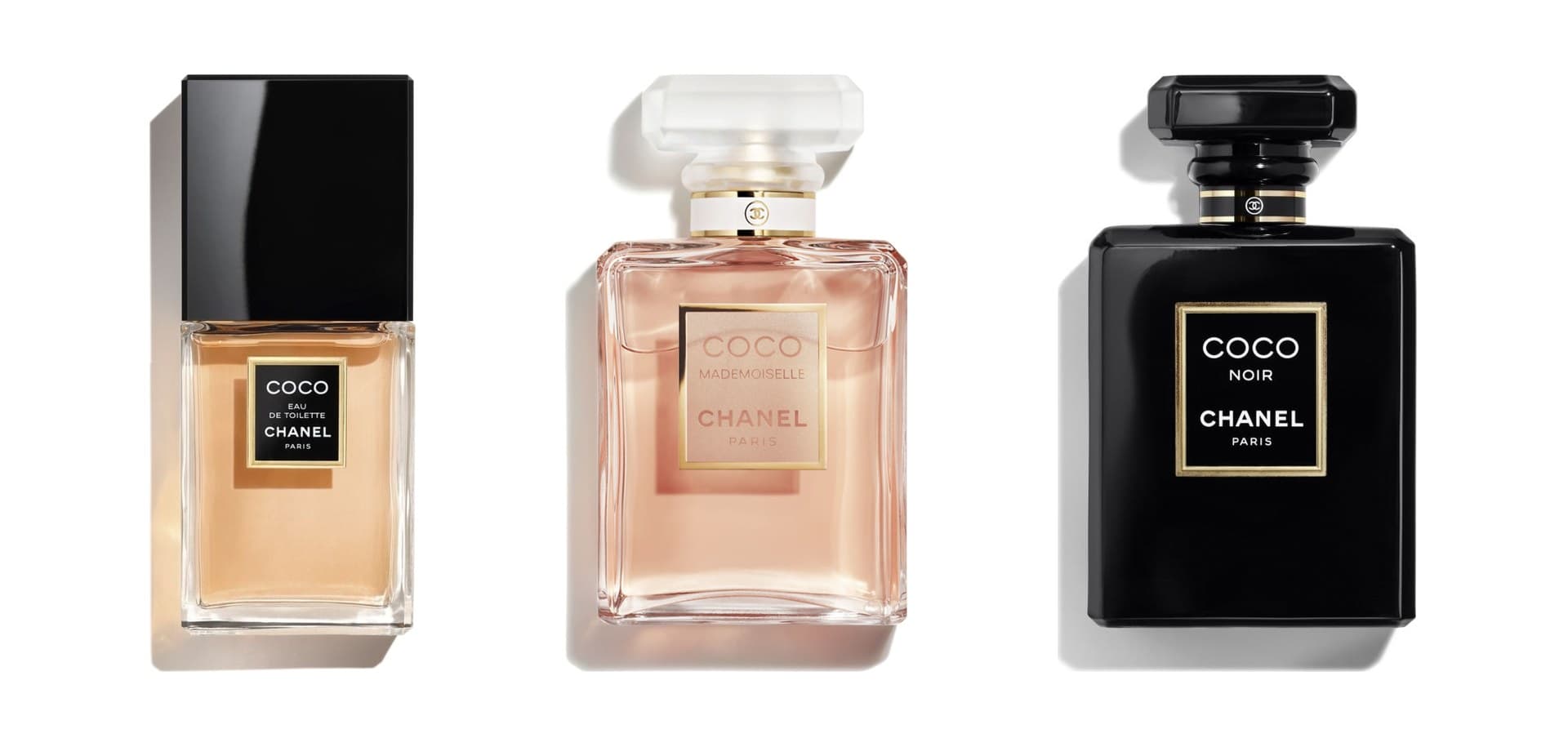
Coco in 1984, Coco Mademoiselle in 2001, Coco Noir in 2012: three fragrances bear Gabrielle Chanel’s nickname, released in eleven versions up to Crush Absolu in 2026. The dates, perfumers, and notes of each, and what ties them together.
Gabrielle Chanel’s nickname
Jacques Polge composed Coco in 1984, six years after joining Chanel. The fragrance bears the founder’s nickname and, according to the house, tells of her taste for the baroque: the apartment on rue Cambon, the Byzantine jewelry, a whimsical and radiant facet.
Today the name covers three distinct fragrances. Coco Mademoiselle, in 2001, targets a younger clientele and becomes the line’s best-seller; Coco Noir, in 2012, returns to the Orient. Olivier Polge, who succeeded his father in 2015, signed the last three versions of Coco Mademoiselle.
Chanel places the entire line among its amber fragrances. Eleven perfume pages trace its versions, from eau de toilette to extrait, and from 1984 to Crush Absolu, released on August 19, 2026.
Coco, a baroque Orient
In 1984, perfumery was living in the age of the great orientals, opened by Yves Saint Laurent’s Opium in 1977. Angela of Now Smell This sees Coco as Chanel’s elegance grafted onto that wave. According to Michael Edwards, Jacques Polge described an Orient that begins and ends in Venice.
Inès de La Fressange was its first face. In 1991, Jean-Paul Goude filmed Vanessa Paradis as a bird in a golden cage, to Stormy Weather. Elena Vosnaki of Perfume Shrine considers it the fragrance’s greatest success.
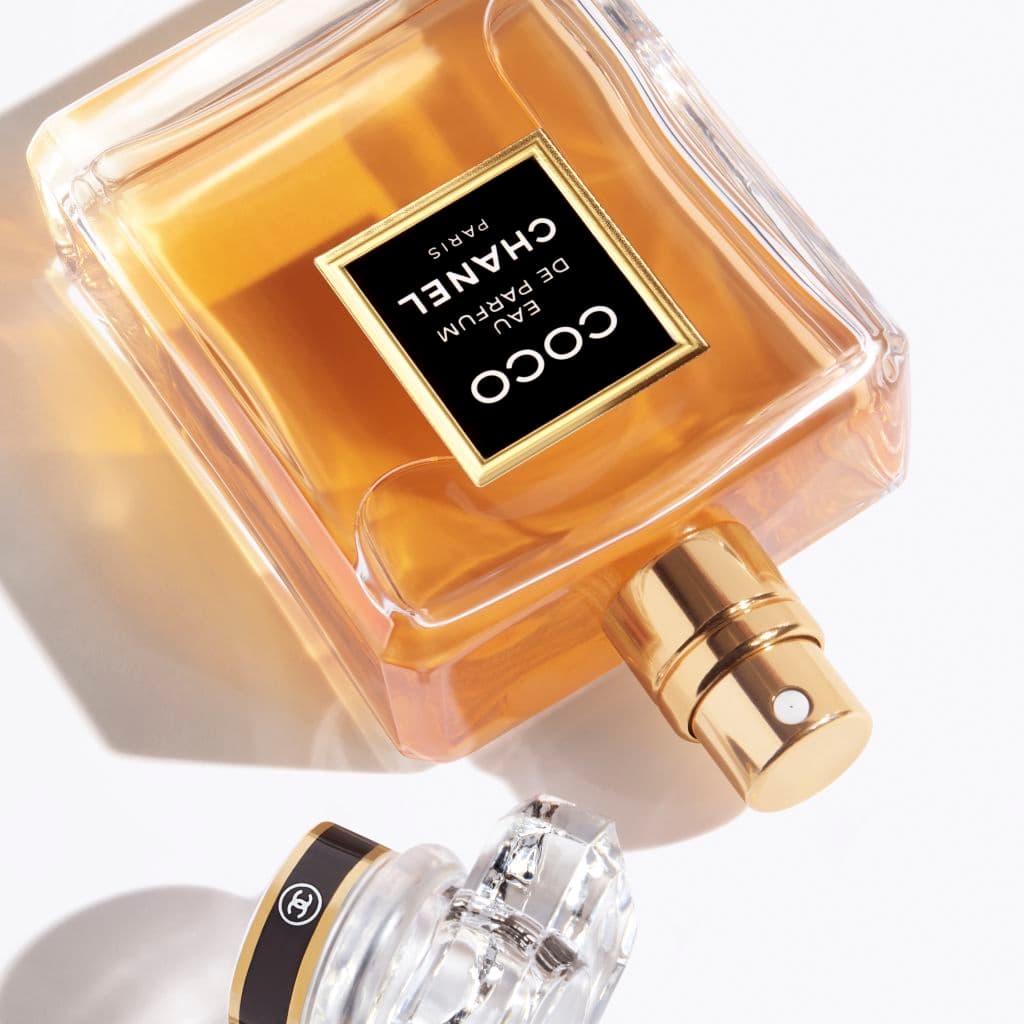
1984 · Eau de Parfum · Mandarin, jasmine, patchouli
Coco
Chanel
The reference version, which Chanel describes as an amber symphony: Sicilian mandarin, jasmine, ylang-ylang and orange blossom, patchouli, benzoin and tonka note. Suzanna of Bois de Jasmin, reluctant at first, considered it in 2012 a jewel of a perfume that has not aged.
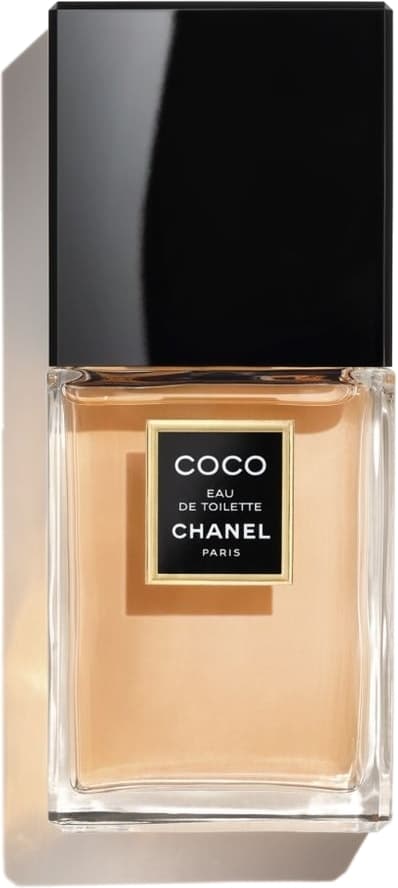
Eau de Toilette · Mandarin, jasmine, ylang-ylang
Coco Eau de Toilette
Chanel
A floral-spicy accord that the house calls lighter without being any less rich. The eau de toilette keeps the mandarin and the heart of jasmine and ylang-ylang, without the orange blossom, and retains only patchouli in the base.
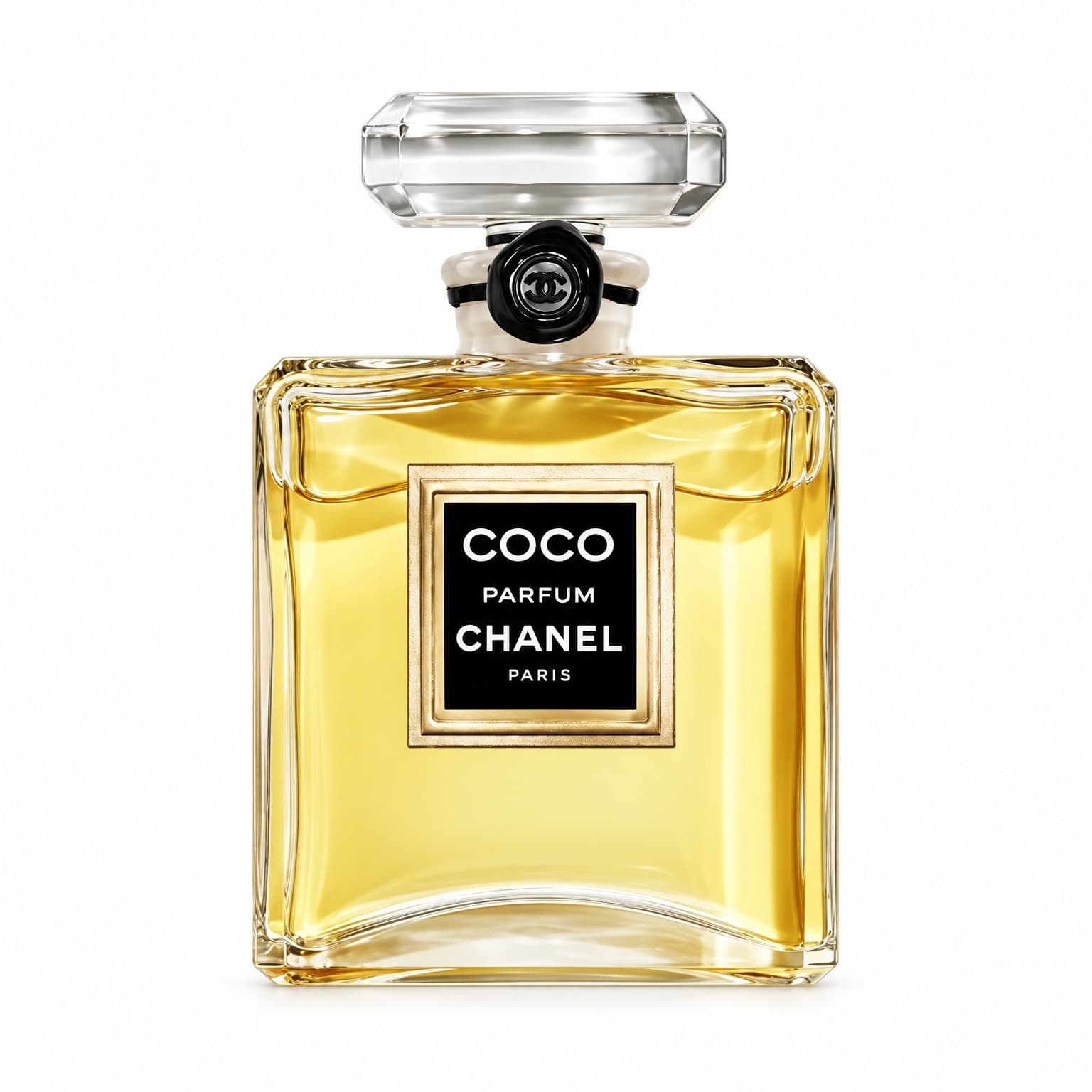
Extrait · Jasmine, May rose, benzoin
Coco Extrait
Chanel
Coco’s most concentrated form, in a 15 ml bottle hand-sealed with baudruche. May rose replaces the ylang-ylang and orange blossom of the eau de parfum. The extrait no longer appears in the house’s French catalog.
Coco Mademoiselle, the best-seller
In 2001, Jacques Polge composed for a younger clientele an amber that Chanel calls surprisingly fresh, and that its 2011 press kit called a fresh oriental. Kate Moss was its first face; Keira Knightley took over in 2007, in films by Joe Wright.
In 2012, Suzanna of Bois de Jasmin presented it as the best-selling women’s fragrance in the United States. She finds it has almost nothing in common with Coco beyond a marketing strategy, and places it among the descendants of Angel, Thierry Mugler’s gourmand patchouli.
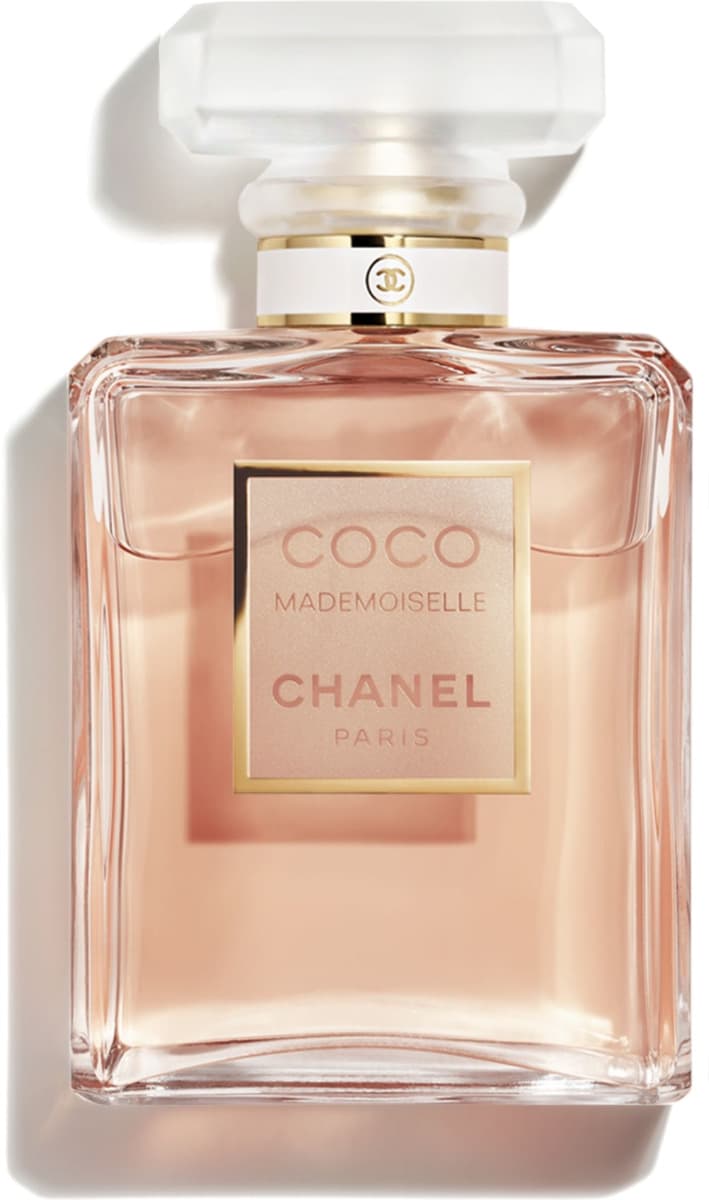
2001 · Eau de Parfum · Orange, rose, patchouli
Coco Mademoiselle
Chanel
Orange opens onto a transparent accord of jasmine and rose, while patchouli and vetiver draw an amber-woody base. Jacques Helleu chose the house’s faceted bottle for it, now available from 35 to 200 ml.
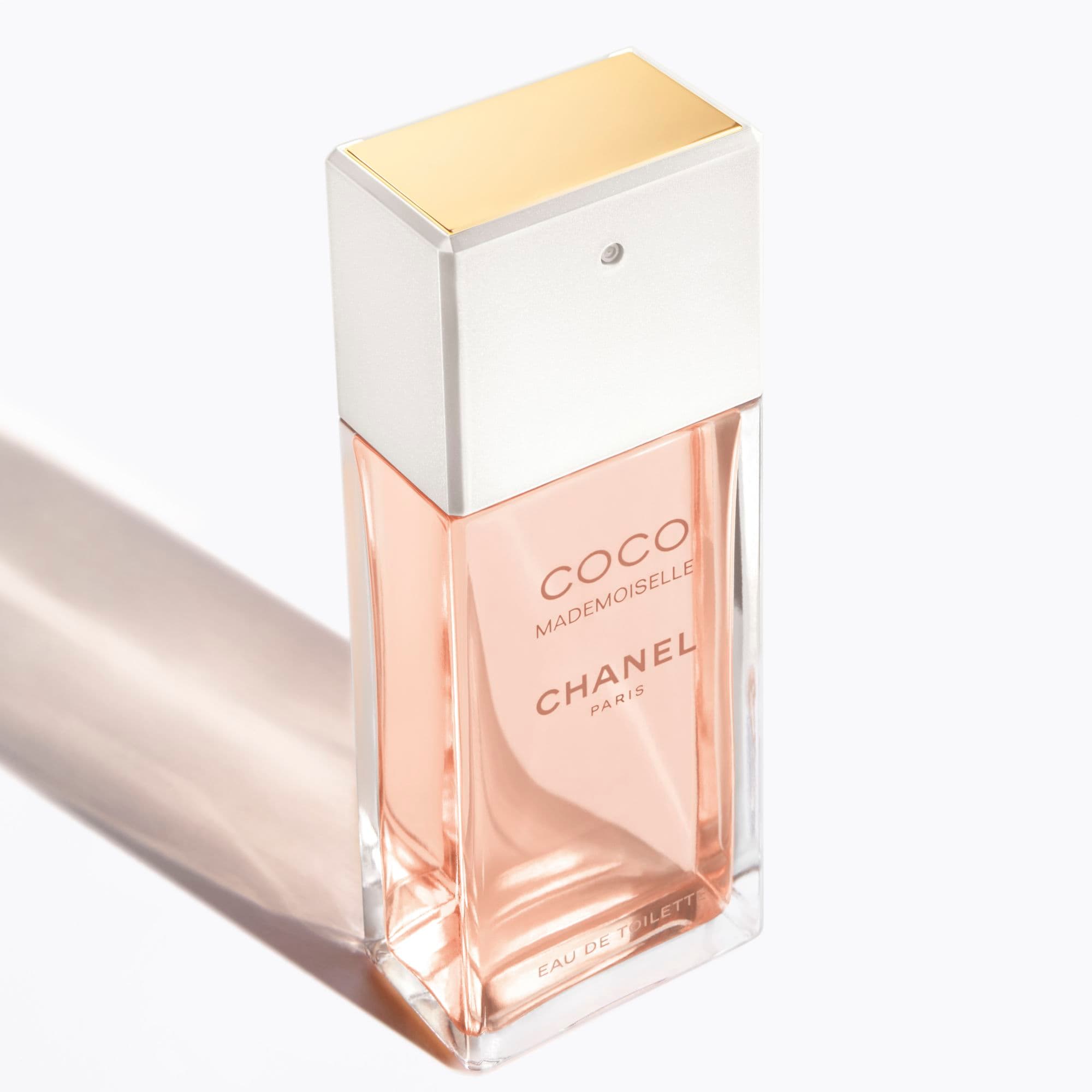
2002 · Eau de Toilette · Grapefruit, lychee, rose
Coco Mademoiselle Eau de Toilette
Chanel
Sicilian grapefruit and lychee, often attributed to the whole line, belong specifically to this eau de toilette, which Chanel describes as a fresh, fruity, airy amber accord. A pearly white cap tops its glass column.
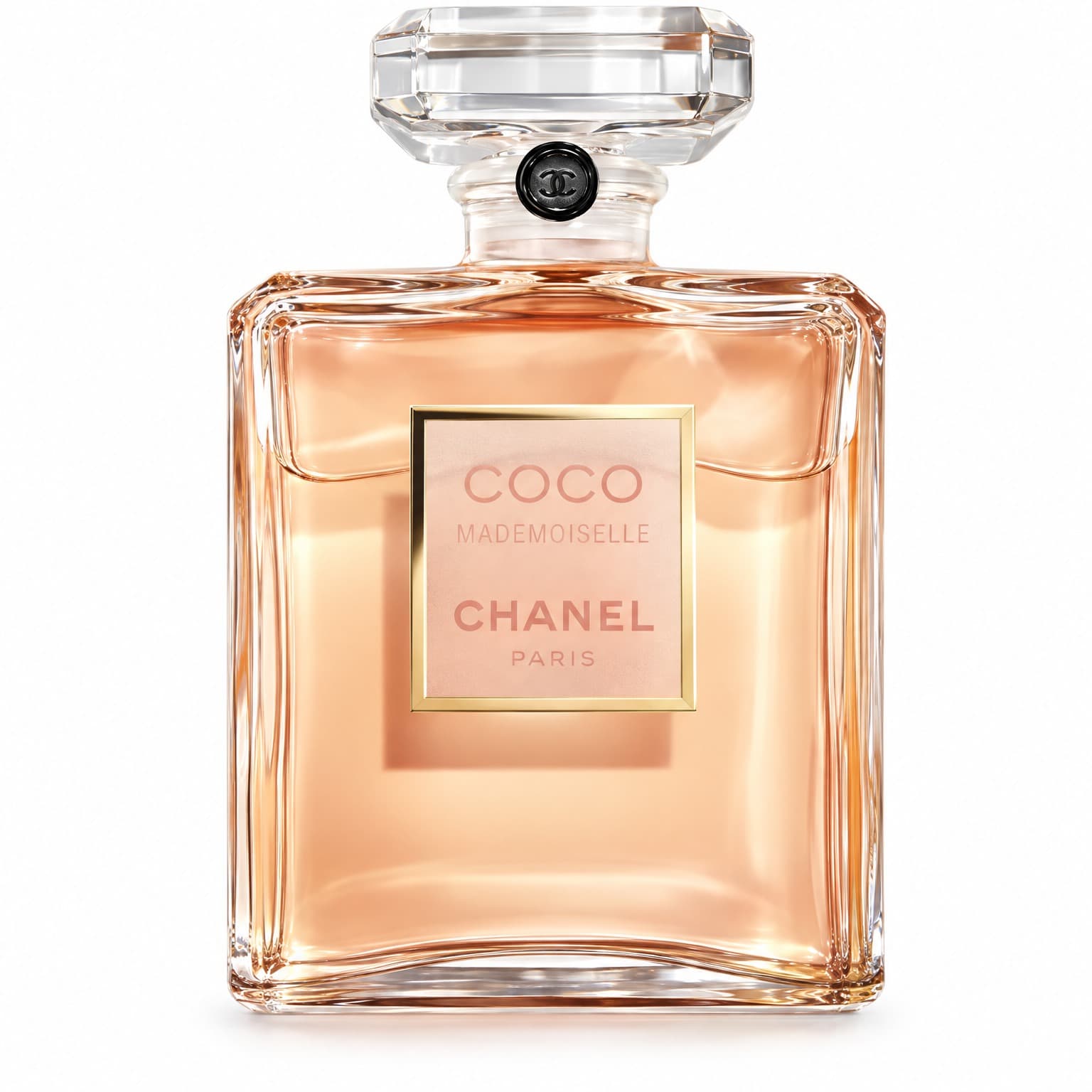
Extrait · Jasmine, May rose, iris
Coco Mademoiselle Extrait
Chanel
The jasmine and May rose absolutes are enriched with Florentine iris, which the description of the eau de parfum does not name. The extrait comes in a 7.5 ml bottle sealed with baudruche and, among Les Grands Extraits, in a 900 ml bottle cut like a diamond.
Olivier Polge’s variations
Having become the house’s in-house perfumer in 2015, Olivier Polge took up his father’s work with three interpretations of Coco Mademoiselle. Each one shifts a slider: patchouli pushed to the extreme, a light version designed for the night, a magnetic fruitiness.
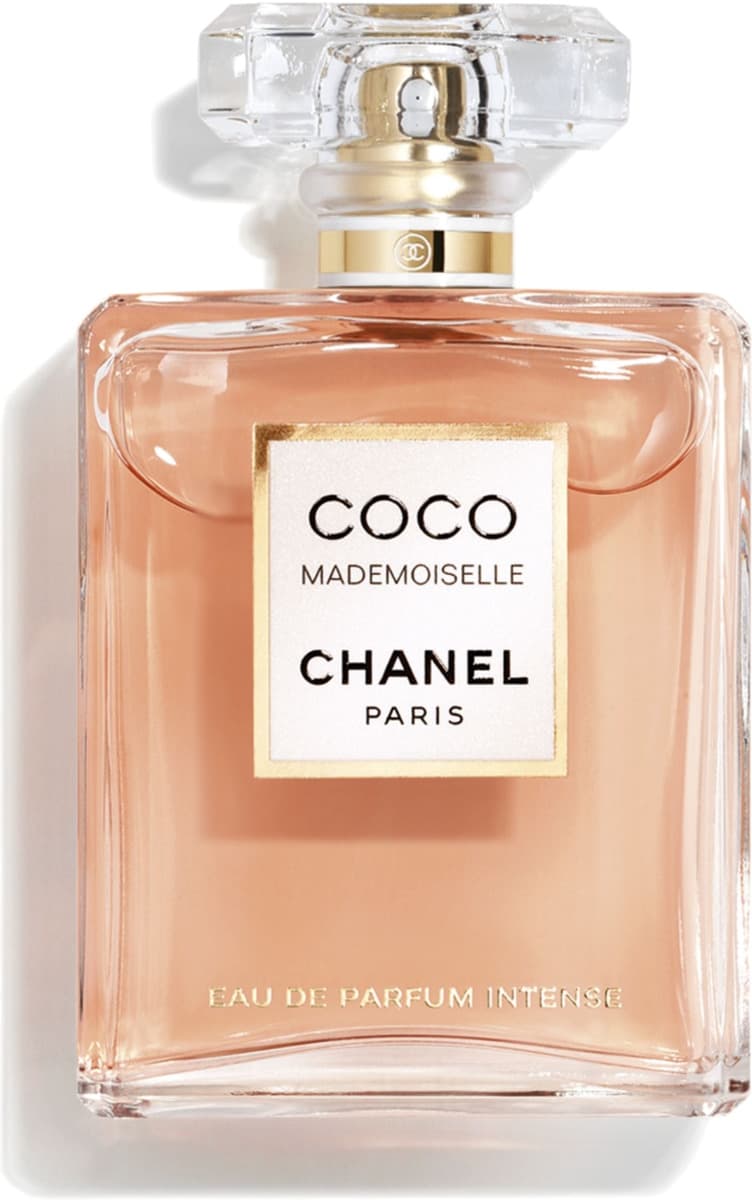
2018 · Eau de Parfum Intense · Patchouli, tonka, vanilla
Coco Mademoiselle Intense
Chanel
Olivier Polge says he increased the patchouli fractions to the extreme, wrapped in an accord of tonka bean and Madagascar vanilla. Keira Knightley shot a new film for its launch; in 2023, Whitney Peak fronted the campaign Chanel now associates with the Intense.
2020 · Eau pour la nuit · Jasmine, rose, white musks
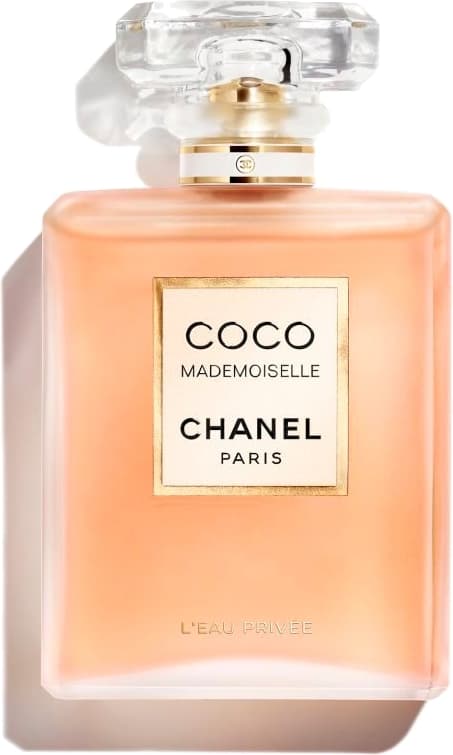
Coco Mademoiselle L'Eau Privée
Chanel
Olivier Polge’s first fragrance for the night, a water to wear even in the hair, in which white musks replace the woods. Sophie Normand sees it as a veil faithful to the original; Thomas Dunckley finds it very pretty but superfluous for anyone who already loves Coco Mademoiselle.
2026 · Eau de Parfum · Lychee, grapefruit, patchouli
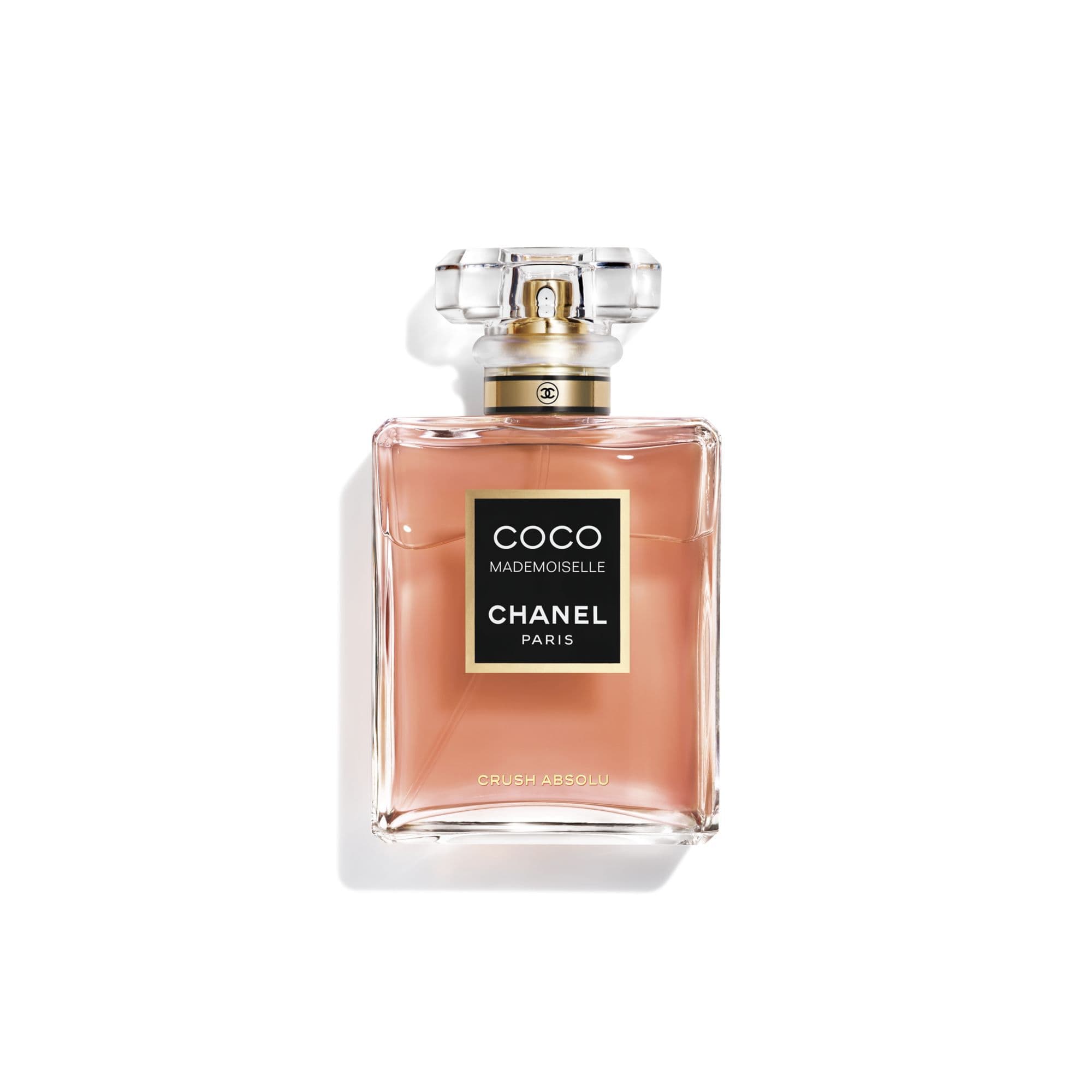
Coco Mademoiselle Crush Absolu
Chanel
Released on Gabrielle Chanel’s birthday, Crush Absolu pairs a lychee and grapefruit accord with patchouli and vanilla amber notes. Gracie Abrams embodies it in a film by Joe Wright. Elena Knezevic finds it lacking personality, Delaney Loane memorable.
Coco Noir, the return to the Orient
In August 2012, eleven years after Coco Mademoiselle, Jacques Polge returned to Coco’s Orient. The fragrance’s story starts in Venice, where Gabrielle Chanel stayed in 1919 after the death of Boy Capel; the perfumer speaks of a nocturnal vision of the Orient.
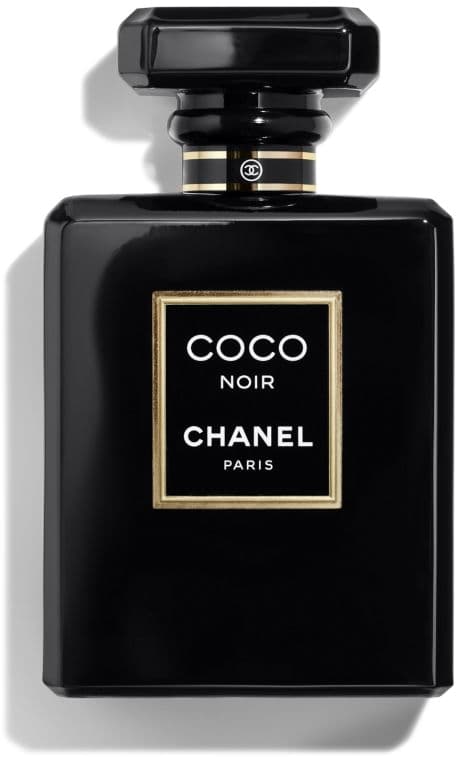
The bottle takes up the house silhouette in opaque black glass. The reception was disappointed: Victoria of Bois de Jasmin regrets the timidity of a fragrance named for black, and Angela of Now Smell This suggests renaming it Coco Pourpre.
2012 · Eau de Parfum · Bergamot, rose, geranium
Coco Noir
Chanel
An amber that Chanel calls modern and luminous: bergamot, rose and rose geranium leaf, patchouli and tonka bean. Karlie Kloss became its face in 2014, photographed by Sølve Sundsbø.
Extrait · Egyptian jasmine, May rose, sandalwood
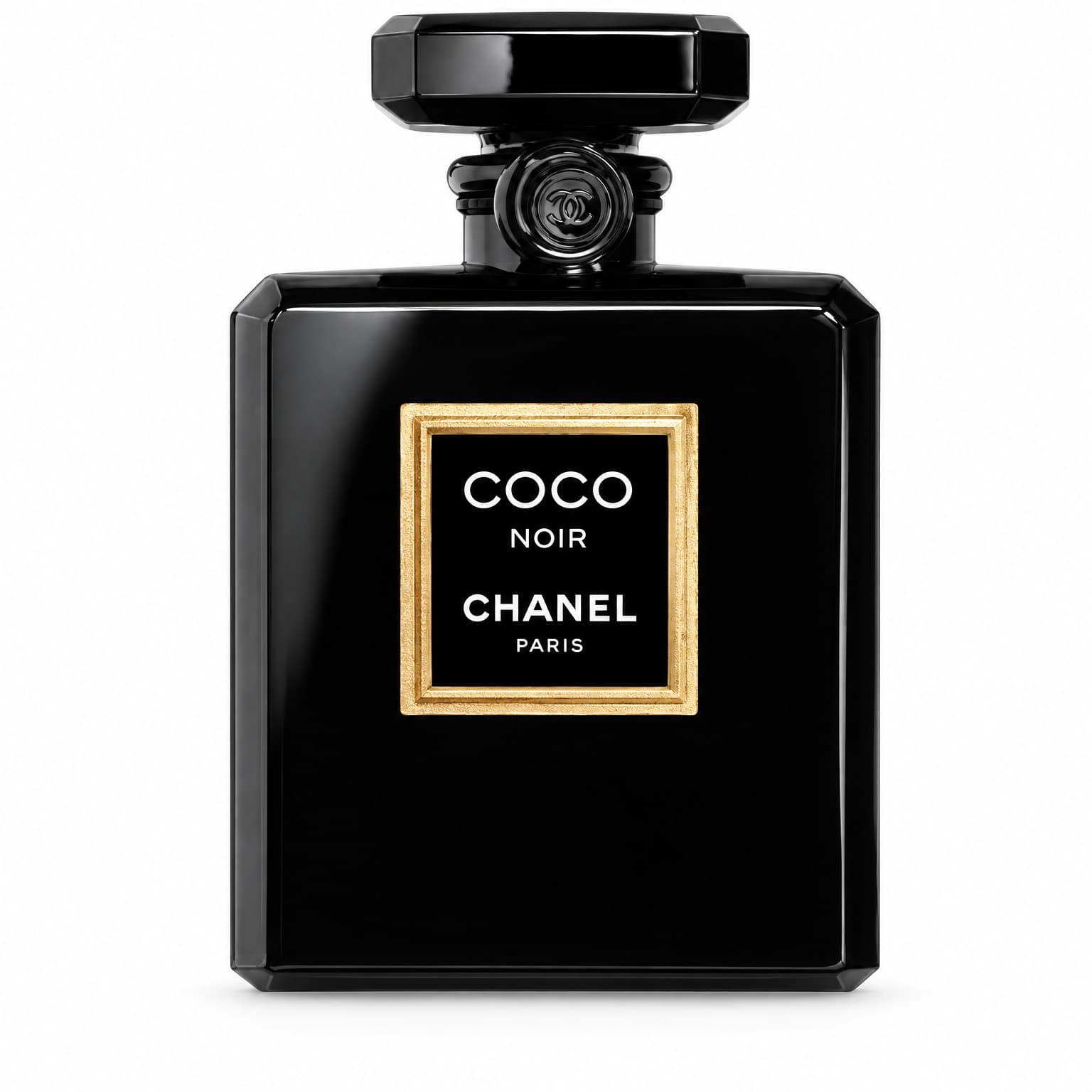
Coco Noir Extrait
Chanel
The voluptuous, enveloping version of Coco Noir, part of Les Extraits de Chanel, in a 15 ml bottle hand-sealed with wax. Bourbon vanilla and New Caledonian sandalwood join the patchouli and tonka.
What ties the three fragrances together
Patchouli runs through the whole line: in the base of Coco and Coco Noir, as the signature of Coco Mademoiselle. The flowers change from one fragrance to the next, jasmine for Coco, jasmine and rose for Coco Mademoiselle, rose and geranium for Coco Noir; the three extraits meet on jasmine and May rose.
The ingredient lists published by Chanel draw another divide. All the waters of Coco and Coco Mademoiselle are tinted with colorants; Coco Noir, whose black glass hides the juice, declares none. Neither do the extraits of Coco and Coco Noir, while Coco Mademoiselle’s counts two.
The eleven Coco perfume pages
 Oriental
 Oriental
 Oriental
 Oriental
 Oriental
 Oriental
 Oriental
 Oriental
 Oriental
 Oriental
 Oriental
Each page traces the fragrance’s origins, its composition, its bottle and, where it exists, the critics’ analysis.