
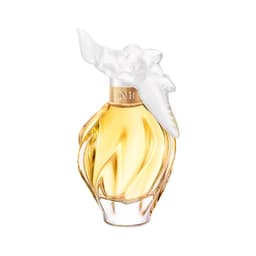
Launched in 1948, L’Air du Temps is the fragrance that made the house of Nina Ricci. Francis Fabron ties carnation and clove to a bouquet of gardenia, jasmine and rose, over a powdery base of iris, sandalwood and oakmoss. Robert Ricci wanted a bottle that carried peace: Marc Lalique gave it, in 1951, its two crystal doves. Rewritten across the decades, it remains one of the most widely recognized spicy florals in the world.
Connoisseurs agree on the structure and disagree on the powder, often because they are comparing different versions of the juice. What the rewriting of the formula took away, and what remains of it.
Olfastory’s review
What those who smelled it before report
Critics who were able to smell an older extract describe a dense white bouquet, where rose and spicy carnation keep the whole from tipping into a bridal bouquet. The base, meanwhile, rests on a soapy musk thickened with moss, amber and sandalwood.
That foundation, they say, is barely found in perfumery today. It belongs to a school where the base carried the fragrance for hours, without seeking the transparency the market now demands.
Context matters as much as the juice. Reviewers recall that its name, borrowed from the register of the spirit of the times, spoke of the hope of an era, and place it alongside the other fragrances of the same postwar wave.
The disagreement centers on the powder
Some wearers find in it nothing more than hotel soap: flowers, aldehydes, a sweetness they judge dated. The criticism comes up often enough to be reported rather than dismissed.
Others, who own bottles from the eighties, describe something quite different: a tender green floral, with body, almost chypre through the oakmoss, far removed from the sugary roundness of recent versions.
This disagreement is not simply a matter of taste. The two camps are describing different versions of the fragrance, which is what makes most of the reviews published online difficult to compare with one another.
What the rewriting took away
The recurring observation among those who compare versions: the spicy carnation was sharper, the green foundation more biting, and the powdery has taken over. The character of the fragrance has shifted, not merely softened.
Two materials explain most of it. Benzyl salicylate, long present in high proportion, now falls among the substances requiring declaration; oakmoss is likewise subject to restrictions.
No statement accompanied these changes, and no date is public. These observations remain a body of consistent testimony gathered over the years, not a documented fact: the distinction deserves to be made.
Is it still worth wearing
Yes, but only knowing which vintage one has under the nose. Judging L’Air du Temps on a mass-market bottle is like judging a record on a poorly remastered reissue.
One quality remains uncontested, even by its detractors: it is instantly recognizable. Few fragrances born nearly eighty years ago can still announce themselves in three seconds.