
Christian Dior
Eau Fraîche
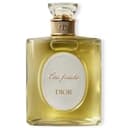
Eau Fraîche appeared in 1955, composed by Edmond Roudnitska for Dior. The house presents it as the forerunner of fresh fragrances: a citrus chypre built on Sicilian mandarin, bitter petitgrain and Indonesian patchouli. Francis Kurkdjian restores its original formula on 1 October 2026, alongside the twelve other Dioriginals.
- Brand
- Christian Dior
- Launch year
- 1955
- Perfumer
- Gender
- Women
- Olfactory family
- Chypre
- Secondary family
- Citrus
- Concentration
- Eau de Toilette
Where to buy
Eau Fraîche entered the Parfums Christian Dior catalogue in 1955. Edmond Roudnitska composed it six years after Diorama, his first creation for the house, and one year before Diorissimo.
The house describes it as a bracing citrus eau, a classic of elegance and well-being from the moment it appeared, and places it today among the exceptional creations of Christian Dior.
The origin of the eaux fraîches
Francis Kurkdjian sees in this fragrance the opening of a new olfactory style. The family of eaux fraîches descends from it, he says, from the nineteen-sixties onwards, and Roudnitska had set down its first term.
The couturier and his perfumer
Stéphan reports that Christian Dior had adopted Eau Fraîche and wore it daily. Roudnitska would return often to citrus for the house, with Eau Sauvage in 1966 and Diorella in 1972.
The collection of classics
Stéphan dates to 2009 the gathering of the historic fragrances of the house under Les Créations de Monsieur Dior, all served as eau de toilette, Diorissimo excepted, which keeps its eau de parfum and its extrait.
What changes on 1 October 2026
Eau Fraîche is among the thirteen fragrances that Francis Kurkdjian is restoring under the name Dioriginals. Four years of work went into returning to the first formulas, which regulation and the growing scarcity of raw materials had eaten into.
He says he heightened every quality of the citrus, bergamot, lemon, mandarin and orange, and recomposed the aromatic basil and tarragon accord that signed the fragrance, which regulation had put at risk.
He also says he erased additions that had appeared over time and were foreign to the first formula. The thirteen receive the Ovale bottle, clear glass with a half-sphere stopper, designed in 1948 by Serge Heftler-Louiche.
Olfactory pyramid
- Top notesThe first minutes
- Heart notesThe heart of the perfume
- Base notesWhat lingers
Share your impressions
Create an account to keep your votes and find your notebook.