
Collection
Les Dioriginals: thirteen Dior classics restored in the Ovale bottle
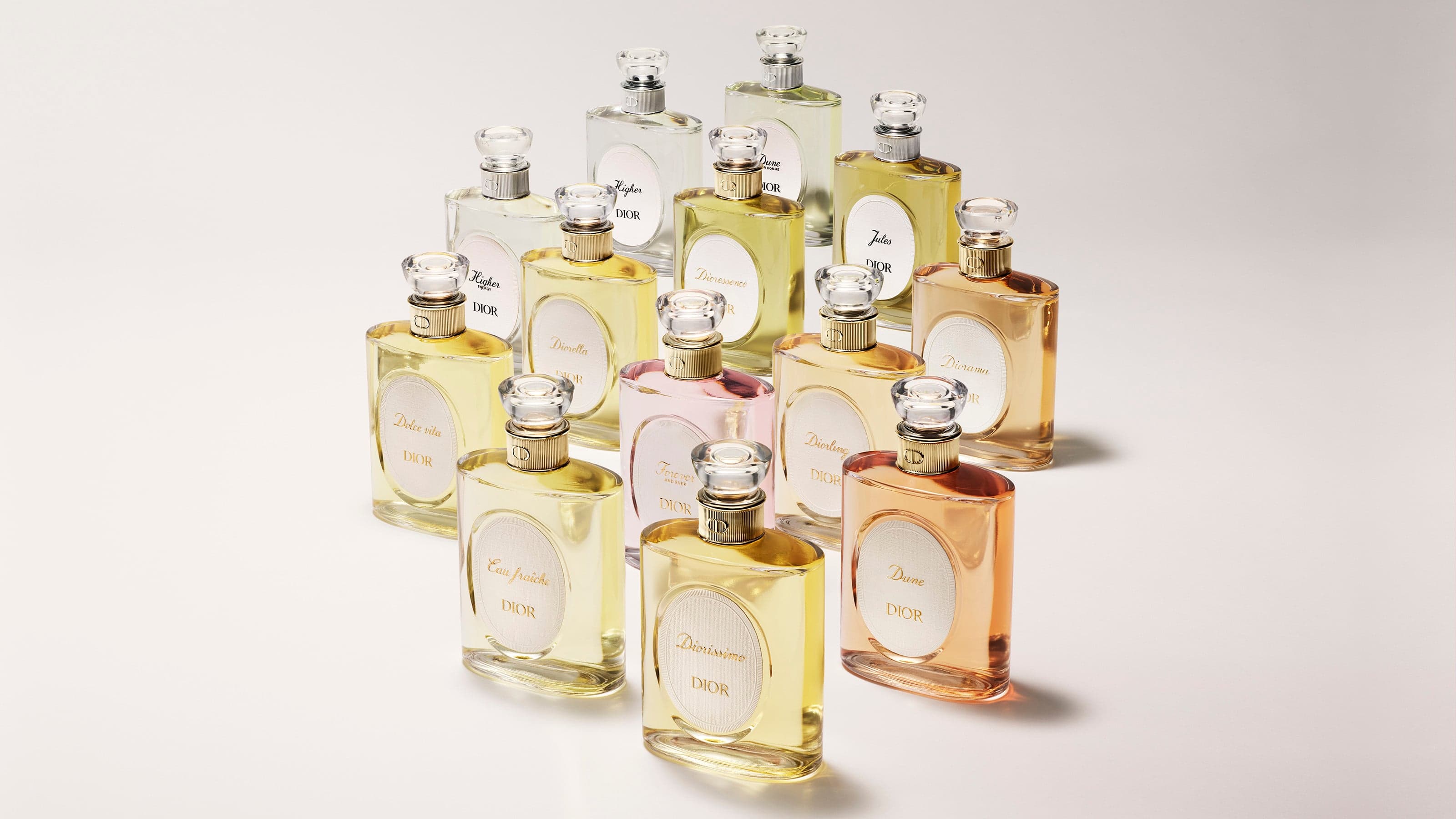
On October 1, 2026, Dior brings thirteen of its historic perfumes together under a single name, Les Dioriginals. Restored by Francis Kurkdjian, they leave their original bottles for the Ovale designed in 1948. What changes, what remains, and the thirteen entries to revisit.
One collection, thirteen signatures
Les Dioriginals bring together thirteen perfumes that Dior presents as the signatures that shaped its olfactory heritage and left their mark on the history of perfumery. The oldest, Diorama, dates from 1949; Higher Energy, released in 2003, is among the most recent. All are offered as Eau de Toilette.
The house sorts them into three families, which serve as the thread of this article: florals, chypres and woody fragrances. This classification is Dior’s own. Our entries sometimes place a perfume elsewhere, according to the material that dominates the formula sold today: Dolce Vita appears among the woody fragrances, Dioressence among the orientals.
Francis Kurkdjian’s restoration
Dior entrusts the collection to Francis Kurkdjian, its perfume creation director. The brief, as the house puts it: to give each perfume back its original brilliance and luster. It does not detail the adjustments made, formula by formula.
The labels published for the collection say more. Every ingredient list is itemized, from twenty-six entries for Forever and Ever to fifty-three for Jules. Five of them name oakmoss extract, the emblematic material of chypre: Diorella, Dioressence, Diorama, Diorling and Jules. Eau Fraîche, which the house nonetheless files among the chypres, declares none.
The 1948 Ovale
The thirteen perfumes share the same bottle, the Ovale, which Serge Heftler-Louiche, co-founder and first director of Parfums Christian Dior, designed in 1948 for the house’s first creations. Clear glass, a half-sphere stopper, a white cord knotted at the neck.
A textured label echoes the original oval, and a finely ridged metal ring engraved with the CD monogram circles the neck. According to Town & Country, this is not a parallel edition: the versions sold until now are being replaced.
The florals
Four perfumes, from the lily of the valley of Diorissimo to the amber notes of Dune, which the house describes first through their flowers.
1956 · Edmond Roudnitska · Floral notes
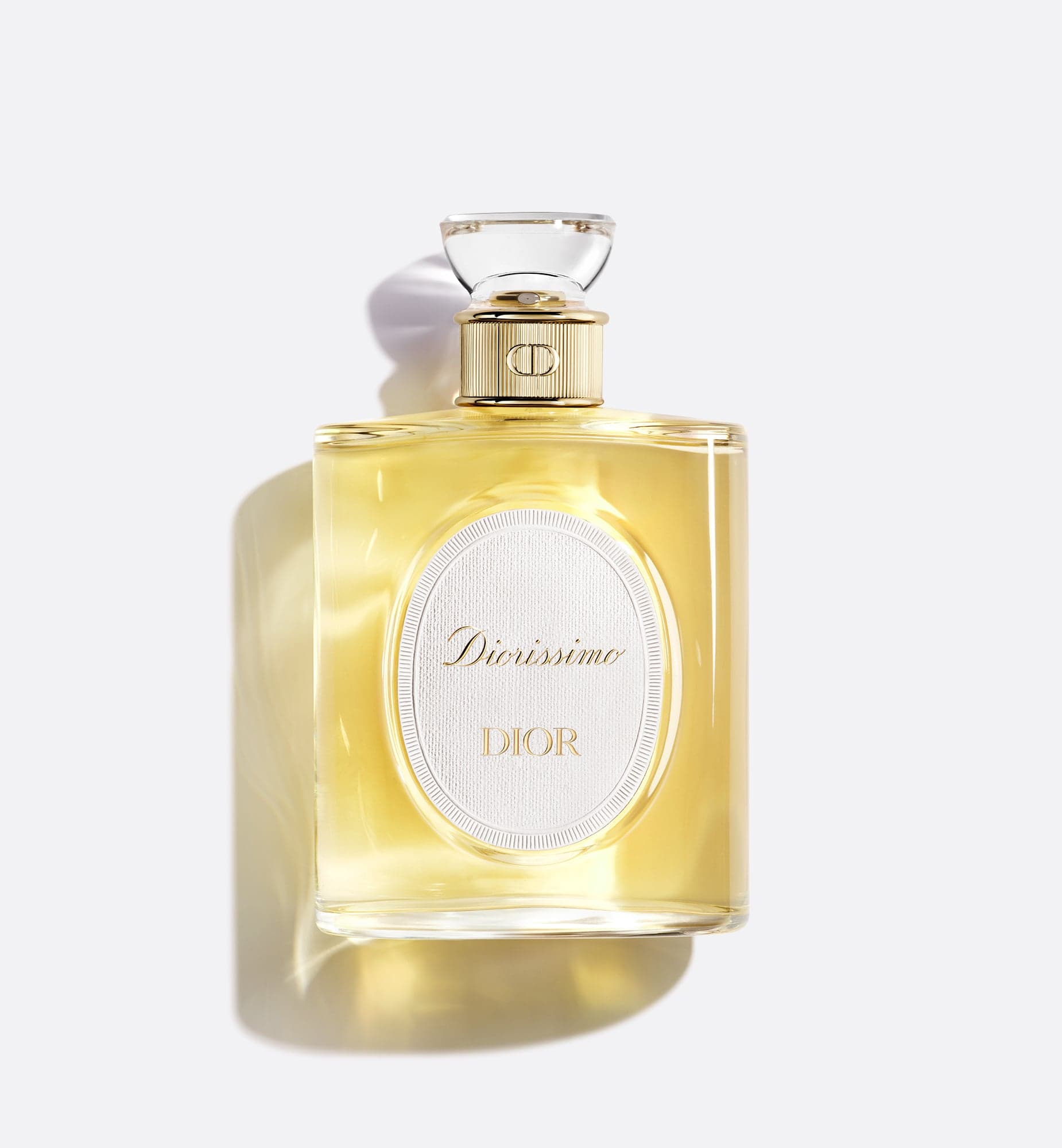
Diorissimo
Christian Dior
Christian Dior’s lily of the valley. The flower yields no essence: Edmond Roudnitska rebuilt it in 1956, and the house regards Diorissimo as one of the masterpieces of world perfumery. Hydroxycitronellal, a molecule with a lily-of-the-valley scent, heads its ingredient list.
1991 · Jean-Louis Sieuzac and Dominique Ropion · Floral and amber notes
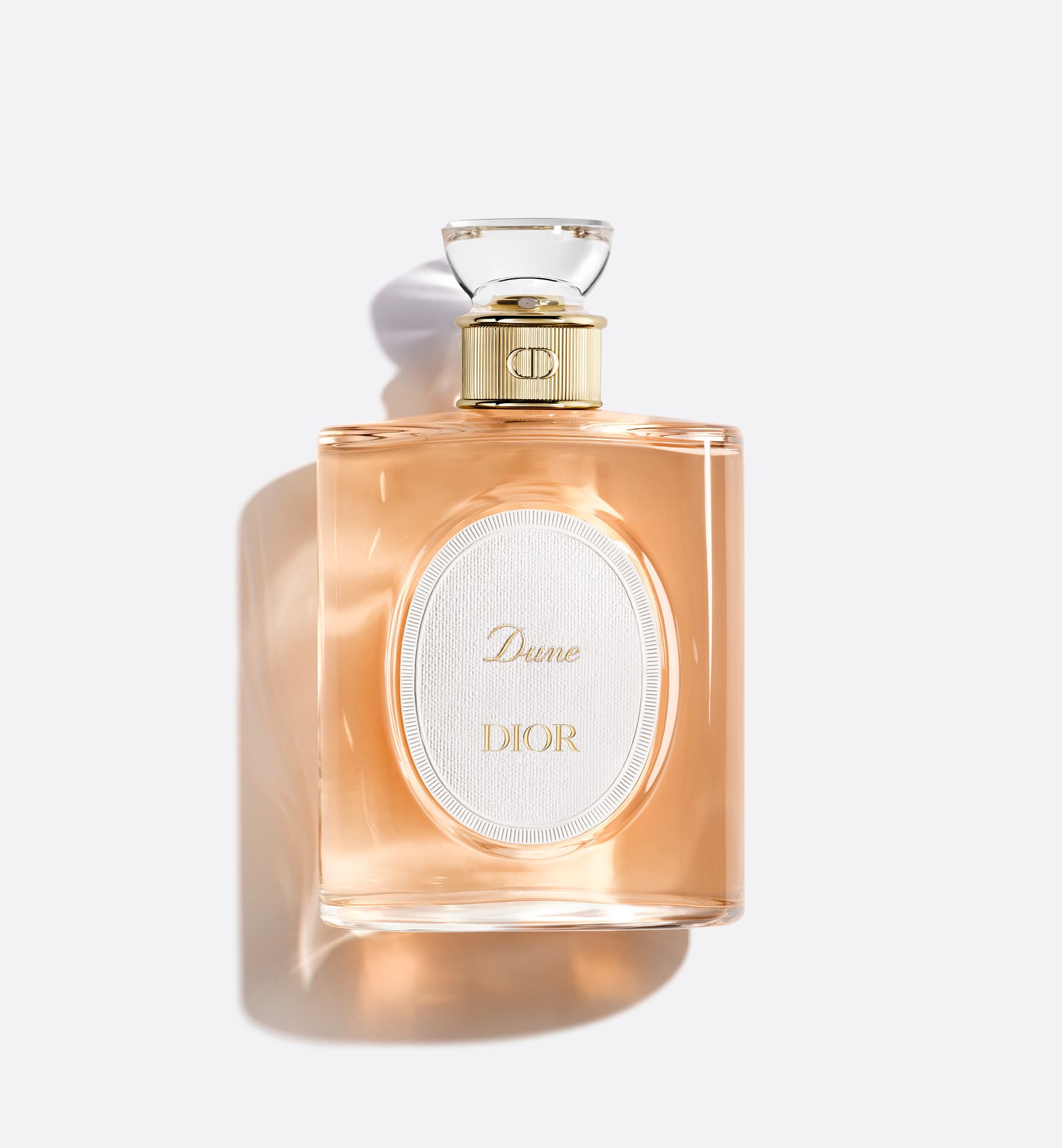
Dune
Christian Dior
An amber floral that the house describes as an oceanic perfume, now pared down to Sicilian mandarin, a peony accord and vanilla. Its ingredient list declares no oakmoss.
1995 · Pierre Bourdon · Floral and fruity notes
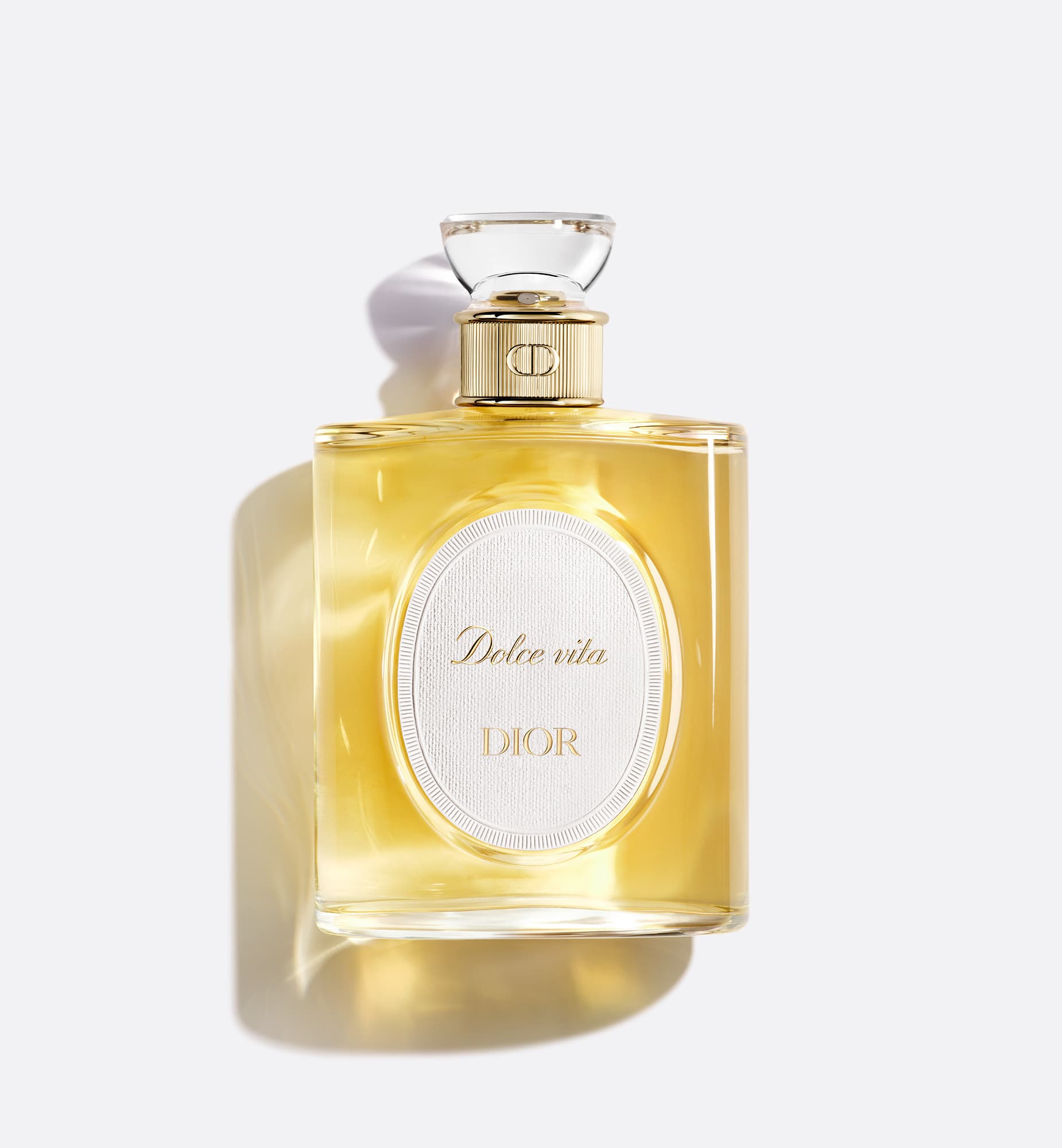
Dolce Vita
Christian Dior
Composed under the direction of Maurice Roger, Dolce Vita takes its name from Fellini’s film. Cedar, cooked peach, cinnamon and vanilla draw its outline; the label names clove bud and cinnamon bark oils.
Turn of the 2000s · Floral and musky notes
Forever and Ever
Christian Dior
The most recent of the collection’s florals. A clear freesia, an Indian jasmine absolute and a Bulgarian rose form its outline; the label confirms the rose, with rose extract, geranium oil and rose ketones.
The chypres
The largest and oldest family in the collection: five perfumes, from the 1949 Diorama to the 1972 Diorella, three of them signed by Edmond Roudnitska.
1949 · Edmond Roudnitska · Chypre and spicy notes
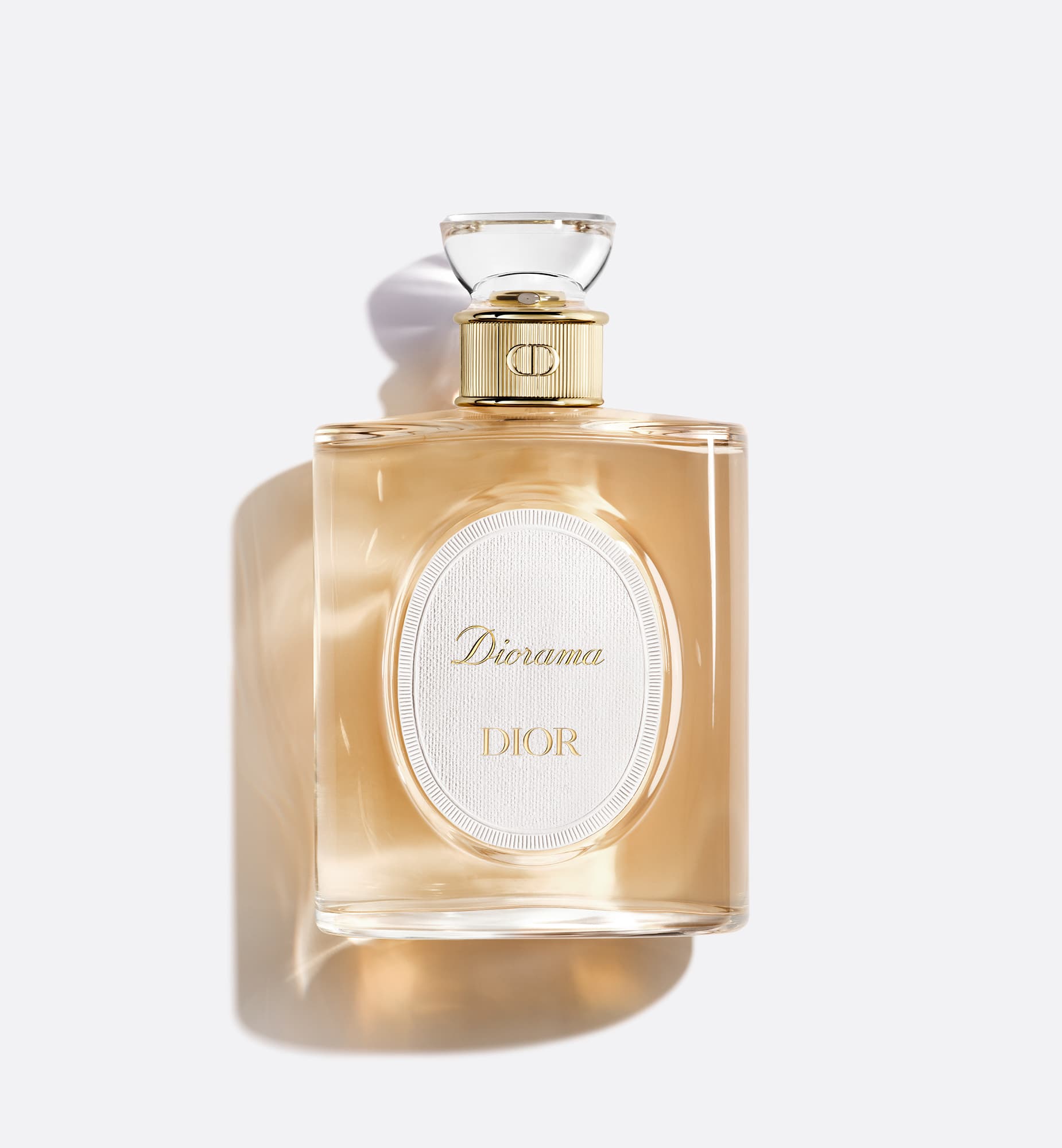
Diorama
Christian Dior
The house’s second perfume, composed by Edmond Roudnitska in 1949: a fruity chypre built on the Prunol base he favored. Dior reissued it in 2010 within Les Créations de Monsieur Dior.
1955 · Edmond Roudnitska · Citrus and chypre notes
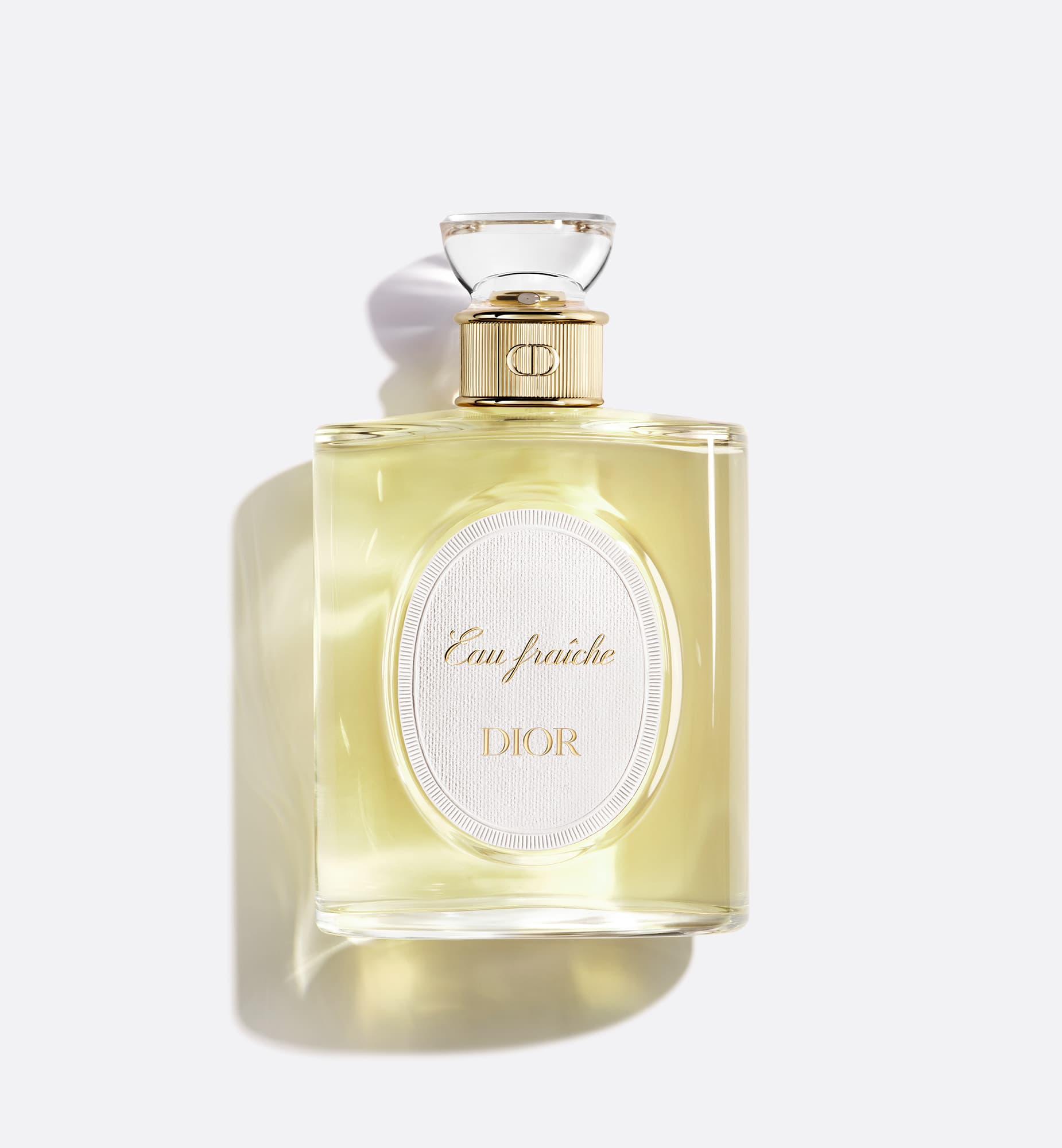
Eau Fraîche
Christian Dior
Christian Dior’s own perfume, according to the house, and the forerunner of fresh fragrances: a citrus chypre built on Sicilian mandarin, bitter orange petitgrain and patchouli.
1963 · Paul Vacher · Chypre and leather notes
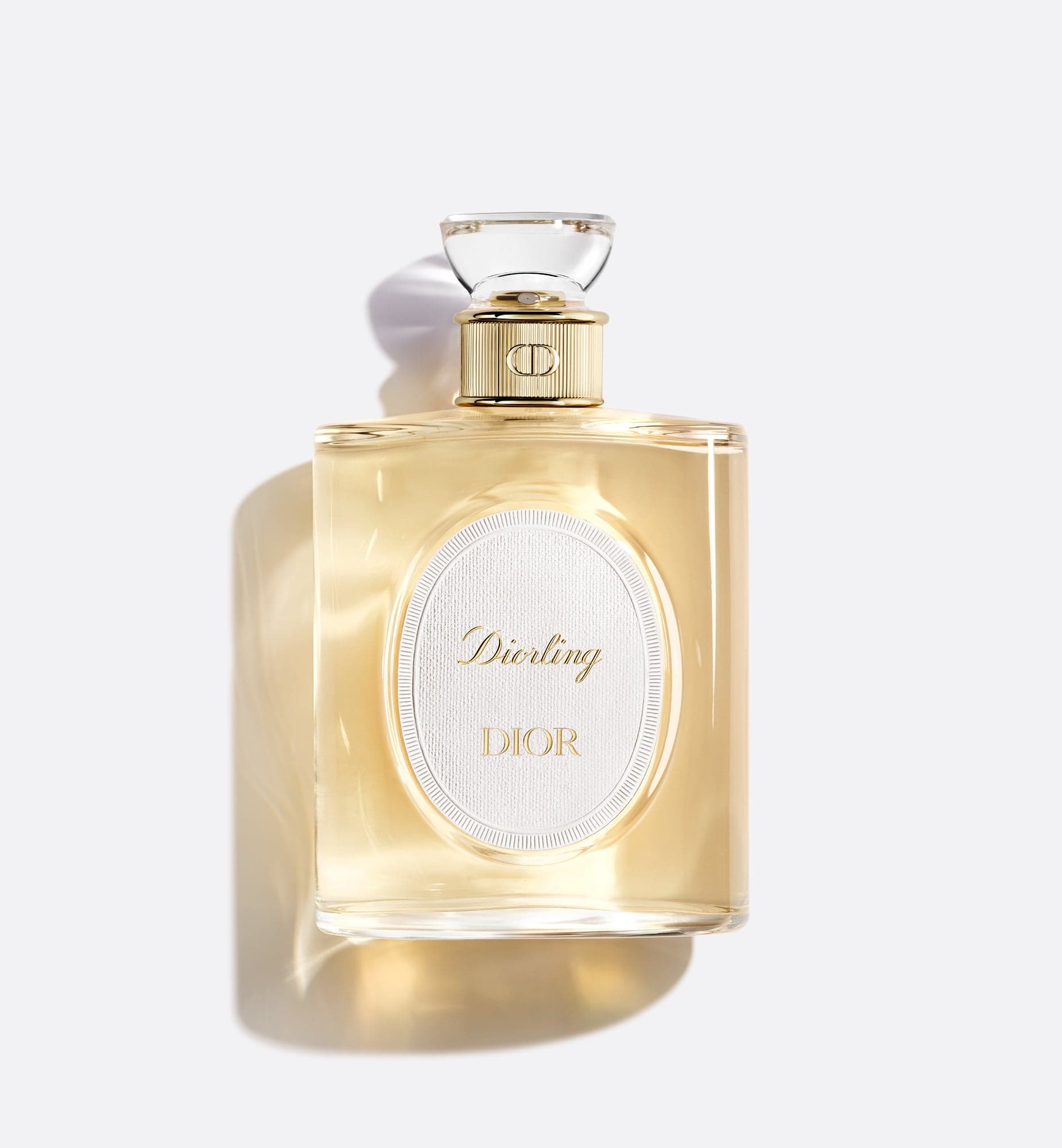
Diorling
Christian Dior
The first perfume Dior launched after the couturier’s death. Paul Vacher composed a leather chypre inspired by English style, tweed and riding boots; François Demachy has since reorchestrated it.
1969 · Guy Robert · Chypre and spicy notes
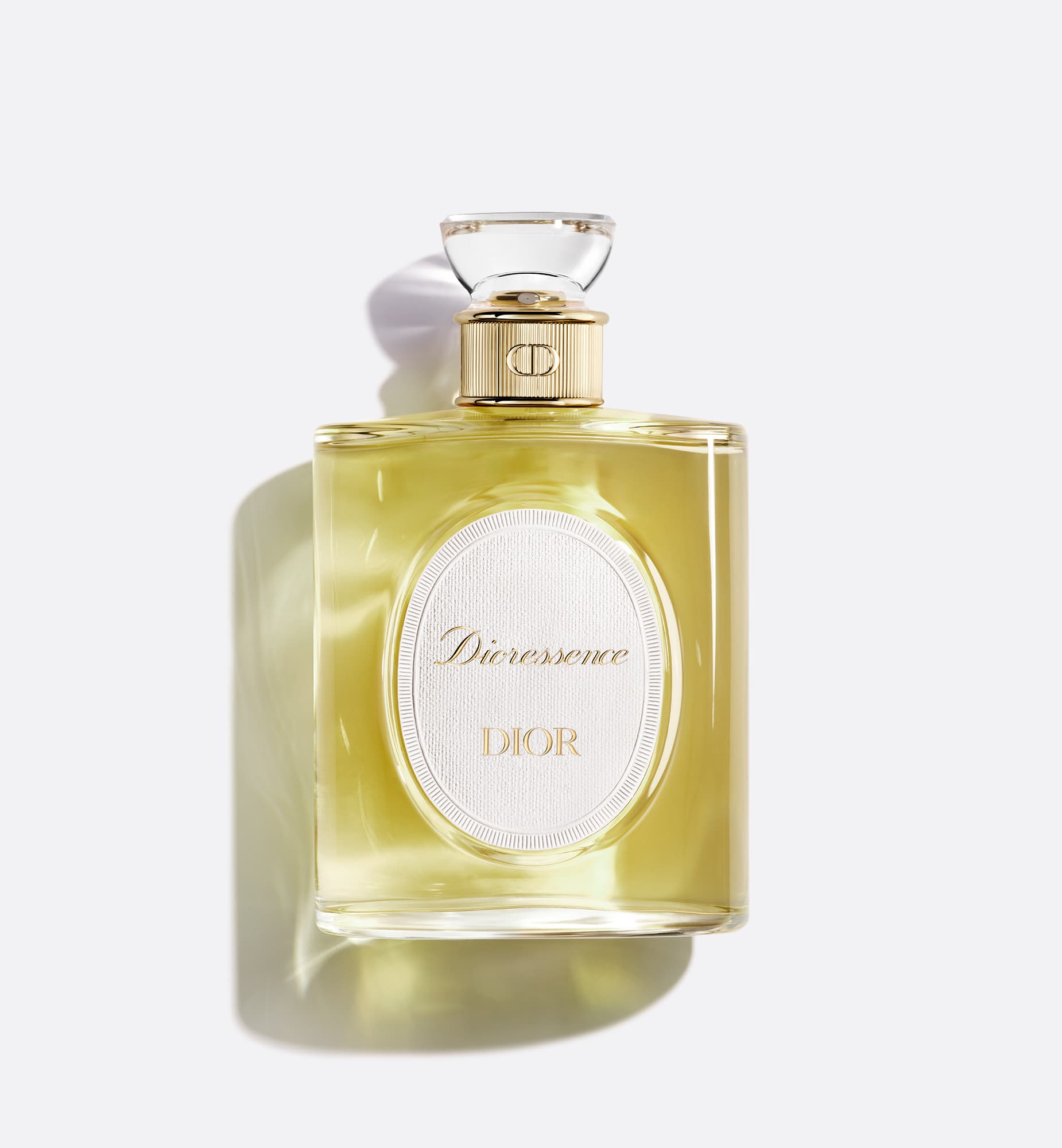
Dioressence
Christian Dior
Launched under the slogan “the barbaric perfume” to accompany a fur collection, Dioressence was born an animalic amber chypre and has been reworked several times since. Its ingredient list, one of the longest in the collection, runs to fifty-two entries.
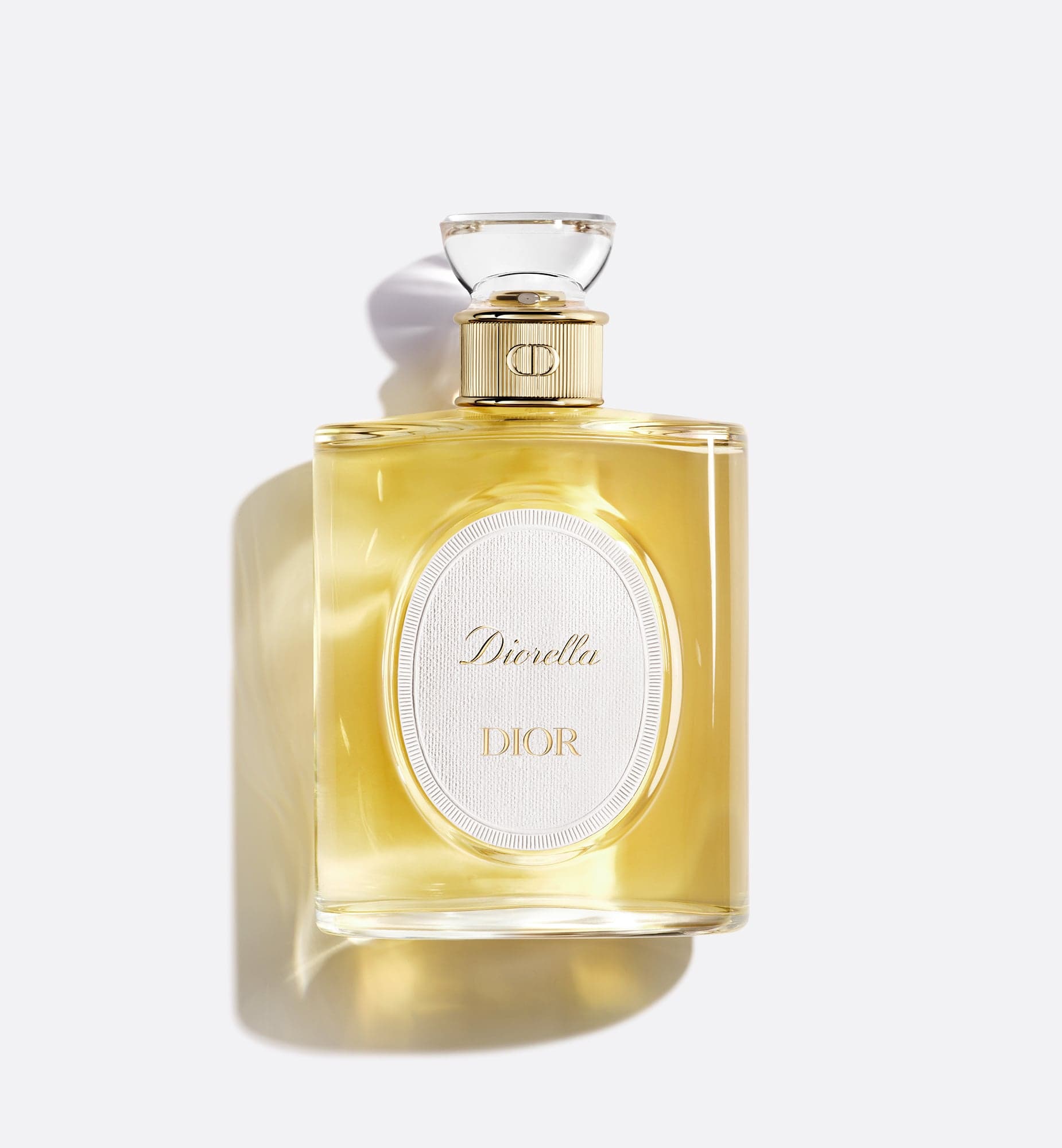
1972 · Edmond Roudnitska · Chypre and floral notes
Diorella
Christian Dior
The last Roudnitska in the collection. The house now sums it up as Sicilian lemon, a honeysuckle accord and Bourbon vetiver; oakmoss extract appears on its label.
The woody fragrances
Four perfumes that Dior presents among its men’s fragrances, from Jules in 1980 to Higher Energy in 2003.
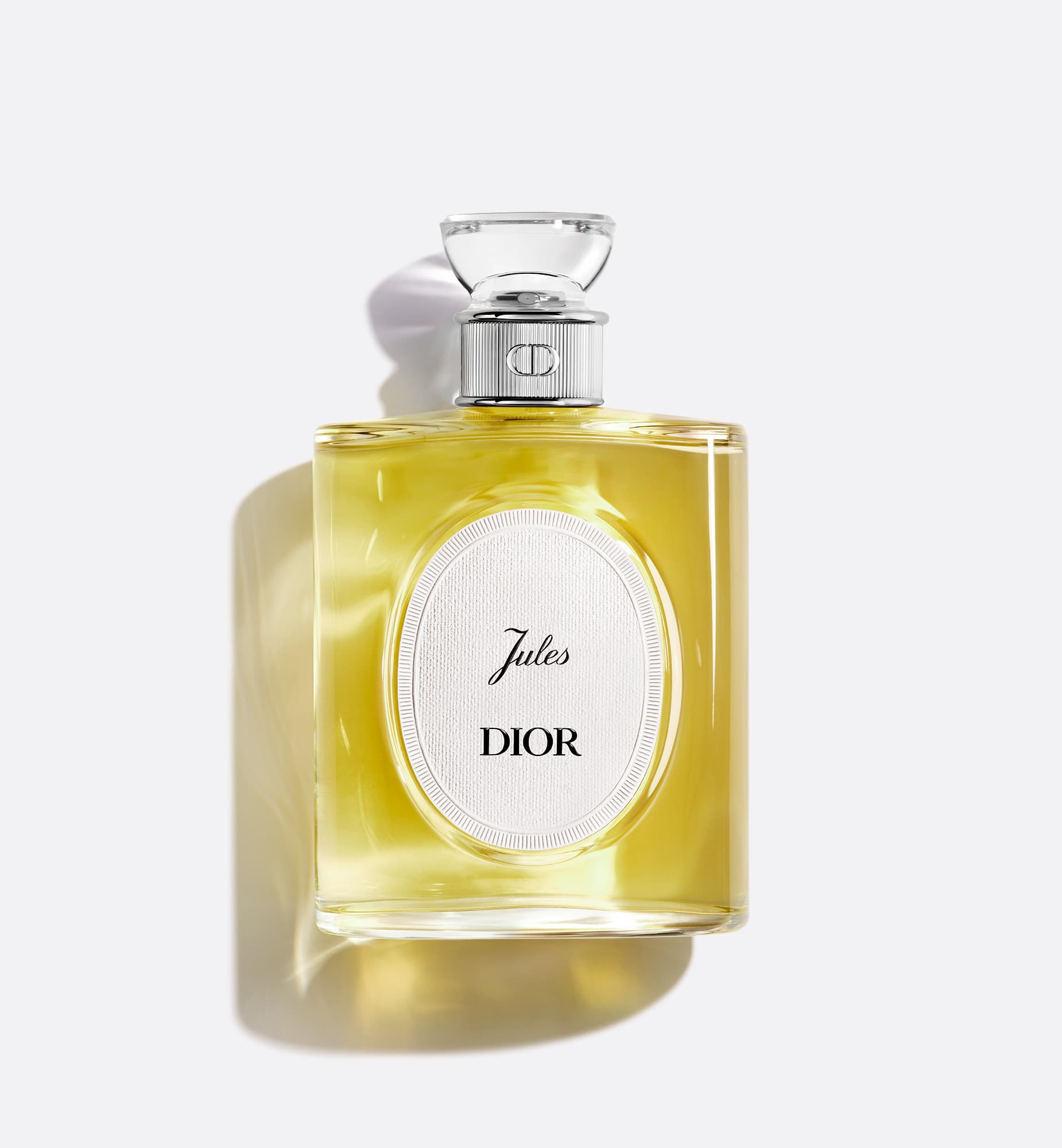
1980 · Jean Martel · Aromatic and amber notes
Jules
Christian Dior
A green, animalic fougère released fourteen years after Eau Sauvage, whose name borrows the French slang for a boyfriend. Its ingredient list, the longest of the thirteen, names lavender, coumarin and oakmoss.
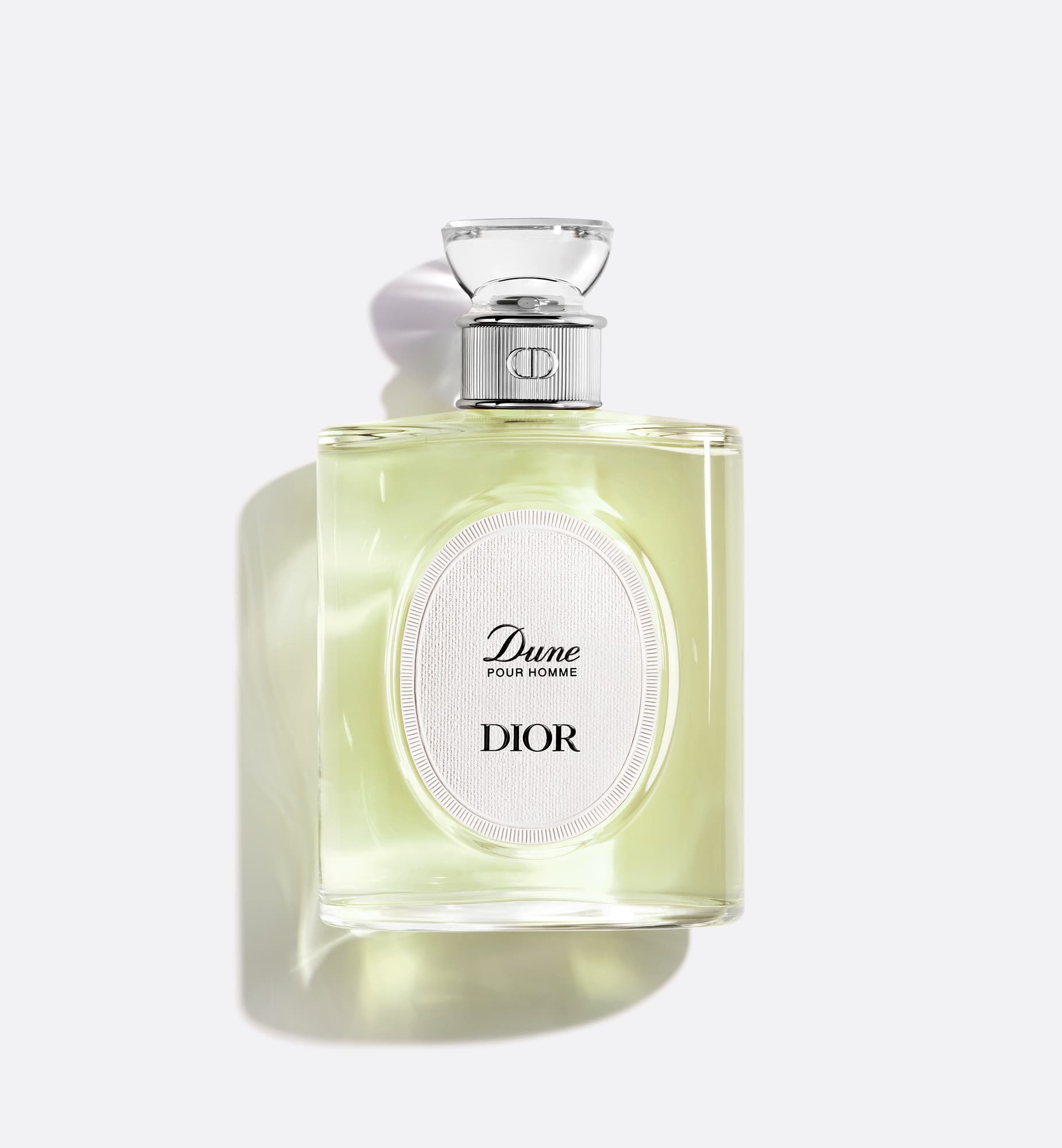
1997 · Olivier Cresp · Woody and green notes
Dune pour Homme
Christian Dior
Composed by Olivier Cresp six years after the women’s Dune, around a fig leaf that Dior places in the top notes. The house sees it as a return to the source, inspired by walks along the seashore.
2001 · Olivier Pescheux and Olivier Gillotin · Woody and citrus notes
Higher
Christian Dior
A men’s fragrance built on a brief accord of citrus, pear and cypress, running against the heavy ambers of the previous decade.
2003 · Olivier Pescheux · Woody and citrus notes
Higher Energy
Christian Dior
Released two years after Higher, on an opening of grapefruit and juniper berries. A base of vetiver and white musks makes it drier and more resinous than its predecessor.
The thirteen entries
 Floral
 Floral
 Woody
Woody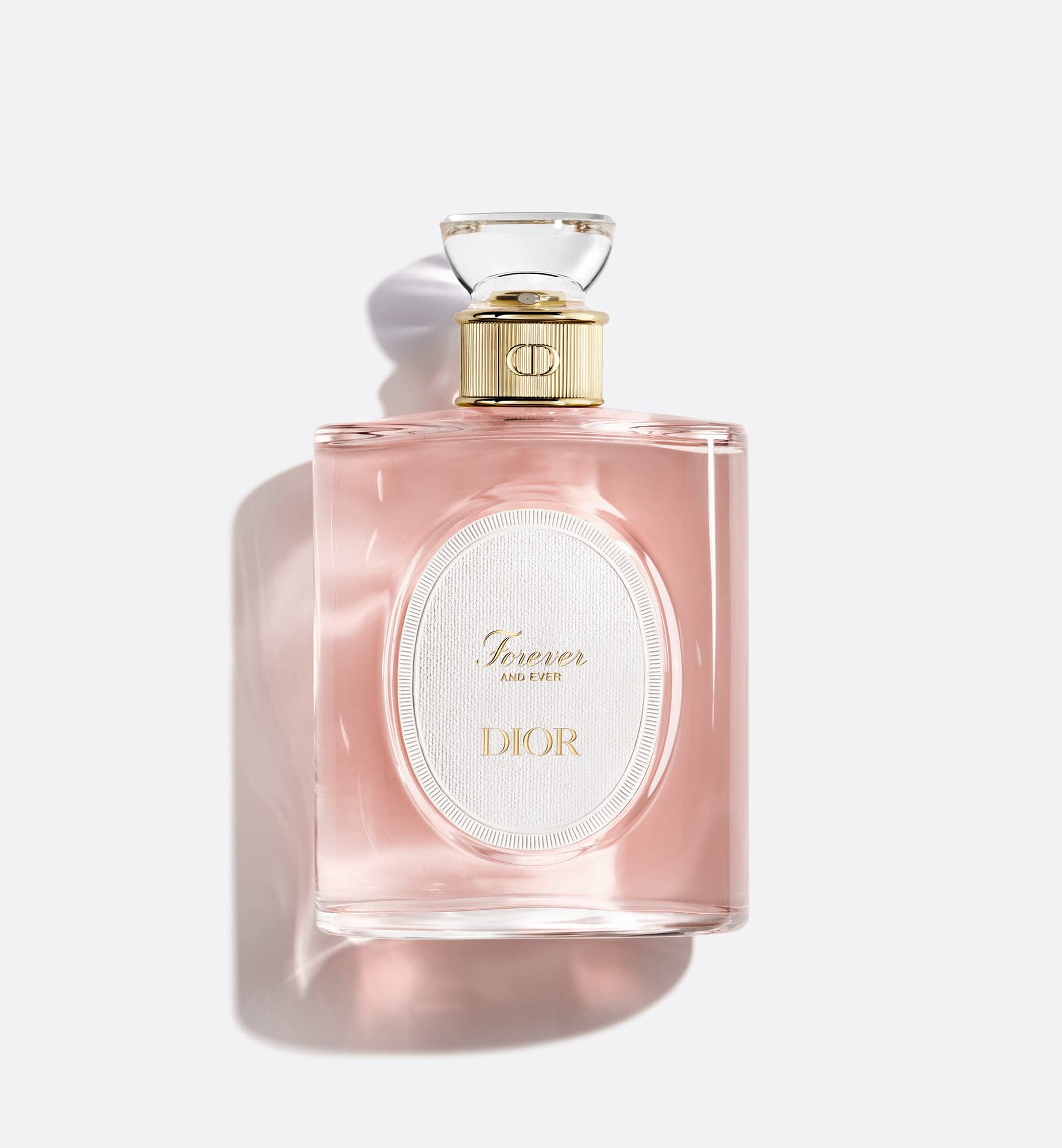 Floral
 Floral
 Chypre
 Chypre
 Oriental
 Chypre
 Fougère
 Woody
Woody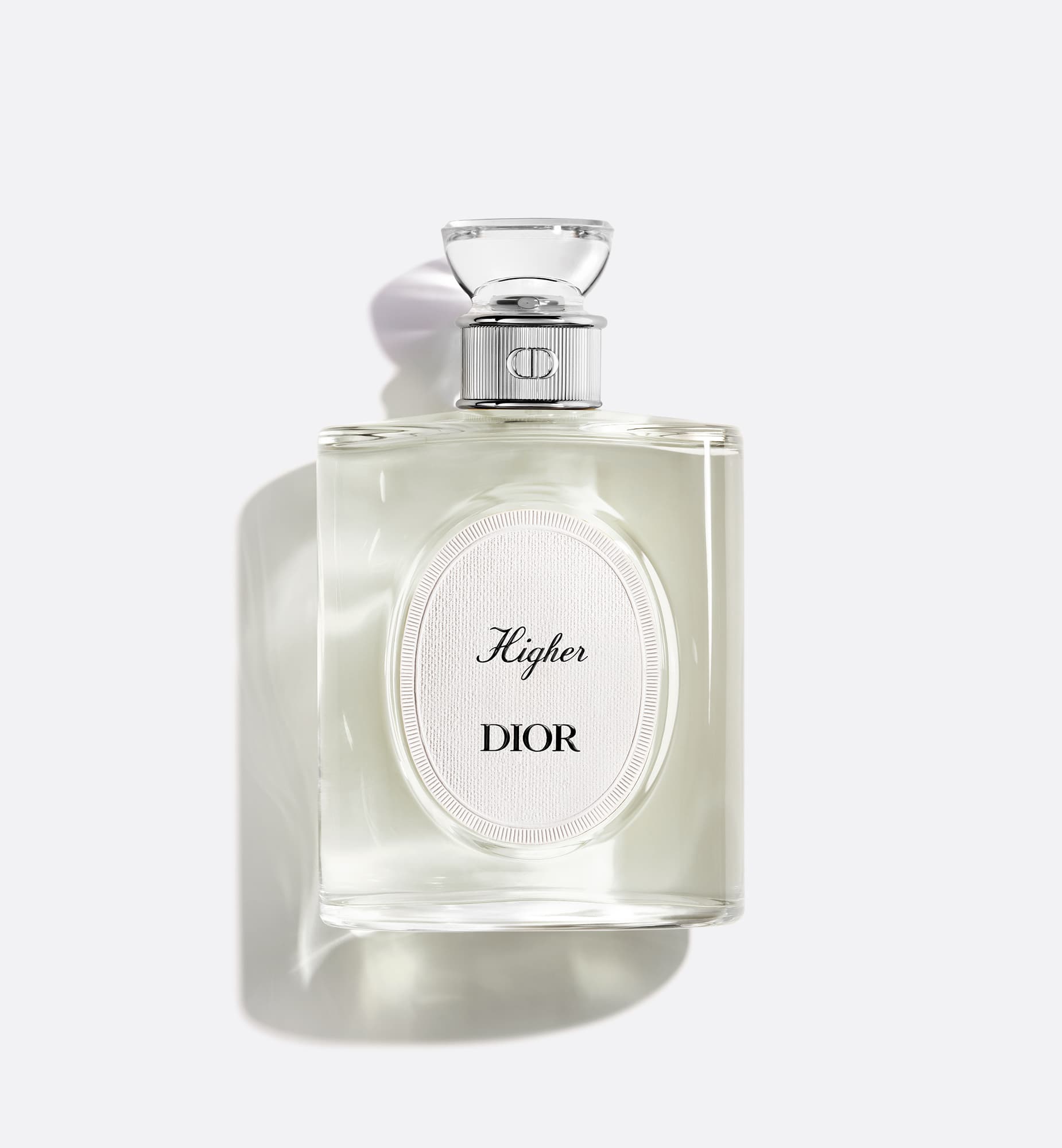 Woody
Woody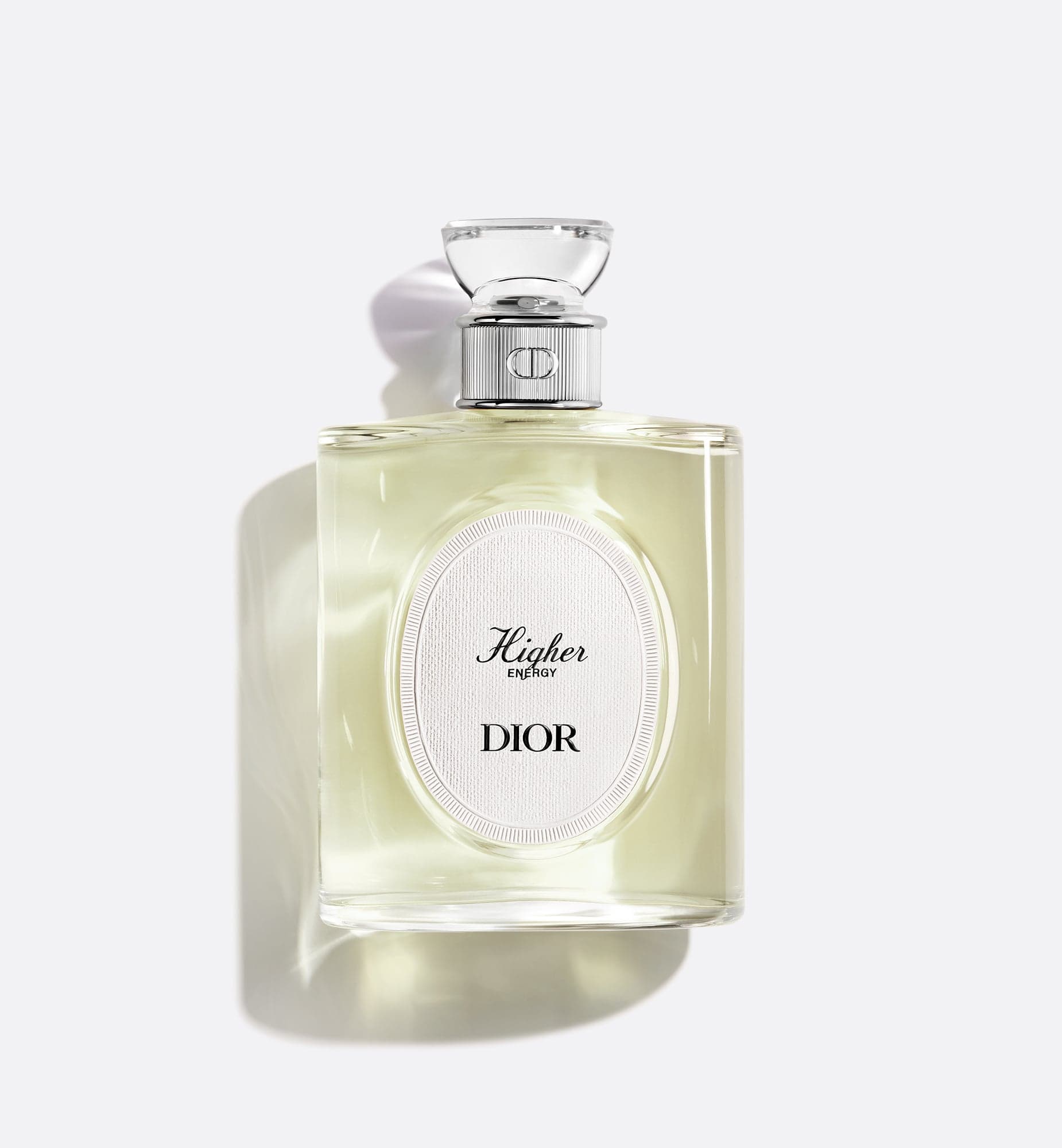 Citrus
Each entry traces the perfume’s history, its composition and the ingredient list of its Dioriginals version.