
Givenchy
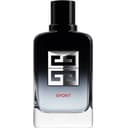
Gentleman Society Sport
Gentleman Society Sport: When four-note minimalism replaces vintage complexity — from the 1974 patchouli-vetiver masterpiece to the simplified 2026 flanker, the story of a line that gradually forgot where it came from
Where to buy
Gentleman 1974-2026: fifty years of simplifications where fifteen notes become four
There is something almost melancholy about spraying Gentleman Society Sport in 2026. Not because of what it is — a perfectly correct woody-fresh fragrance for the office. But because of what it represents: the distance traveled since the original Gentleman of 1974.
That Gentleman, the one Paul Léger created for Hubert de Givenchy, was something else entirely. An unclassifiable olfactory abstraction built around patchouli-vetiver-Russian leather, with civet, oakmoss, honey, cinnamon. Fifteen to twenty notes depending on the source; a fragrance that developed for hours on skin, constantly revealing new facets. Vintage reviewers describe a fragrance that is mature, sophisticated, virile yet civilized. A masterpiece still cited today alongside Tiffany for Men or Chanel Antaeus.
The reformulations changed everything (and not for the better)
Obviously, this 1974 Gentleman no longer really exists. Successive reformulations have gradually eliminated everything that gave it character: natural civet (banned, replaced by synthetics), oakmoss (severely regulated by IFRA), tarry Russian leather (toxicological restrictions). The celebrities who wear Gentleman Society Sport today probably do not even smell the shadow of what their predecessors wore in the 1980s.
Then in 2017, a complete break. Givenchy fully abandoned the vintage DNA for a radical reinvention: pear-lavender-vanilla-iris, sweet and gourmand, aimed at Millennials. A commercial blockbuster that has strictly nothing to do with the original — they only share the name. The success was massive, and the line then entered a cycle of regular flankers. Society arrived in 2023 with its vetiver quartet (Haiti, Uruguay, Madagascar) and its French narcissus. Then Extrême in 2024. Ambrée in 2025. And now Sport.
Sport 2026: four notes to replace fifteen
The pyramid of Society Sport fits in one line: lemon / vetiver-narcissus / cedar. Four notes. That is all. Compared to the fifteen to twenty of the 1974 vintage, or even the eight of the original 2023 Society, this is a radical simplification. But not the sophisticated minimalism of a Terre d'Hermès, where Jean-Claude Ellena builds a cathedral with four masterfully dosed ingredients; rather a commercial simplification aimed at the hurried consumer who wants an easy fragrance.
The word Sport here obviously does not mean it should be worn while playing tennis (nobody wears perfume before sport, let us be serious). It is an established marketing code meaning a lightened-fresh version of an existing fragrance. Acqua di Gio Sport, Polo Sport, Dior Homme Sport... the same logic applies everywhere.
What has disappeared (and what remains)
The most revealing point is perhaps the disappearance of the vetiver quartet that made the original Society interesting. In 2023, Givenchy used four different vetiver origins — Haiti with its smoky-chocolatey facets, a more woody-dry Java, green-lemony Réunion, earthy-mossy Madagascar. This orchestration created a living vetiver that developed over hours. Fascinating for anyone who took the time to truly wear it.
Sport 2026? A single vetiver, with an origin not specified by the house — presumably a more standard sourcing than the 2023 quartet. Givenchy communicates no detail about this material, and this silence feeds skepticism: early feedback describes a result perceived as simpler than that of the original Society.
What remains is the French narcissus. Here, Givenchy holds firm on the terroir storytelling: narcissus harvested in the Alpes-Maritimes, winter bloom, hand harvesting. This is real — French narcissus is indeed present in the formula. It simply needs to be put in its proper place: in a modern composition, an absolute of this type is used in a small proportion, alongside a majority of synthetic materials common in the industry. The house does not detail the exact origin of the lemon nor the precise nature of the woody base — on this last point, the usual synthetic woods (such as Iso E Super) are the most likely hypothesis, as with most of the segment.
For whom, for when?
Sport is worn in spring-summer-fall, mild temperatures, casual occasions. Casual office, weekends, post-gym (hence the name). Expected performance: 4-6 hours with moderate projection. This is a fragrance for the public-professional sphere, discreet, inoffensive, pleasing without displeasing. Exactly what men aged 25-40 looking for a versatile office fragrance they can wear daily are after.
The problem? For €100-120 a bottle, objectively more interesting alternatives exist. Guerlain Vetiver at €70 offers superior sophistication with genuine heritage. Encre Noire Lalique at €40 offers premium Haiti vetiver that Sport does not even dare to use. Terre d'Hermès Eau Très Fraîche plays in the same woody-fresh category with infinitely more elegance.
The paradox of marketing terroir
What raises questions with Society Sport is the tension between the discourse (French raw materials, Grasse narcissus, terroir authenticity) and the economic reality of the formulation. Givenchy heavily insists on the French narcissus throughout its communication — it is the differentiating argument against competitors using anonymous synthetics.
But when the first flanker abandons the vetiver quartet that was the pride of the original Society to return to a more standard vetiver, the message received by enthusiasts is clear: the promise of premium raw material quality held for the launch version, not for its flankers. This is at least how the community read it, and comparisons between versions feed this observation.
Rational from an industrial standpoint, no doubt — simplifying a formula between a launch and its flankers is a widespread practice in the designer segment. The problem is that seasoned reviewers detect it immediately: smells cheaper, less complex, more synthetic — the comments converge.
What remains when nostalgia is removed
Gentleman Society Sport is not a bad fragrance. It is even a perfectly correct fragrance for what it claims to be: a fresh-light-versatile version of Society, wearable daily without overthinking it. The lemon brings transparency, the French narcissus (however minor its share in the formula) creates a nice green-aquatic bridge to the woody base, and the whole holds up correctly through an office day.
The problem is not what it is, but what it could have been. With the sophistication of the original Society's vetiver quartet. With real cedar essential oils rather than synthetic accords. With genuine olfactory ambition rather than a focus-group calibration aimed at pleasing the maximum number of people while displeasing the fewest.
The history that is forgotten
What strikes me most is how far this is from the 1974 Gentleman. Not only in terms of formulation — obviously, fifty years separate the two, regulations have changed, tastes have evolved. But in terms of philosophy. Paul Léger's Gentleman was a fragrance that embraced its complexity, that demanded time to be understood, that rewarded attention. A fragrance for a mature man who attends gallery openings and wears three-piece suits without stiffness.
Society Sport 2026 targets the man who wants to smell good at the office without thinking about it. Two different audiences, two different eras, two different conceptions of perfume. Neither is intrinsically superior — but one can regret that the Gentleman line has completely abandoned what made its original identity to become a proliferating line of interchangeable flankers.
Twelve versions in nine years (2017-2026), a pace of 1.3 flankers per year. That is a lot. And each new release dilutes a little more what Gentleman used to mean. Perhaps in ten years, when Givenchy launches Gentleman Society Sport Intense Elixir Limited Edition, no one will remember that at the start, there was a patchouli-vetiver-leather masterpiece that collectors still fight over on eBay.
Or perhaps this is exactly the natural evolution of a perfume line in the modern industry: a brilliant birth, commercial success, proliferation, gradual dilution of identity, then eventually a heritage relaunch in twenty years once nostalgia has done its work. The eternal cycle.
Olfactory pyramid
What the community says
Season
Occasion
Create an account to keep your votes and find your notebook.
The advertising
Steel, light and speed
Pierre Gasly, surrounded by his team in a set of steel and light, for a film by Yvan Fabing airing from March 2026.
Pierre Gasly, Formula 1 driver, fronts the campaign in a clean, graphic set made of steel, light and speed, surrounded by his team to embody the spirit of the collective: Givenchy presents him as the new face of the Gentleman fragrances. He had already been named global ambassador of the Gentleman line in 2025, as the first Formula 1 driver to become a global face for a perfume house.
The film is directed by Yvan Fabing, for a campaign designed by Exhibition, with the track Territory by The Blaze as the soundtrack. The rollout covers television, digital and social media, for a first airing in March 2026. The agency Simo Squad led the entire launch, in coordination with The Grid Agency.