
Cacharel
Eden
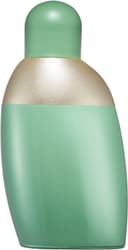
Composed by Jean Guichard, Eden was released by Cacharel in 1994. Twenty-three attested raw materials coexist in it, from bergamot to tonka bean, from water lily to patchouli, and this abundance is as much the subject of the fragrance as its reproach. The aquatic effect owes less to water flowers than to Calone, a synthetic material emblematic of the 1990s. Its veined jade opaline bottle never repeats itself quite exactly.
Where to buy
Eden was released in 1994. Cacharel had already launched Anaïs Anaïs and Loulou, and in the early 1990s was looking for a way to sustain interest without leaving the white floral territory that had built its reputation. Jean Guichard composed the juice.
Cacharel, a third act
The house responded on two fronts. The television advertisement showed nude adolescents in nature, with a media launch of considerable scale, and critics regard it as one of the last campaigns of that magnitude for a fragrance.
The juice remained floral, but changed in nature. To the house's white flowers, tuberose and orange blossom already present in Loulou, Guichard added damp greenery and a water accord meant to evoke a primal nature.
The gamble of excess
Twenty-three raw materials are found in the bottle, from citrus to anisic tarragon, from water flowers to heady white flowers, from a woody structure to vanilla and musk. Eden gives up none of its registers.
The timeline partly explains this refusal. The perfumery of the preceding decade piled up raw materials, while the one opening up sought purity and water. Eden does not choose, and this hesitation still fuels most of the judgments passed on it today.
Posterity has given it a place its reception did not foreshadow. Critics see it as the precursor of the green, acidic compositions that have come back into fashion since, at Marc Jacobs or Mugler, presented at their release as novelties.
An opaline bottle never identical
The bottle breaks with the codes of the shelf. A round green opaline pebble, asymmetrically cut, without screen printing, closed with a gold-ball cap. The material imitates polished jade more than perfumery glass.
The house claims a process that veins each piece differently: neither the shape nor the color repeats from one example to another. The claim comes from Cacharel, and no independent source consulted disputes or measures it.
The bottle's creator is named by none of the sources gathered, neither the brand nor the collectors' directories that nonetheless describe the piece in detail. The name is therefore missing here, rather than a convenient attribution.
What Eden retains of its reputation
More than thirty years on, Eden remains sold and remains discussed. Its longevity is considered formidable, its sillage overwhelming, and its identity immediately recognizable, which accounts for both its loyal following and its rejections.
A flanker, Eau d'Eden, appeared two years later, again by Jean Guichard. It took a different path, fruitier and clearer, and did not have its predecessor's contested posterity.
Cacharel belongs to the L'Oréal group, which produces and distributes its fragrances. Eden still appears in the brand's catalog alongside Anaïs Anaïs, Noa and Amor Amor, making it one of its oldest lines still sold.
Olfactory pyramid
- Top notesThe first minutes
- Heart notesThe heart of the perfume
- Base notesWhat lingers
What the community says
Create an account to keep your votes and find your notebook.