
Cacharel
Loulou
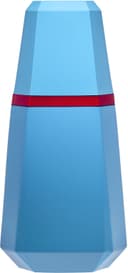
Cacharel's second perfume, Loulou was born in 1987 under the hand of Jean Guichard, nine years after Anaïs Anaïs, whose opposite it takes. Vanilla serves as its foundation, surrounded by sun-kissed, powdery flowers contradicted by a bitter greenness of blackcurrant and tagetes. The juice has divided opinion since its release. Its blue and red bottle, signed by Annegret Beier, borrows its colors from a Matisse odalisque wearing scarlet trousers.
Where to buy
Loulou appeared in 1987. Cacharel had launched only one perfume until then, Anaïs Anaïs, nine years earlier, and the market had hardened. The house gave it a younger sibling, built around two words that Jean Guichard received as a brief: tenderness and seduction.
Anaïs Anaïs's younger sibling
The gap between the two was intentional. Anaïs Anaïs portrayed the demure, romantic young girl; Loulou aims at the femme fatale, provocative and unpredictable. Critics of the time saw in it a perfume of paradoxes, in the image of an exacerbated femininity.
The house found its figure in Louise Brooks, an American actress of the 1920s. Sources disagree on the film: some name Lulu, others Pandora's Box, and none of those gathered settle between the two titles.
Starting from vanilla
Guichard started from vanilla, and he explained why: he was seeking a sensuality that would smell of skin, drawing on the French idea that a young girl's skin recalls caramel.
Around the vanilla sit the sun-kissed flowers, jasmine, ylang-ylang and tiare flower, and the powdery materials that are heliotrope, mimosa and iris. A green accord of blackcurrant, tagetes and mandarin contradicts them from the opening.
Critics place Loulou in the lineage of Poison, released shortly before, in a gentler register: vanilla replaces honey and spices, but the idea of forbidden fruit and unrestrained femininity remains intact.
Annegret Beier's bottle
The bottle bears a signature: Annegret Beier. An octagonal prism with straight edges, narrowing toward the top, in opaque blue and red. Few bottles of the 1980s departed so far from the expected shapes on the shelf.
The colors come from a Matisse painting, an odalisque whose red trousers stand out against a blue background. The exact title and year of the painting are missing from every description consulted, and are therefore not given here.
An earlier version of the bottle existed, closer to a genie's lamp: a blue octagonal base with a spiked red tip. Confusing it with the current bottle is common, as both have circulated under this label.
What Loulou has become
Loulou ranks among the great commercial successes of its decade, and it still divides opinion. Reviews split between long-standing devotion and immediate rejection, with little indifference in between.
Its legacy can be read in other houses. Enthusiasts liken Alien by Mugler to a Loulou lightened of its sugar, and detect in both a woody, musky material that is never forgotten once recognized.
A claim circulates that nothing supports: that worldwide success supposedly spared the United States, where the juice was said to have been seen as too bold. None of the seven sources gathered carries it.
Olfactory pyramid
- Top notesThe first minutes
- Heart notesThe heart of the perfume
- Base notesWhat lingers
Share your impressions
Create an account to keep your votes and find your notebook.