
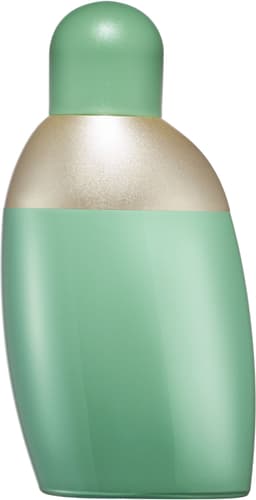
Composed by Jean Guichard, Eden was released by Cacharel in 1994. Twenty-three attested raw materials coexist in it, from bergamot to tonka bean, from water lily to patchouli, and this abundance is as much the subject of the fragrance as its reproach. The aquatic effect owes less to water flowers than to Calone, a synthetic material emblematic of the 1990s. Its veined jade opaline bottle never repeats itself quite exactly.
Eden divides more than it unites. Twenty-three raw materials, a formidable longevity and a fully assumed artificiality make it a fragrance that is identified instantly, rarely liked by halves, and never worn absentmindedly.
Olfastory’s review
Eden belongs to that category of fragrances not worn by chance. The judgments gathered are split almost evenly between lasting attachment and outright rejection, and the two camps often describe identical sensations.
A fragrance that does not choose
The main reproach can be summed up in one sentence: Eden wants to be too many things at once. White flowers, greenery, watery fruits and a sweet woody base all compete for space, with no register prevailing.
This abundance produces a specific effect. Tuberose, a heady material, collides with greenery that critics find unnatural, and the accord meant to evoke a garden reads to many as a cardboard set.
Not everyone holds this against it. Luca Turin gives it four stars and places it among the sweet greens, describing it as wet cashmere, a phrase that does justice to its strangeness without condemning it.
What its detractors hold against it
Longevity tops the list of grievances. Several accounts speak of a longevity that lasts beyond the day and a sillage that fills an entire room, to the point of making the fragrance difficult to wear at the office.
The opening concentrates the rest. It is described as sweet and artificial, closer to confectionery or warm plastic than to a garden, and it asks those who tolerate it poorly to wait several hours.
What its loyal wearers find in it
Its supporters agree on one point: Eden has a signature. It is recognized in a second, resembles no recent release, and this singularity, in their eyes, outweighs its imbalances.
The attachment is often a matter of memory. Several accounts link Eden to a specific period, adolescence or a first job, and describe an opulence they consider now gone from recent batches.
A third recurring reason is the aquatic sensation. Those who like it describe a warm, vegetal, almost stagnant water, and consider this strangeness the fragrance's true subject rather than a flaw.
Should you wear it today
Eden suits those seeking a fragrance dated in the good sense of the word, with a strong identity and no concern for discretion. It suits neither shared spaces nor those who expect a floral to remain restrained.
Testing on skin is non-negotiable. The reported longevity makes a mistake costly, and the opening does not predict what follows: several accounts report changing their mind after a few hours, in one direction or the other.
One reservation of honesty remains. Sources document the current formula poorly, and the comparison between older and newer bottles rests on unverifiable impressions. Anyone seeking the Eden of the 1990s has no guarantee of finding it.