
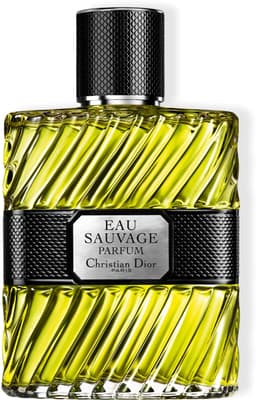
Eau Sauvage Parfum is a flanker of Eau Sauvage launched by Dior in 2012 and composed by François Demachy. It retains the structure of the 1966 original — bergamot, lavender, hedione — but shifts the balance toward the woody base, where vetiver, patchouli and oakmoss take up more space, making it a darker juice than the eau de toilette it derives from. It should not be confused with Sauvage, released in 2015, which belongs to a different line.
Eau Sauvage Parfum was released in 2012. François Demachy signs its composition, a flanker of Eau Sauvage, the first masculine perfume by Dior, created by Edmond Roudnitska in 1966. The distinction matters: unlike Sauvage, released in 2015 and belonging to a different line, this is truly a variation on the original formula.
A flanker among several
Dior had already reworked Eau Sauvage on several occasions, with Eau Sauvage Fraîcheur Cuir in 2007 and Eau Sauvage Extrême in 2010. The 2012 parfum version goes further than these attempts by shifting the balance of the composition rather than modifying it in touches.
The shift toward the woody base
The original framework remains recognizable: bergamot at the opening, now accompanied by citron and petitgrain, lavender in the aromatic part, and hedione, which gave Eau Sauvage its jasmine-like clarity. What changes is as much the added material as the proportions. Myrrh enters the line: resinous and slightly smoky, it dominates the first few minutes and weighs on the base, alongside vetiver, patchouli and oakmoss. The lower part of the composition thus takes precedence over the citrus freshness, and the juice becomes darker and denser than the eau de toilette it derives from.
This choice explains the mixed reception of this version. Those who expected the transparency of the original find a perfume of a different character, while others see it as the logical continuation of a composition that Roudnitska had deliberately left clear.
Hedione, a thread stretched between 1966 and 2012
Hedione deserves a mention, as it provides continuity between the two versions. This synthetic molecule, developed at Firmenich from Edouard Demole's work on the components of jasmine, made Eau Sauvage a turning point in 1966: it brings air to a composition and lets the materials interact without weighing them down. It remains present in 2012, in a whole that simply puts it less to the fore.
The perfumer who touched the founding perfume
François Demachy was born in Cannes and grew up in Grasse, where his father ran a pharmacy. He trained at the Charabot perfumery school before joining Chanel, where he led research and development. He joined Dior in 2006 and remained the house's in-house perfumer-creator until 2021, the year Francis Kurkdjian took over the position.
Reworking Eau Sauvage meant touching the founding perfume of Dior's masculine line, which sheds light on the caution of the exercise: the 2012 version retains the 1966 structure rather than remaking it.