
Christian Dior
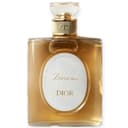
Diorama
Diorama is the second fragrance of the house of Dior. Edmond Roudnitska composed it in 1949, a fruity chypre built on the Prunol base he was fond of. The house reissued it in 2010 under Les Créations de Monsieur Dior, in a version it attributes to François Demachy: ylang-ylang and bergamot at the opening, jasmine and fruit at the centre, patchouli and cedar at the base.
- Brand
- Christian Dior
- Launch year
- 1949
- Perfumer
- Gender
- Women
- Olfactory family
- Floral
- Concentration
- Eau de Toilette
Where to buy
Diorama entered the catalogue in 1949, the second fragrance of the house after Miss Dior. Edmond Roudnitska composed it, and Dior wanted it on the scale of Parisian haute couture, with the elegance and sophistication dear to the couturier.
A fragrance like no other
The house reports a wish of Christian Dior's: a fragrance like no other. It describes an accord of flowers and spices from which, it says, the whole originality of the juice comes.
The name comes from a dress in the haute couture collection. Roudnitska signed there his first creation for Dior, at the start of a collaboration that would give Eau Fraîche, Diorissimo, Eau Sauvage and Diorella.
The 2010 reissue
Dior gathered its classics under Les Créations de Monsieur Dior. Elena Vosnaki notes the irony of the title: the couturier died in 1957, before several of these fragrances were conceived.
The house now attributes the juice to François Demachy, its perfumer-creator, who takes up the original theme in a haute couture fragrance enriched with materials of the highest quality. Vosnaki reads in that change of signature the admission of a modified formula.
Distribution changed with the reissue. Until then reserved to avenue Montaigne, Diorama reached selected counters in 2010, Saks in the United States, Harrods and Fortnum & Mason in London.
What changes on 1 October 2026
Diorama opens the list of the thirteen fragrances Francis Kurkdjian is restoring under the name Dioriginals, after four years of work, to recover the original formula where regulations and raw materials had eroded it.
Kurkdjian says he focused his effort on the quality of the jasmine, which he wanted to heighten, restoring the original shine and scent of a composition he holds to be masterful.
The thirteen receive the Ovale bottle: clear glass, a hemisphere-shaped stopper, a white cord tied at the neck. Serge Heftler-Louiche, co-founder and first director of Parfums Christian Dior, had designed it in 1948.
Olfactory pyramid
Share your impressions
Create an account to keep your votes and find your notebook.