
Fahrenheit by Christian Dior. Originally, the word perfume comes from the Latin per fumum, which literally means through smoke. In this sense, it was a means of communicating with the gods from earth via scents. Perfume thus embodies on its own all the elements of our planet, whether earth, water, or air.
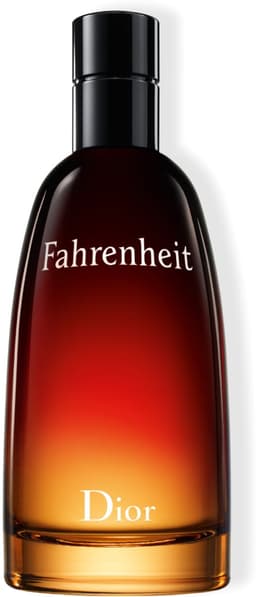
A bottle with fluid lines whose red gradient was born, according to Dior, from a cooling flaw in the glass at Saint-Gobain.
Dior describes a bottle with fluid, streamlined lines. The Fragrance Foundation France traces its contours to a Brancusi inspiration and attributes the color gradient to a Pop Art painter — the text reads Jacques Rosenquist, whereas the first name given by dior.com is James.
The coloring stems, according to Dior, from an unintentional industrial innovation: a cooling flaw in the glass in the furnaces of the Saint-Gobain glassworks is the origin of the gradient. The house adds that this color born of chance was unanimously chosen and led to the creation of a dedicated furnace to reproduce this particular cooling process. The trade press presents Saint-Gobain Desjonquières, in the Bresle valley, as the first glassmaker to work red gradient glass as early as 1987, specifically for Fahrenheit.
Fragrantica reports a similar but distinct version: a malfunction in temperature control at the Saint-Gobain Desjonquières plant allegedly produced bottles intended to be amber orange with a luminous gradient; the same source states that the current bottles, after a redesign, feature a more contrasted gradient running from yellow to red to almost black.
The flankers reuse the shape. Fahrenheit Le Parfum, in 2014, features it in iridescent glass shifting from inky black to crimson then to yellow, in a 75 ml size. Fahrenheit Cologne, in 2016, keeps the gradient but replaces the red incandescence with a bluish gray, the bottle capturing a liquid clarity between two glowing layers.