
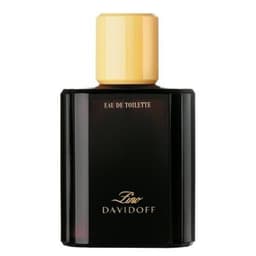
Davidoff's second perfume, Zino was released in 1986 and bears the first name of the Geneva cigar merchant who gave the house its name. Michel Almairac and Pierre Bourdon lay a bouquet of lavender and clary sage over a base of patchouli, sandalwood and vanilla, in which critics have recognized the smell of a cigar box.
The list of twelve
Sources converge on twelve raw materials: Brazilian rosewood, lavender, clary sage and bergamot in the top notes; rose, geranium, jasmine and lily of the valley for the heart; patchouli, sandalwood, vanilla and cedar in the base.
This is the list repeated by retailers and directories, unchanged for years. It does not tell the whole story: critics have named others, which no brand description confirms.
A fougère opening
Bergamot and lavender open on the most well-trodden ground of 1980s masculines. Clary sage pulls toward green and sweat, rosewood toward a woody, rosy warmth that softens the whole.
Nothing original at this stage, and it is intentional: the opening is a diversion. The perfume presents itself as a fougère before showing something else, and this false lead is what critics find cleverest about it.
A floral heart in a masculine
Rose, geranium, jasmine and lily of the valley: four flowers in a men's perfume, which was far from obvious in 1986. Geranium provides the link, with its green, peppery facet that pulls rose toward the masculine side.
Lily of the valley, for its part, comes from no flower: the raw material cannot be extracted and is reconstructed in the laboratory. The bottle's label keeps a trace of it, under a name no one reads.
The base, and what critics hear in it
Patchouli, sandalwood, cedar and vanilla make up a broad, sweet base, more amber than woody. This is where the impression of density comes from, and the longevity that wearers credit to the perfume.
Jeanne Doré also detects cistus and costus, two raw materials absent from the usual lists. No brand description mentions them: these are two raw materials perceived on skin, not two declared raw materials.
The regulatory list
The label declares limonene, linalool, coumarin, citronellol, hydroxycitronellal, citral and geraniol. Coumarin signs the fougère, hydroxycitronellal the lily of the valley, citronellol and geraniol the rose and geranium.
Nothing there betrays the patchouli or the sandalwood, which carry no allergen to declare. The list thus tells half the perfume, the regulated half, and leaves the rest to the nose.