
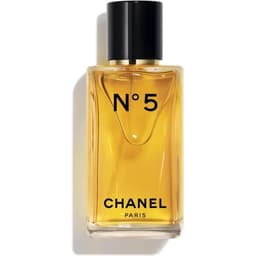
Launched by Gabrielle Chanel in 1924, N°5 eau de toilette is a warm, lively version of the fragrance Ernest Beaux created in 1921. Ylang-ylang and neroli, heightened by aldehydes, open onto a base of vanilla, vetiver, and sandalwood. In 2026, Chanel reissued it in a rectangular bottle inspired by the one from 1924.
Chanel describes N°5 eau de toilette as the fullness of a great floral accord. The top, dominated by ylang-ylang and neroli, is heightened by aldehydes; the alchemy of vanilla, vetiver, and sandalwood gives it a vibrant, warm base.
The notes are arranged here as follows: ylang-ylang, neroli, and aldehydes in the top; vanilla, vetiver, and sandalwood in the base. Chanel details no heart tier for the eau de toilette, whose woody facet it emphasizes.
An abstract floral
For Olivier Polge, the essence of N°5 lies in a bouquet of flowers none of which is truly identifiable: that is what makes it abstract. Aldehydes, molecules that enhance natural ingredients, made it in his view an incredibly modern fragrance as early as 1921.
What stays out
Rose and jasmine, often associated with N°5, do not appear in Chanel’s description of the eau de toilette. They stay out of the classification, as do the iris, lily of the valley, and musk sometimes attributed to it.
Similar perfumes
Similar notes and family, from other houses.
- ArpègeLanvin
- NocturnesCaron
- Infusion YlangPrada
- Eau d'IvoireBalmain
- See By ChloéChloé
- Joy Eau de ParfumJean Patou
- Angel ElixirThierry Mugler
- AmazoneHermès