
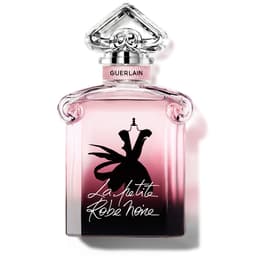
Launched worldwide in 2012, La Petite Robe Noire was not born that year. Delphine Jelk had composed it in 2009 for Guerlain boutiques only, at a time when she did not yet work for the house. Thierry Wasser reworked the formula before its wide release. Built around an accord of black cherry, almond and licorice laid over a rose, the eau de parfum brought the gourmand into Guerlain, and divided critics from its release.
La Petite Robe Noire has done something rare: considerable volumes and a cold reception among enthusiasts. The praise and the criticism often bear on the same thing, a sweetness that Guerlain had never embraced to this degree.
Olfastory’s review
The general public on one side, enthusiasts on the other
Volumes have been considerable since 2012, and Guerlain does not hide it. Enthusiasts attentive to the house have nonetheless given it a much colder reception, and the two observations have coexisted ever since.
The gap comes down to the expectations placed on this house. Those who come looking for an effective fruity gourmand find it. Those who come looking for a Guerlain in the sense of Shalimar or L'Heure Bleue do not find it.
The criticisms, and where they come from
Auparfum, in 2012, describes a shift toward a fruity-patchouli aesthetic very widespread at the time, and considers that the widely distributed version lost some of the singular charm of the boutique exclusive.
In the comment thread beneath the article, several readers go further. They find it overly sweet, with a short development, and the sense of a well-made fragrance that is far from what they love about Guerlain.
One criticism recurs more than any other: the name. As early as 2009, the magazine noted that it sounded more like a title from Chanel than one from Guerlain, and the objection has never disappeared.
What is credited to it
The cherry wins unanimous approval, even among those who dislike the fragrance. Auparfum judges it juicy and pulpy enough to avoid the disaster that the announcement of a fruity gourmand at Guerlain seemed to threaten.
The campaign, meanwhile, is praised without reservation, even by those who tear the fragrance apart. The drawn silhouette, Nancy Sinatra's music and the refusal of a face of the campaign have been recognized as remarkably well executed.
One merit remains beyond dispute: the fragrance opened up territory previously foreign to Guerlain's repertoire, and it did so with a formula composed outside its walls by an unknown perfumer.
Who it suits, and what remains unknown
It is aimed at those who want a bold, tenacious fruity sweetness, not those who want restraint. Its cherry and almond make it identifiable within a second, which becomes an asset or a flaw depending on the use.
Two things escape any verification. No reliable sales figures circulate, despite the rankings displayed here and there. And no reformulation after 2012 can be dated with certainty.