
Divine Couture
Jean Paul Gaultier celebrates Parisian gourmand indulgence. For nearly five decades, Jean Paul Gaultier has embodied that irreverent Parisian spirit that dares to blur codes, transgress conventions, and celebrate bodies in all their diversity. From the iconic corset worn by Madonna during the Blonde Ambition Tour in 1990 to the provocative runway shows of the 1980s, the couturier has continuously proclaimed that beauty has no standard, that seduction speaks in the plural, that fashion must shock as much as it sublimates. With Divine Couture, launched in early 2026, Jean Paul Gaultier translates this philosophy into the olfactory register and composes a gourmand manifesto as minimalist in its construction as it is maximalist in its intention.
- Brand
- Jean Paul Gaultier
- Launch year
- 2026
- Perfumer
- Gender
- Women
- Olfactory family
- Floral
- Concentration
- Eau de Parfum
Where to buy
Unlike fragrant compositions that multiply notes to create complexity, Divine Couture takes the bold gamble of radical simplicity. Three raw materials alone—raspberry, meringue, benzoin—are enough for Quentin Bisch to paint the olfactory portrait of a Parisian femininity that embraces its contradictions: at once sophisticated and gourmand, elegant and playful, classic and contemporary. This apparent simplicity is in fact a feat of olfactory high-wire artistry, where each ingredient must carry several statements at once, where the balance between sweetness and character is achieved through precise dosing rather than the stacking of facets.
The Divine saga: from sea breeze to Parisian pastry
To understand Divine Couture, one must first revisit the genesis of the Divine line, launched in 2023. With Gaultier Divine, Quentin Bisch proposed a bold composition that paired white floral notes, airy meringue and a salty marine accord thanks to Calypsone—this exclusive Givaudan molecule that smells of ocean breeze tinged with watermelon. The fragrance divided opinion: some found it refreshingly original, others denounced a salinity that, depending on the skin, evoked natural iodine or beaten egg white. Polarizing, certainly, but memorable.
In 2024, Gaultier Divine Le Parfum intensified the original formula with sun-kissed frangipani notes, a radiant lily and an amber-benzoin base that warmed the whole composition. The marine salinity persisted but was wrapped in a golden sensuality that won over a wider audience. Then in 2025, Gaultier Divine Elixir pushed the concentration even further with a heady tuberose, a creamy vanilla and a salty-caramel accord that transformed the initial sea breeze into something more gourmand, more addictive, warmer.
With Divine Couture in 2026, Jean Paul Gaultier and Quentin Bisch make a radical creative turn. Gone are the marine notes that characterized the first three installments, gone the floral complexity, gone even the salty accord that was the—sometimes controversial—signature of the line. Divine Couture abandons the ocean for the pastry shop, trades the beach for the tea salon, forsakes sea spray for sweet indulgences. This change of direction might disappoint fans of the original marine salinity, but above all it reflects a determination not to confine Divine to a single formula, and to let each creation explore different facets of that feminine divinity celebrated by the house. This minimalist composition reveals all the sophistication of a Parisian gourmand character that never sacrifices elegance on the altar of sugar.
Gourmand triptych: anatomy of a composition in three acts
The olfactory pyramid of Divine Couture defies the conventions of modern perfumery, where one generally expects a minimum of ten notes to create depth and development. Here, Quentin Bisch takes the opposite gamble: three strategically chosen ingredients, worked at varying concentrations to create the illusion of richness out of simplicity. This minimalist approach is reminiscent of the philosophy of Jean-Claude Ellena at Hermès, who composed his Un Jardin fragrances with remarkable economy of means, or that of Alberto Morillas, who sometimes signs limpid compositions built on a few solidly established pillars.
First movement: the fruity attack of raspberry
From the very first spray, Divine Couture opens on a radiant raspberry that is neither timid nor conventional. But note: this is not the juicy, realistic raspberry one would pick straight from the garden. It belongs instead to the register of stewed, candied, almost crystallized raspberry—the raspberry found in fine pastries, Parisian macarons, red fruit tartlets in the shop windows along Rue de Rivoli. Its natural acidity has been tamed, softened by sugar, turned into something rounder, more approachable, more immediately appealing.
Quentin Bisch likely worked with synthetic molecules rather than natural raspberry absolute—an extremely rare and costly raw material obtained by extraction from fresh fruit. Synthetic molecules such as raspberry ketone or alpha-ionone can recreate the characteristic scent of raspberry while amplifying certain facets: the almost floral-rosy quality the fruit naturally possesses, its powdery sweetness that vaguely evokes violet, its velvety texture that seems lined with that distinctive down.
This opening raspberry is not merely fruity: it already carries an assumed gourmand dimension that foreshadows what follows. It brings to mind less a countryside harvest than a Parisian afternoon treat, less a grandmother's garden than a Pierre Hermé shop window. This raspberry wears invisible high heels; it has traded its country clothes for a little black dress. It remains recognizable, authentic in its fruity identity, but it has become sophisticated, urbanized, Parisianized.
Second movement: the airy cloud of meringue
As the raspberry fades—and it does so rather quickly, as do all red fruit notes with significant volatility—Divine Couture reveals its meringue heart. This ingredient, a particular favorite of Quentin Bisch's—already found in previous Divine installments—creates that very particular olfactory texture: airy, vaporous, almost dematerialized, yet undeniably sweet.
But what is meringue in perfumery? Unlike rose or jasmine, meringue does not exist naturally in the plant world in a form that could be distilled or extracted. It is a constructed accord—a combination of synthetic molecules seeking to recreate the olfactory impression of this culinary preparation made from whipped egg whites and cooked sugar. Perfumers likely work with white musks to create that impression of cottony softness, vanillin or ethyl maltol to bring sweet softness, perhaps a touch of heliotropin for the powdery-almond nuance characteristic of well-baked meringues.
The result? An olfactory sensation of almost tactile lightness, as if one were breathing in a cloud of powdered sugar, as if the air itself were turning into pastry. This meringue fortunately does not carry the syrupy heaviness one might fear: it remains airy, almost ethereal, evoking foam rather than cream, breath rather than mass. It creates, within Divine Couture, that impression of enveloping sweetness without ever tipping into the cloying—a remarkable balancing act given how quickly overly sweet accords can saturate the olfactory receptors.
This meringue engages in a fascinating dialogue with the lingering raspberry: together, they evoke Franco-Russian pastries such as pavlova topped with red fruits, or vacherin desserts where crisp meringue envelops raspberry ice cream. This same association appears in Parisian macarons—another emblem of contemporary French pastry-making—where the crisp meringue shell protects a fruity ganache heart. Divine Couture does not literally copy these culinary references but captures their spirit, their taste memory, that synesthesia whereby smelling the fragrance almost feels like tasting these sweet indulgences.
Third movement: the balsamic warmth of benzoin
It is in the background that Divine Couture reveals its most sophisticated dimension, the one that keeps the composition from being relegated to the teenage-fragrance shelf despite its fruity-sweet gourmand character. Benzoin—this aromatic resin extracted from styrax—brings the depth and warmth needed to anchor the almost volatile lightness of the raspberry-meringue accord. Without it, Divine Couture would evaporate within a few hours, leaving only an ethereal memory. With it, the fragrance gains weight, presence, the ability to persist on skin well beyond what one would expect from such a pared-down composition.
Benzoin has a complex scent that combines several seemingly contradictory facets. First, there is a vanilla-caramel sweetness that creates a natural continuity with the meringue in the heart. The two raw materials blend into one another seamlessly, with benzoin extending and enriching the sweet accord by adding a deeper, more baked, almost candied dimension. This caramelized facet evokes sugar beginning to brown in the pan, that stage just before caramel turns bitter, where it develops its richest aromas.
But benzoin is not only sweetness: it also carries a slightly spicy, almost incense-like dimension that introduces a discreet form of spirituality into the composition. This balsamic facet recalls church incense, the precious resins burned during ceremonies, those sacred scents rising in wisps of smoke. In Divine Couture, this dimension remains subtle—there is no lapse into the heavy, intoxicating oriental register—but it is enough to create an almost meditative depth that contrasts with the apparent frivolity of the fruity opening.
Finally, benzoin brings an almost velvety, powdery texture that wraps the skin like a cashmere shawl. This tactile quality turns Divine Couture into a cocoon of a fragrance, a comforting scent worn the way one would slip on a soft sweater on a rainy Sunday. Benzoin has that rare ability to create a sense of olfactory warmth—not the spicy heat of pepper or ginger, but a gentle, enveloping, reassuring warmth, like a cup of hot chocolate or a fireplace.
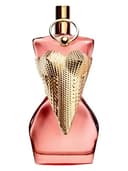
The corset dons powdery pink: a bottle between tradition and novelty
It is impossible to discuss a Jean Paul Gaultier fragrance without dwelling at length on its bottle, so much has the house turned its containers into true sculptural works, instantly recognizable. From Classique in 1993, with its corseted female bust that caused a delightful scandal, to Le Male and its muscular male torso in a tattooed sailor top, Jean Paul Gaultier has always treated the bottle as a narrative element in its own right, not as a mere functional container.
For the Divine line launched in 2023, the house created a new silhouette that draws on its heritage while offering something different. The bottle revisits the corseted bust concept that made Classique famous, but with a more pared-down, more contemporary, almost minimalist treatment. The curves are still there—shapely hips, defined waist, suggested bust—but rendered with an economy of detail that evokes Greek statuary more than a Victorian corset laden with lace.
What sets Divine Couture apart from its predecessors in the range is its color treatment. Where Gaultier Divine played on radiant gold and transparency, where Divine Le Parfum intensified that gold to an incandescent glow, where Divine Elixir offered a subtle gradient from golden to pink, Divine Couture fully embraces a powdery pink shade that covers the entire bottle. This pink is neither the garish fuchsia of preteen fragrances nor the candy pink of overly sweet scents: it is a sophisticated, almost nude pink, evoking slightly flushed skin, raw silk, the rice powder of antique compacts.
The choice of this color is, of course, not incidental. Powdery pink has a long history in the world of fashion and perfumery. It is the color of the 1930s and their Art Deco elegance, that of Parisian boudoirs where elegant women perfumed themselves before the ball, that of couture houses that dressed duchesses and actresses. It is also a color deeply associated with French pastry: the natural color of meringue lightly tinted with raspberry, that of Pierre Hermé macarons, that of sugar-coated almonds. By choosing this powdery pink, Jean Paul Gaultier visually builds the bridge between the world of couture and the world of gourmand indulgence, between the fashion runway and the Parisian tea salon.
The corset structuring the bust remains gold—faithful to the Divine visual identity—but in a more discreet, almost matte version, evoking rose gold rather than bright yellow gold. This gilded restraint allows the powdery pink of the glass to truly shine, without being overwhelmed by too dominant a metal. The corset's ribs trace vertical lines across the bottle that sculpt the silhouette, creating a play of light and shadow that gives depth to the whole.
The cap revisits the iconic shape—almost a precious jewel—topped with the JPG emblem. Unlike certain versions in the range where the cap can seem disproportionate, here the balance is perfect: the gold cap crowns the pink bottle without overwhelming it, creating that visual harmony that makes one want to leave the bottle on the dressing table as a decorative object rather than tuck it away in a cabinet.
The gourmand Parisienne: who is this couture confection for?
Divine Couture paints the olfactory portrait of a Parisian femininity that embraces, without complex, her love of fine pastries while maintaining an elegance that never falters. This woman is neither the rushed working girl snacking on a chocolate bar between two meetings, nor the stiff, buttoned-up woman who would never touch a dessert for fear of gaining an ounce. She embodies instead that modern Parisienne who knows that true luxury sometimes lies in simple pleasures—a good pastry savored slowly in a cozy tea salon rather than a starred dinner gulped down while checking a phone.
One readily imagines her working in creative fields—art direction, fashion, design, luxury communications—professions that value good taste as much as efficiency, that allow jeans to be paired with a structured blazer, that permit fantasy within an overall sophisticated framework. She might collect discreet addresses—that Japanese pastry chef tucked away in Le Marais who makes raspberry-shiso éclairs, that bakery in the 10th arrondissement selling meringues made according to a 19th-century recipe…
Unlike overtly sexy fragrances that promise instant seduction, Divine Couture plays a softer, more approachable, more reassuring register. It is a fragrance that seduces through gourmand indulgence rather than mystery, that attracts through sweetness rather than intensity. The kind of fragrance worn first to please oneself, before pleasing others. The kind of scent one chooses on mornings when olfactory comfort is needed, when the sweet embrace of benzoin and meringue acts like a fragrant caress on a day that promises to be difficult.
Divine Couture is particularly well suited to cool seasons and temperate climates. Its fruity-sweet gourmand character blossoms fully when temperatures drop and the body calls for cocooning fragrances that warm and comfort. Fall and winter become its preferred playgrounds: misty October mornings when cashmere sweaters come back out, rainy November afternoons spent taking refuge in a café, December evenings when the city sparkles with lights…
In summer heat, however, Divine Couture could seem too rich, too sweet, almost stifling. The meringue and benzoin that bring comfort in cool weather potentially become heavy as the thermometer rises. It is better, then, to turn to earlier installments of the Divine line with their refreshing marine facets, or to reserve Divine Couture for air-conditioned summer evenings.
The sillage of Divine Couture remains moderate—far from the projection bombs that saturate an elevator. Within a radius of 50 centimeters, the fragrance will be perceptible, creating that gourmand bubble that intrigues without overwhelming. At the office, it will not bother colleagues sensitive to heady scents. In the evening, it will not compete with other fragrances but will quietly assert its sweet-fruity presence.
Longevity ranges between 5 and 7 hours on normal skin—an honest performance for an Eau de Parfum of this apparent lightness. The benzoin in the base ensures notable persistence: even once the raspberry and meringue have faded, that balsamic-powdery warmth remains, evidence that a fragrance was worn that day. On fabric, longevity can easily double, the fibers holding onto benzoin's molecules particularly well.
A minimalist creation with maximalist ambitions, Divine Couture proves that it is not necessary to stack twenty notes to create a memorable fragrance. With only three strategically orchestrated ingredients—candied raspberry, airy meringue, balsamic benzoin—Quentin Bisch composes an olfactory portrait of the gourmand Parisienne who never sacrifices elegance on the altar of sugar. Between a radiant fruity attack and a comforting powdery sweetness, between the frivolity of pastry and the sophistication of balsam, Divine Couture celebrates the simple truth that Jean Paul Gaultier has proclaimed throughout his career: true feminine divinity needs neither justification nor a choice between its different facets. It can be both strong and soft, sophisticated and gourmand, serious and playful—and proudly wear its powdery pink corset like a trophy of plural femininity.
Olfactory pyramid
Share your impressions
Create an account to keep your votes and find your notebook.