
Hero Elixir
Hero Elixir: minimalist manifesto of vanilla leather, chronicle of an industry hooked on Elixirs and of a masculinity finally reconciled with softness. Is there an Elixir to stop this ELIXIR hype wagon exclaims an exasperated tester on Fragrantica facing the announcement of Hero Elixir in January 2026. This quip perfectly sums up the current state of commercial masculine perfumery which, since roughly 2023-2024, seems to have decreed that every successful line must absolutely have its own Elixir — a term once reserved for exceptional concentrations but now trivialized to the point of absurdity. Let us take stock of this semantic inflation: Azzaro The Most Wanted Elixir (2024), Armani Code Elixir (2024), Acqua di Gio Elixir (2024), Bad Boy Elixir Carolina Herrera (2024), Paco Rabanne 1 Million Elixir (2023), Jean Paul Gaultier Le Male Elixir (2023), Sauvage Elixir Dior (2021 — the precursor that started it all), Versace Eros Flame Elixir (rumored 2025), and now Burberry Hero Elixir (2026). Within three years, the designer industry has produced more Elixirs than during the entire previous history of perfumery.
Where to buy
What happened? Why has this particular term — Elixir — become the collective obsession of commercial masculine brands? The answer lies in one word: Sauvage. When Dior launched Sauvage Elixir in 2021, its success was staggering: it was a radical intensification of the Sauvage EDT 2015 (bergamot-pepper-ambroxan), concentrated, sweetened (cinnamon-licorice-lavender-vanilla), powerful (12h+ longevity), luxurious (glossy black bottle, premium price of €150 for 60 ml versus €90 for 100 ml of the EDT). But above all, Elixir sounds better than the usual designations: not Parfum (too classic, too old), not Intense (already overused, banal), not Extrait (too technical, misunderstood by the general public). Elixir carries perfect alchemical-magical connotations for marketing: it is the transmutation potion, the mysterious essence that turns lead into gold, the ordinary man into an irresistible hero. It is Harry Potter meets GQ Magazine.
From medieval alchemy to the Sephora fragrance aisle: a brief history of a term emptied of its substance
The word elixir has a fascinating etymology tracing back to medieval Arabic al-iksīr (الإكسير), itself borrowed from late Greek xērion (ξήριον), designating a medicinal powder sprinkled on wounds. In medieval Arabic then European alchemy (11th-17th centuries), the elixir designated THE mythical substance capable of transmuting base metals into gold (the Philosopher's Stone in liquid form) and, according to certain traditions, of indefinitely prolonging human life (elixir of long life, elixir of youth). It was the ultimate goal of the alchemical quest: after years of calcination, distillation, putrefaction, coagulation of raw materials in smoking athanors, the alchemist finally obtained a few drops of a red-gold liquid endowed with supernatural powers. The elixir was not simply a strong potion — it was the quintessence, the absolute, the ultimate concentrate of transformative power.
In the 19th-20th century, the term gradually became secularized in pharmacopeia to designate liquid medicinal preparations containing active substances dissolved in sweetened alcohol (paregoric elixir against diarrhea, Dr. Pabst's elixir of long life, Swedish bitters elixir...). These commercial elixirs were in reality flavored alcohol solutions sold as universal panaceas — the ancestor of today's miracle dietary supplements. Then in niche perfumery of the 2000s-2010s, a few houses occasionally used Elixir to designate exceptional concentrations: Byredo Elixir Suede (30% concentration, luxurious bottle, stratospheric price of €350 for 75 ml), Frédéric Malle Musc Ravageur Extrait de Parfum sometimes nicknamed the elixir, a few Roja Dove creations. In these rare cases, Elixir effectively signaled something exceptional: maximum concentration, rare ingredients, prohibitive price — a genuine exceptional product for wealthy connoisseurs.
But in 2021-2026, the designer industry has completely hijacked and emptied the term of its original substance. Current commercial Elixirs are generally NOT 30% concentrations (they tend to hover around 15-20%, a standard EDP/Parfum concentration), do NOT contain exceptionally rare ingredients (the same arochem bases as the rest of the line, slightly overdosed), and are NOT really more expensive proportionally (€120-150 for 50-60 ml versus €80-100 for 100 ml of the EDT/EDP — one pays for novelty and packaging, not superior quality). Elixir has become a pure marketing label meaning essentially: this is the strongest/sweetest/longest-lasting version of our best-seller, and we want you to buy it IN ADDITION to the one you already own, not instead. It is a term of collecting, not of intrinsic quality. A lucid tester sums it up: they're really trying to push these leather aromachem accords on us as elixir (extrait) style small flacons [...] this Saffiano molecule is not worth the premium — in other words, what is being sold to us as luxury elixir is nothing but a standard designer fragrance concentrated into a small expensive bottle.
The collector's psychology: how Elixir turns the buyer into a Pokémon trainer of the fragrance aisle
If brands keep frantically producing Elixirs despite their often redundant character with earlier versions of the same line, it is because the strategy works commercially. It exploits several powerful psychological biases. First, the artificial scarcity effect: Elixir suggests this is the ultimate, definitive version, that there will be nothing above it (spoiler: there will always be something above it). The buyer fears missing this supreme version and buys impulsively. Then, completion anxiety: if you already own Sauvage EDT and EDP, not having Sauvage Elixir creates a gap, an incomplete collection that itches psychologically. It is the gotta catch 'em all Pokémon syndrome applied to fragrance: every new release is a new specimen to capture to prove one is a serious collector.
Third, the implicit hierarchy among wearers: whoever still wears the 2015 EDT is an outdated casual; whoever wears the 2021 Elixir is an up-to-date connoisseur, an early adopter who follows the releases. Fragrance becomes a marker of cultural capital in the fraghead subculture where knowing an Elixir exists and having already tested/bought it places one socially above someone who has not even heard of it. On YouTube, fragrance influencers (Jeremy Fragrance with 1.8M subscribers, Gent Scents, CascadeScents, Brooklyn Fragrance Lover) fuel this frenzy by creating videos like TOP 10 BEST ELIXIRS 2024 or ELIXIR VS PARFUM: WHICH TO BUY, generating millions of views and reinforcing the idea that Elixirs constitute a separate category that must absolutely be explored. The feedback loop is perfect: brands release Elixirs, influencers make videos, consumers buy, brands see the success, release even more Elixirs.
But the most interesting sociological analysis concerns what one Fragrantica commentator observes: I'm not gonna lie I have been enjoying the elixir phase of perfumery. The richer deeper scents have almost all been better than the originals. This defense of the Elixir wave reveals something profound: by intensifying and sweetening the formulas (nearly all Elixirs add vanilla, tonka, caramel, amber compared to the fresher-drier EDT versions), brands are responding to a real demand for warmer, more enveloping, less austere masculine fragrances. The EDTs of the 2010s (Sauvage, Bleu de Chanel, Dior Homme, Acqua di Gio Profumo) were often elegantly fresh but a bit cold, distant, corporate. The emergence of Hero Elixir by Burberry and other Elixirs represents a shift toward a more tactile, more sensual masculinity, no longer afraid of being sweet-soft as long as it remains powerful-lasting. Elixirs are not just a marketing scam — they are also the symptom of a transformation in masculine olfactory expectations: less James Bond tuxedo-martini, more Jake Gyllenhaal cashmere-sweater-by-the-fireplace.
Hero Elixir in this context: cynical response or the logical culmination of a wood-to-leather evolution?
Every brand I know has made an elixir version… so when burberry made it we gonna talk…!! jokes one tester, summing up the collective feeling of weariness at this tide of Elixirs. Burberry Hero Elixir, announced in early 2026, thus arrives in a saturated market where simply naming a fragrance Elixir is no longer enough to create excitement. Consumers have become cynical, jaded: a matter of time till they dropped this. Elixirs are fire so I don't think most people are complaining — in other words, everyone knew it was coming, it was inevitable, one can no longer even be indignant about it. But looking at the trajectory of the Hero line since 2021, one realizes that this Elixir may not be just an opportunistic strategy but the logical culmination of a coherent five-year evolution.
Hero EDT (2021) was woody-fresh-pepper: bergamot, juniper, black pepper, a trio of cedars — classic masculinity, clean, slightly austere. Hero EDP (2022) added incense-benzoin-pine: a resinous-spiritual dimension, deeper, more meditative. Hero Parfum (2024) introduced amyris-cypriol: woody-earthy-slightly animalic facets, veering toward leather/tobacco without naming it explicitly. Hero Parfum Intense finally embraced leather as its central note. And now Hero Elixir (2026) places leather as a top note from the opening (with vanilla), completing the transformation: in five years it moved from clean wood to sweet animal leather. It is an evolution from vegetal to animal, from dry to creamy, from cerebral to sensual. A perceptive tester notes: it looks like they took the exact notes that I pick up of the dry down from the parfum intense and made it into its own — in other words, Elixir extracts the final essence (the vanilla-leather-cedar drydown) of Parfum Intense and makes it the primary identity of the fragrance, eliminating the intermediate stages. It is radical minimalism: going straight to the essential, to the warm heart reached after 4 hours in the earlier versions.
Ascetic quintet: vanilla, leather, cedar, amber, tonka — when five notes suffice to redefine textile virility
Hero Elixir stands out through an almost provocative formulaic minimalism in a market saturated with complex pyramids stacking fifteen ingredients to impress: officially only five notes — Vanilla + Leather (top), Cedar (heart), Amber + Tonka Bean (base). Five. No bergamot for a fresh opening, no spices for dynamism, no flowers for sophistication, no exotic woods for exoticism. Just the essential, stripped to the bone. This economy of means recalls the architectural aesthetic of Ludwig Mies van der Rohe (less is more), Apple design (eliminating everything superfluous until reaching pure essence), or Japanese kaiseki cuisine (five fundamental flavors perfectly balanced). It is a statement of intent: amid ambient aromatic noise, simplicity becomes the ultimate luxury. Each note can fully occupy its space without having to shout to be heard over ten other ingredients.
But this minimalism is not impoverishment — it is concentration. The five chosen notes are all heavy hitters, powerful-persistent molecules that establish a lasting olfactory presence: vanillin/ethyl vanillin (formidable tenacity, several days on clothing), synthetic leather accords (arochem molecules such as Saffiano, Suederal, Cuir de Russie that cling for hours), cedar (Virginia, Atlas, Himalaya — structuring woody-dry essential oils), amber (ambroxan/Iso E Super amber-mineral bases omnipresent in modern perfumery), tonka (coumarin, hay-vanilla-almond that fixes the whole). These are foundational ingredients, of olfactory architecture, not superficial ornament. Building a fragrance solely with these five notes is like building a building solely with concrete, steel, glass — raw, industrial materials, honest in their structural function. The result risks being brutal, blunt, without frills — exactly what Hero Elixir seeks.
Inaugural vanilla: the base note promoted to leading lady, hierarchical revolution of the pyramid
The boldest decision of Hero Elixir is to place vanilla as a top note — a position usually reserved for citrus, fresh aromatics, volatile notes that evaporate quickly. Traditionally, vanilla is a base note par excellence: heavy, sweet, persistent, it serves as an olfactory anchor that holds the lighter notes together. Putting it at the opening constitutes a structural transgression that reverses the entire classical top-heart-base pyramidal logic (volatile-medium-fixed). It is like starting a gourmet meal with dessert: destabilizing, unusual, potentially brilliant or disastrous depending on execution. But this reversal has a strong conceptual justification: vanilla at the opening immediately announces the tone, signals that this fragrance will embrace its sweetness from the very first second without going through conventional stages (citrus freshness → floral-spicy development → gourmand arrival). It is olfactory straight-to-the-point.
Chemically, placing vanilla at the top likely requires the use of ethyl vanillin (ethylated vanillin, a synthetic molecule 3-4x more powerful than natural vanillin) rather than natural vanilla absolute, which would be too heavy-viscous to volatilize quickly. Ethyl vanillin has a slightly different odor from vanillin: sweeter-powdery, less deep-complex, with an almost caramelized-burnt facet that distinguishes it. At high concentration (which is probably the case in Hero Elixir for it to be perceptible from the opening), it can create an almost sickly sweet intensity — hence tester descriptions: amped up vanilla, amber and sweetness, soft vanilla cedarwood amber glow. This inaugural vanilla radically transforms the fragrance's personality: where Hero EDT/EDP were elegant woody fragrances with a final sweet touch, Hero Elixir becomes a gourmand-leather fragrance from the very start, completely reversing the aromatic profile.
This promotion of vanilla to a dominant position fits within a broader movement of assumed feminization of masculine perfumery: accepting historically feminine-coded notes (vanilla, but also praline, caramel, red fruits) in masculine contexts provided they are offset by power and virile notes (leather, wood, amber). This is the strategy of Sauvage Elixir (massive vanilla + mineral ambroxan + spices), 1 Million Elixir (vanilla-praline + wood), Le Male Elixir (vanilla + lavender fougère). Contemporary masculinity accepts being sweet-soft as long as it remains strong-lasting. It is less a gender transgression than an expansion of the permitted spectrum: the 2026 man can smell of vanilla without fear that his virility will be questioned, provided his sillage projects strongly enough to fill a room and lasts long enough to survive a full day. Sweetness becomes acceptable if it is powerful. It is a masculinity that has earned the right to be comfortable, enveloping, comforting — more teddy bear than grizzly.
Simultaneous leather: textile animality as a Burberry signature and a British marker of sporting elegance
Alongside the inaugural vanilla, Hero Elixir places leather right from the top note — a choice that makes absolute sense for a house like Burberry whose historical DNA is deeply linked to technical textiles and leatherwork. Recall that Burberry was founded in 1856 by Thomas Burberry as a draper-tailor, and that his revolutionary 1879 invention — gabardine (a tightly woven cotton fabric, waterproof yet breathable) — transformed British outerwear. The Burberry trench coat (created in 1902, perfected during WWI 1914-1918 for officers) has become the quintessential British fashion icon: functional, elegant, military-turned-civilian. And this trench is traditionally worn with belt, epaulettes, buckles, details... in leather. Leather is therefore a constitutive material of Burberry identity: leather bags, shoes, belts, gloves, equestrian saddlery (the brand long equipped the British aristocracy for hunting and riding).
In Hero Elixir, leather specifically evokes English leather: not the raw-animalic leather of niche fragrances (Tom Ford Tuscan Leather with its violent raspberry-leather facet, Ombre Leather with its dark smoky-patchouli leather), but a clean-polished-well-kept leather, an indoor gentleman's-club-London leather where Chesterfield armchairs in burgundy leather sit alongside mahogany bookcases and Persian rugs. It is the leather of Church's ankle boots polished daily, of lambskin gloves worn to drive a vintage Jaguar, of grained-leather briefcase bags accompanying city workers on the London Underground. A tester describes it as smooth leather and warm vanilla, but a bit cowboy — and it is precisely this cowboy dimension that is interesting: leather here is not urban-sophisticated as in Dior Homme Intense, but slightly rustic, sporty, outdoor. It is the leather of riding boots, hunting jackets, saddles — a leather that has been used, that bears traces of wear, that smells of horse and hay.
Chemically, modern leather accords in perfumery are rarely built with real leather (Russian leather tanning based on tarred birch is nearly unobtainable and very expensive). Specialized arochem molecules are used: Saffiano (a smooth-clean leather note), Suederal (suede), quinolines (a smoky-tarry leather facet), styrax/labdanum (balsamic leather), synthetic castoreum (animalic leather), isobutyl quinoline (leather-tobacco). A technical tester notes: they're really trying to push these leather aromachem accords on us [...] this Saffiano molecule — confirming that Hero Elixir likely uses Saffiano, an IFF molecule created specifically to evoke Saffiano leather (grained leather invented by Prada in 1913, treated to resist scratches and water). This perfumed Saffiano leather is smooth, clean, slightly waxy — exactly what one expects from Burberry leather: elegant yet practical, luxurious yet functional, British to the core (the British have always preferred the polished-maintained leather of Church's ankle boots to the raw-patinaed leather of the Italians).
Central cedar: the woody backbone running through the entire Hero line as a recurring olfactory signature
The heart of Hero Elixir rests on cedar — a note that literally constitutes the DNA of the entire Hero line since 2021, present in every iteration (EDT: trio of Atlas/Virginia/Himalaya cedars; EDP: same; Parfum: cedar + amyris + cypriol; Parfum Intense: cedar + leather; Elixir: cedar alone at the heart). This constancy is not accidental: cedar is THE masculine wood par excellence in Western perfumery, the one that immediately signals this is for men. Why? Because cedar has a dry-clean-slightly camphoraceous odor that evokes freshly sharpened pencil wood, a cigar box, a solid-wood library, wardrobes (cedar mothballs) — in short an entire universe of groomed-organized-controlled masculinity. It is not a damp-musty wood (like vetiver), nor a sweet-resinous one (like pine), nor an exotic-precious one (like sandalwood) — it is an everyday, familiar, reassuring wood.
Technically, cedar in perfumery can refer to several very different essential oils: Virginia cedar (Juniperus virginiana, actually a juniper, dry-powdery-slightly sweet odor), Atlas cedar (Cedrus atlantica, Moroccan cedar, woody-earthy-slightly animalic odor), Himalayan cedar (Cedrus deodara, woody-spicy-slightly resinous odor). In the Hero line, Burberry explicitly uses a trio of these three cedars in the EDT/EDP versions, creating a multi-faceted woody symphony. For Hero Elixir, the official notes simply mention Cedarwood without specifying which one, suggesting either a blend of the three, or (more likely) a synthetic cedar accord reconstructed with molecules such as Cedramber (IFF), Iso E Super (velvety amber-wood), Georgywood (crystalline dry wood), Akigalawood (patchouli-amber wood). These captive molecules create an idea of cedar rather than a naturalistic cedar: smoother, cleaner, more modern than natural essential oils, which can be earthy-rough.
In Hero Elixir, cedar fulfills a crucial structural function: it prevents the fragrance from becoming too gourmand-sweet (a risk with vanilla + tonka + amber together). It is the backbone that keeps the architecture upright, avoiding collapse into a shapeless olfactory pudding. A tester describes the drydown of Parfum Intense (of which Elixir is the extrapolation): soft vanilla cedarwood amber glow turned down from the spicy radiation it started with — here cedar tempers, calms, tames the vanilla sweetness that would otherwise become sickly. This is the classic role of dry wood in gourmand orientals: providing a mature-adult counterpoint to sweet indulgence, reminding one that this is a sophisticated masculine fragrance, not a childish vanilla-ice-cream-scented fragrance. Cedar is the three-piece suit dressing up the gourmand character, making it presentable in adult society.
Amber + Tonka: a founding duo that turns structure into caress and woody masculinity into an olfactory hug
The base of Hero Elixir combines amber and tonka bean — a classic duo of modern oriental perfumery that has conquered masculine perfumery since the 2000s. Amber in perfumery is an entirely synthetic creation (to be distinguished from natural ambergris, an extremely rare and expensive sperm whale secretion) typically built with vanillin plus balsamic resins (benzoin, styrax, labdanum) plus synthetic musks. But in contemporary designer perfumery, amber often refers to a specific family of molecules: Ambroxan (a mineral-amber-salty molecule omnipresent since the 2010s, signature of Sauvage, Bleu de Chanel, etc.), Iso E Super (velvety amber-wood-cedar), Cetalox (clean amber-marine). These molecules create a warm-enveloping base without being heavy-syrupy like traditional oriental ambers (such as Serge Lutens's Ambre Sultan with its thick honey-vanilla). It is a modern amber, refined, translucent — amber in idea more than in substance.
Tonka bean (Dipteryx odorata, a seed from a South American tree) naturally contains coumarin (1-10% of the bean), a molecule with an incredibly tenacious and suave hay-vanilla-almond-caramel scent. Coumarin is the smell of freshly cut hay drying in the summer sun, of almond paste, of mild tobacco, of a vanilla that is less sugary-edible and more herbaceous-noble. In masculine perfumery, tonka brings a sophisticated sweetness that immediately distinguishes a well-made fragrance from a cheap one: vanilla alone can smell like a car air freshener, but vanilla plus tonka smells like a high-end fragrance. This is what perfumery calls a rounding agent — an ingredient that smooths edges, softens transitions, wraps the whole in a creamy-velvety texture. Tonka transforms an addition of disparate ingredients (vanilla + leather + cedar + amber) into a unified composition that seems to flow from a single pour.
The amber plus tonka pairing in Hero Elixir fulfills a very precise function that one tester perfectly describes: creating an amber glow — an amber light, a radiant warmth emanating from the fragrance after a few hours. It is no longer the sweet vanilla of the opening, nor the frank leather of the development, nor the dry cedar of the heart — it is a golden-warm synthesis that melts all these elements into a unified aura. It is the moment when the fragrance ceases to be a succession of identifiable notes and becomes a global olfactory presence, an atmosphere, a mood. The English have a perfect term for this: cozy — comfortable, snug, comforting. Hero Elixir in its amber-tonka base becomes a cozy fragrance, an olfactory cashmere sweater, an aromatic fireplace. It is a masculinity that has moved past the need to prove its virility through roughness and can afford to be enveloping, reassuring, soft — like Jake Gyllenhaal in certain roles (Brokeback Mountain, Nightcrawler) embodying a vulnerable-complex masculinity that remains magnetically masculine despite/because of its softness.
Hoof-shaped bottle: from the heroic horse to a British equestrian symbol, when animal anatomy becomes a luxury object
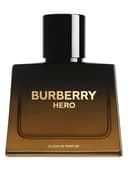
The Hero bottle (across all versions including Elixir) adopts a shape unique in contemporary perfumery: an angular glass bottle, shaped into an abstract reinterpretation of a horse's hoof. This equestrian reference may seem odd at first — why a hoof? — but it makes absolute sense in the context of Burberry's history and British aristocratic culture. The horse has for centuries been THE symbol of social status in Great Britain: owning horses signaled wealth (purchase cost, upkeep, stables, staff), upper-class leisure (fox hunting, polo, horse racing at Royal Ascot), and even military power (cavalry). British aristocracy literally defined its superiority by the quality of its stable: a gentleman was expected to be an excellent rider, to take part in fox hunts organized on country estates, to bet on horse races at Epsom or Newmarket.
Burberry has historically equipped this equestrian clientele: trench coats to stay dry during rainy autumn hunts, leather gloves to hold the reins without blisters, cashmere scarves for protection against the cold during morning rides, Wellington boots adapted for riding. The horse is thus deeply inscribed in Burberry's clientele DNA. The hoof specifically — that horned part of the equine foot, solid, powerful, striking the ground with the characteristic sound of a gallop — symbolizes strength, movement, freedom. In the Hero advertising campaigns with Adam Driver (an actor chosen precisely for his accessible everyman appeal rather than an unreachable top-model look), one sees the model swimming with a horse in the ocean, running on rocky beaches — images of wild freedom, of man-animal-nature connection that break with traditional masculine fragrance imagery (a man in a suit in an urban penthouse or behind the wheel of an Aston Martin).
The hoof-shaped bottle visually translates this aesthetic: it is a massive object, heavy in hand (thick glass), angular (no feminine-soft curves but frank-masculine edges), with a shade that varies by version (EDT/EDP in transparent amber-cognac glass, Parfum in deep brown almost black, Elixir probably in an even darker shade or with a metallic treatment). The square cap bears the TB monogram (Thomas Burberry, logo redesigned in 2018 by Peter Saville for Riccardo Tisci, replacing the historical equestrian knight with a modernist monogram). The whole creates a virile-tactile object pleasant to hold, to handle — it is a bottle one enjoys grasping to apply the fragrance, not just a functional container. On a bathroom shelf, it possesses a sculptural presence that immediately distinguishes it from standard rectangles (Bleu de Chanel, Dior Homme) or sporty shapes (Invictus trophy, Spicebomb grenade). It is a signature bottle recognizable from ten feet away, creating exactly the instant brand recognition marketing departments seek.
Elixir wearers: sociology of a masculinity reconciled with sweetness and generational mapping of the acceptance of sweetness
Who is Hero Elixir aimed at in early 2026? Who are these men ready to wear a leather-vanilla fragrance that embraces its gourmand character from the opening? To answer, one must understand a deep generational shift in representations of olfactory masculinity. Men born in the 1970s-80s (today 40-55 years old) grew up with predominantly fresh-dry-woody masculine fragrances: Azzaro Pour Homme 1978 (lavender-anise-vetiver), Drakkar Noir 1982 (aromatic fougère), Cool Water 1988 (marine-mentholated), Acqua di Gio 1996 (aquatic-fresh). These fragrances conveyed a clean-sporty-dynamic masculinity but also a fairly rigid one: a man was not supposed to smell sweet-floral-powdery for fear of being perceived as effeminate. The permitted olfactory spectrum was narrow: citrus-aromatics-wood, full stop.
But men born in the 1990s-2000s (today 15-35 years old, Generation Z plus young millennials) grew up in a radically different cultural context where gender boundaries have become porous, fluid, negotiable. These generations were exposed from adolescence to 2000s metrosexuals (David Beckham in a sarong, Brad Pitt with a handbag), to gender-bending pop culture (Harry Styles in a Gucci dress, Jaden Smith in a Louis Vuitton skirt, Lil Nas X in fluorescent pink outfits), to male beauty influencers on YouTube/TikTok (James Charles, Jeffree Star doing makeup tutorials), to the normalization of bi-curiosity and sexual fluidity. For these generations, a man who wears vanilla or red fruits is not less of a man — he is simply a man who smells good. The stigma has largely evaporated, allowing the commercial explosion of 2020s gourmand masculine fragrances of which Hero Elixir is a representative.
The cultivated urban millennial: English leather and vanilla as an impossible reconciliation between tradition and comfort
The first relevant profile is the man between twenty-eight and forty-two years old, urban, highly educated (master's degree), working in creative-tertiary sectors (design, architecture, marketing, tech, media), who simultaneously values cultural heritage (he collects vinyl records, reads Murakami, watches Wes Anderson films) AND contemporary comfort (he wears luxury sneakers, listens to hyper-curated Spotify playlists, uses meditation apps). For this man, Hero Elixir resonates as a perfect synthesis of his contradictions: leather evokes the British heritage he respects (he has probably visited London, had tea at Fortnum & Mason, bought a cashmere scarf at Burberry Regent Street), while vanilla evokes the modern comfort he claims (he unashamedly admits to loving Diptyque scented candles, oversized cashmere sweaters, Netflix evenings under a blanket rather than exhausting clubbing nights).
This profile wears Hero Elixir at the office (if the dress code allows it — tech startup, creative agency, architecture firm) or more certainly in the evening: dinners with friends in trendy neighborhood restaurants (Shoreditch in London, Marais in Paris, Williamsburg in Brooklyn), contemporary art openings, indie rock concerts in intimate venues, Hinge/Bumble dates with women his age who will appreciate the sophistication of the leather as much as the sweetness of the vanilla. It is a fragrance of gentle seduction, not aggressive flirting — it projects a confident but approachable masculinity, cultivated but not snobbish, virile but affectionate. The sillage says: I am an accomplished adult who no longer needs to prove his virility through loud signals, I can afford to be soft because my masculinity is established enough to fear no challenge. This is Jake Gyllenhaal in Prisoners or Nightcrawler mode: intensely masculine yet vulnerable, dangerous yet sensitive, leather AND cashmere.
The curious Gen Z collector: Elixir as a badge of belonging to fraghead culture and olfactory cultural capital
The second significant profile is the young man between eighteen and twenty-eight years old who discovers perfumery through YouTube/TikTok and quickly develops a collecting passion. This profile typically owns fifteen to forty bottles (impressive for his age), religiously follows fragrance influencers (Jeremy Fragrance, Gent Scents, CascadeScents), participates in discussions on Reddit r/fragrance, obsessively compares longevity and projection, chases limited editions and new releases before their official launch (like this tester whose sister smuggles/steals scented water from Harrods where she is doing an internship). For this Gen Z, Hero Elixir represents several things simultaneously: (1) a collector's item to complete his Burberry range, (2) a 2026 novelty he can be among the first to own/test/review, generating social capital within his online community, (3) a simple fragrance (five notes) easy to understand and describe, unlike complex niche compositions of thirty ingredients.
This collector appreciates Hero Elixir precisely because it ticks every box on the 2025 fraghead checklist: (a) it is an Elixir (current buzzword), (b) it is leather-vanilla (a trending accord following the success of Tom Ford's Ombré Leather in 2018 and its countless clones), (c) it is Burberry (a brand with credible heritage, not an opportunistic celebrity brand), (d) the bottle is distinctive-Instagrammable, (e) performance is decent (not beast mode but lasting). He will wear it mainly on social outings: student parties, Tinder dates, mall weekends, perhaps even university classes if the environment is olfactorily tolerant. For him, wearing a fragrance is not just smelling good but expressing his identity, signaling his belonging to fragrance culture, distinguishing himself from casuals who still wear Axe or Old Spice. Wearing Hero Elixir says: I know the 2026 releases, I follow the trends, I am part of the community of connoisseurs. It is olfactory cultural capital exactly as wearing Jordan 1 Retro High OG sneakers is sneakerhead cultural capital.
Occasions, seasons, and limits: an autumn-winter Elixir that rejects the summer-beach-tropical discourse of its rivals
In terms of seasonality, Hero Elixir clearly positions itself as autumn-winter: the vanilla, leather and amber create a warmth ill-suited to summer temperatures where these notes become stifling-sickly. It is a fragrance for when days grow shorter, temperatures drop, wool sweaters and leather jackets come back out — September to March in the northern hemisphere. Leather in particular works better in cold weather: it evokes winter clothing (leather jackets, gloves, boots), heated interiors (club armchairs, libraries), cars whose leather interiors retain warmth. Wearing leather in the middle of July at 35°C seems an almost comical sensory discordance — although some rebels might find this ironic contrast precisely interesting.
Ideal occasions: evenings rather than mornings (the inaugural vanilla can be too sweet for a 7am wake-up), weekends rather than office (except tolerant creative environments), romantic dates, dinners, bars, cultural events (cinema, theater, concerts), leisurely Saturday afternoon shopping. It is NOT a sport-gym fragrance (too heavy-sweet), nor really a formal-corporate fragrance (it lacks the sobriety expected in a conservative professional environment such as banking-insurance-law), nor a wedding-ceremony fragrance (too casual-everyday). It is fundamentally a fragrance of relaxed-cultivated urban life for young adults who live in major Western cities, frequent trendy neighborhoods, consume indie-mainstream culture, and navigate easily between heritage tradition (respect for Burberry) and contemporary comfort (love of vanilla). Hero Elixir is their fragrance because it embodies exactly this impossible synthesis they themselves seek to embody: traditional AND modern, virile AND soft, English leather AND gourmand vanilla, British heroes galloping freely on Scottish beaches while smelling of warm cookies fresh from the oven — a magnificent contradiction that may well define 2026 masculinity.
Olfactory pyramid
- Top notesThe first minutes
- Heart notesThe heart of the perfume
- Base notesWhat lingers
Share your impressions
Create an account to keep your votes and find your notebook.