
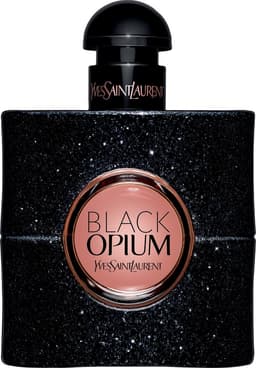
Black Opium: Between sophistication and originality. A fragrance in the image of Yves Saint-Laurent. Like the seductive couturier and perfumer Yves Saint-Laurent, Black Opium, released in 2014, offers a blend of sophistication and raw materials, of elegance and soft brutality, of golden lights of jasmine and orange blossom and dark olfactory paths of coffee.
The story of “Black Opium” begins in 1977, with “Opium.” Having become legendary, “Opium” caused a genuine scandal at the time of the sexual revolution. Indeed, this fragrance with its provocative name was declared a symbol of debauchery, and sex, drugs and alcohol were all associated with “Opium.” In 2014, Yves Saint Laurent unveiled “Black Opium,” a fragrance still just as diabolical, but with a modern, rock-inspired edge.
The 4 perfumers who reimagined Yves Saint Laurent’s provocative essence
It took no fewer than 4 perfumers to create “Black Opium,” namely Olivier Cresp, Marie Salamagne, Nathalie Lorson, Honorine Blanc. It could be said that Olivier Cresp fell into it as a child. Born in Grasse, Olivier Cresp began his career at Firmenich. He is responsible for particularly exceptional fragrances such as “Angel” by Thierry Mugler, “Kokorico” by Jean-Paul Gaultier, and “L’Eau pour Homme” by Kenzo. Marie Salamagne is a graduate of the ISIPCA perfumery school. She particularly enjoys working with balsamic notes, wood, ambroxan, and patchouli. She is behind “Aqua Allegoria Mandarine Basilic” by Guerlain and “Eau de Nuit” by Giorgio Armani. Nathalie Lorson is a perfumer at Firmenich. She enjoys working with rose, vetiver, and musky notes. She is behind such beautiful fragrances as “So First” by Van Cleef & Arpels, “Perles de Lalique” by Lalique, and “Gentleman” by Givenchy. As for Honorine Blanc, she was born in Lebanon and is also a graduate of the prestigious ISIPCA perfumery school. She is also behind such great fragrances as “Loversose” by Diesel and “Encounter” by Calvin Klein.
Coffee, the star of Black Opium
With “Black Opium,” Yves Saint Laurent chose to play on coffee notes. The intensity of the fragrance also draws on the addictive quality of coffee and its association with floral notes. Coffee is present from the top notes and immediately contrasts with the fruity sweetness of pear and the spiciness of pink pepper. The heart of “Black Opium” is built around an elegant bouquet of white flowers, notably featuring jasmine and orange blossom. The base leaves a sillage that is both woody and sensual, combining patchouli, vanilla, and cedarwood. Much more rock than the original, this composition is intended for mischievous women, with a hint of rebellion.
Nearly 40 years after the provocative “Opium,” Yves Saint Laurent continues the saga with “Black Opium.” Much more modern, “Black Opium” carries a look that is both rock and casual. Here, coffee is the star of the composition. Paired with white flowers, coffee offers captivating and, above all, addictive tonalities.