
Le Male In Blue
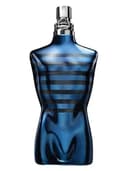
Le Male In Blue: Jean Paul Gaultier's sailor turns metallic blue. Launched in January 2026 as a limited edition, this flanker of Le Male (1995) narrows the composition around three notes: lavender on top, anise at heart, benzoin at the base. The iconic torso bottle is dressed for the occasion in a metallic blue with wave-like glints.
- Brand
- Jean Paul Gaultier
- Launch year
- 2026
- Gender
- Men
- Olfactory family
- Aromatic
- Concentration
- Eau de Parfum
Where to buy
Lavender: thirty years on, still the same note
The original Le Male 1995 by Francis Kurkdjian built an olfactory revolution around 1950s barbershop lavender. Lavender-mint-vanilla was innovative for its era, and became an absolute reference. Thirty years later, in 2026, Le Male In Blue takes up exactly the same lavender. The communication insists on an electric blue intensity. But concretely? It is just lavender. The same lavender used in 50+ Le Male flankers since 1995.
Classic barbershop lavender smells clean-aromatic-camphoraceous, evoking vintage barbershops, traditional soaps and aftershave lotions. It is pleasant, familiar, reassuring. It is also terribly predictable-repetitive. Ultra Male: lavender. Le Male Essence: lavender. Le Male Le Parfum: lavender. Le Male Elixir: lavender. Every Le Male flanker plays a variation on the same central lavender without ever really straying from the original signature.
Le Male In Blue is no exception. The opening lavender fades progressively over 30-45 minutes, giving way to anise-benzoin. It is functional-classic, but zero innovation thirty years after the original perfume. If one already owns any Le Male, one already knows this lavender.
Anise: the "metallic" note that divides
The heart anise of Le Male In Blue is described as metallic, cutting like a sail in the wind. Poetic marketing, but olfactorily? Anise smells like… anise. This anise-licorice-spicy odor recalls pastis, liqueur, candy. Either one loves it or one hates it, rarely a middle ground.
Early-access testers confirm the anise is very present-dominant on opening, then progressively softens, becoming sweeter. One tester mentions the fragrance becomes sweet, closely resembling Le Male Le Parfum once settled. Translation: after an initial eye-catching anise, In Blue reveals a formula close to a simplified version of Le Male Le Parfum. So why buy In Blue rather than the already existing, better Le Parfum?
The "metallic" anise of the communication remains mysterious. Natural anise contains anethole, the molecule responsible for its characteristic odor, but nothing particularly metallic in it. Probably the addition of synthetic molecules (metallic aldehydes such as Methyl Pamplemousse, ozonic notes) creates an impression of metallic freshness. But honestly? Anise remains anise. Marketing can call it metallic-electric-futuristic, the nose just smells classic spicy licorice.
Benzoin: the mandatory resinous-sweet crutch
Benzoin at the base is a natural balsamic resin with a vanilla-caramel-incense-warm almond odor. It is used massively in masculine perfumery to create warmth-sweetness-depth at the base. Dior Homme: benzoin. Guerlain L'Homme Idéal: benzoin. Tom Ford, 30 fragrances: benzoin everywhere. Now Le Male In Blue: benzoin, obviously.
Gaultier's communication states that the benzoin is deeply powerful, anchoring the composition, sealing lasting strength and warmth-depth. But the reality? The benzoin in Le Male In Blue is probably standard-industrial Siam benzoin, exactly the same used in 100 other designer fragrances. Nothing distinctive-unique, just generic benzoin doing the expected job: softening a potentially aggressive anise, creating warmth-roundness at the base, ensuring minimal longevity.
The result of lavender-anise-benzoin? A fragrance that is aromatic-spicy-sweet, probably close to many aromatic oriental fougères on the market. The communication promises an olfactory wave captured in a striking limited edition. The reality will probably be a fairly classic-predictable Le Male flanker in a blue version.
Le Male 1995-2026: thirty years of endless proliferation
The original Le Male 1995 revolutionized masculine perfumery. Francis Kurkdjian created an innovative lavender-vanilla-tonka bean, the iconic sailor-torso bottle, bold metal can packaging. Immediate and lasting phenomenal commercial success. Forbes, GQ, Men's Health still consider it a timeless classic.
But success breeds proliferation. Since 1995, Gaultier has released 30+ Le Male flankers. Le Male Fleur du Mâle 2007, Le Male Terrible 2010, Ultra Male 2015, Le Male Le Parfum 2020, Le Male Elixir 2023, Le Male Elixir Absolu 2025, now In Blue 2026. Not counting the various limited editions, exclusives, and collector items. The release pace has accelerated in recent years: 3-4 new Le Male fragrances annually from 2023 to 2026.
The problem? After thirty years and fifty flankers, it is difficult to bring anything truly new. All of them take up the signature lavender, add a variation of secondary notes (iris, patchouli, coffee, leather, various fruits), slightly modify the concentration-intensity. But the fundamental DNA remains identical. Le Male In Blue follows exactly the same pattern: lavender base plus variation (anise-benzoin) plus distinctive packaging (metallic blue) equals a new sellable flanker.
In Blue vs Le Parfum: too similar?
A tester who tried In Blue confirms: once it settles it becomes sweet, closely resembling Le Male Le Parfum. This is problematic. Le Male Le Parfum 2020 (cardamom-lavender-iris-vanilla-wood) is already an excellent reference in the line, with superior performance (3.80/5 longevity versus 3.12/5 for In Blue), and a more complex-rich composition with four notes versus three.
If In Blue ultimately smells close to a simplified version of Le Parfum, why does it exist? Answer: a limited edition generates purchase urgency. Limited edition triggers FOMO (fear of missing out) among collectors-fans. Even if olfactorily redundant with Le Parfum, the different metallic blue packaging commercially justifies the release. Marketing 101.
But olfactorily? Useless duplication. If one already owns Le Male Le Parfum, In Blue will probably bring nothing new except the frustration of having spent €80-100 on a simplified, less performant version of something already owned that is better.
Performance: mediocre as expected
Preliminary Fragrantica scores are concerning: longevity 3.12/5, sillage 2.44/4. This is mediocre for an Eau de Parfum concentration limited edition sold at a premium price. For comparison, the original Le Male EDT scores 3.56/5 for longevity — the 1995 EDT version holds up better than the 2026 EDP special edition. An aberration.
Why the weak performance? A composition of only three notes means less olfactory material. Volatile lavender disappears quickly. Spicy anise evaporates progressively. Only benzoin remains after 3-4 hours, insufficient to maintain presence-interest. Realistic prediction: 4-6 hours of longevity, moderate projection in the first hour then close to the skin. Disappointing for an €80-100 limited edition EDP.
Compared to other recent Le Male fragrances: Le Male Elixir 2023 (cardamom-lavender-vanilla-wood, Parfum concentration) offers 6-8+ hours of longevity with strong projection. Le Male Le Parfum 2020 gives a correct 6-7 hours. In Blue's mediocre 4-6 hours places it at the low end of the line's performance despite its premium limited-edition positioning.
The "oceanic wave" marketing versus olfactory reality
Gaultier's communication heavily insists on the maritime theme: the sailor charts a new course, an oceanic wave captured, a powerful surge that is magnetic-fluid-intense, does not follow the tide but summons it. The metallic blue torso bottle with translucent black stripes represents a wave. The campaign visual evokes the sea, force, adventure, indomitable masculinity.
But olfactorily? Lavender-anise-benzoin smell nothing particularly oceanic nor maritime. Lavender evokes vintage barbershop, earth, aromatics. Anise recalls pastis, licorice, spices. Benzoin smells of warm, vanillic, sweet resin. No marine-aquatic-ozonic accord typical of truly maritime fragrances (Acqua di Gio, Bleu de Chanel Parfum, Cool Water, etc.).
A PerfumeStars source mentions that a marine accord brings oceanic clarity and freshness. But the official Fragrantica pyramid lists only lavender-anise-benzoin, with no mention of a marine accord. This contradiction between different sources suggests either that the communication added elements that are not actually present, or that the marine accord is so discreet-diluted as to be imperceptible to a normal human nose.
There is an enormous gap between the marketing's ambitious narrative (a powerful, indomitable oceanic wave) and the probable olfactory reality (a classic aromatic-spicy-sweet fougère). A recurring pattern for JPG: ambitious-poetic storytelling masking commercial-predictable formulas. Divine's revolutionary leather flower equals a banal rose-leather. Scandal's scandalous provocation equals mainstream fruity-gourmand. In Blue's surging oceanic wave equals probably lavender-anise-benzoin with nothing truly marine.
A limited edition likely to become permanent
Gaultier announces In Blue as a limited edition for January 2026. The house's history shows that limited editions often become permanent if sales are good. Ultra Male 2015 was announced as limited, and became a permanent bestseller. Le Male Le Parfum 2020 was initially positioned as special, and is now a pillar of the line. In Blue will probably follow the same path: tested on the market as a limited edition in 2026, integrated into the permanent range in 2027 if commercial performance is satisfactory.
Cynical? Realistic. A limited edition generates initial urgency-exclusivity maximizing launch sales. If successful, becoming permanent captures long-term revenue. If it fails, quiet disappearance without impacting the main line's image. A well-honed, effective commercial strategy in modern perfumery.
Who is this fragrance for? (still no one really)
The theoretical target for In Blue: Le Male fans looking for a fresh-modern variation on the classic signature. But the problem? Fifty Le Male flankers are already available, covering every imaginable variation. Ultra Male (amplified lavender-vanilla-pear), Le Parfum (sophisticated lavender-iris-vanilla), Elixir (intense lavender-tonka bean-vanilla), Essence (improved classic lavender-mint-vanilla). What room is left for In Blue to occupy?
Anise-licorice lovers might be interested, but anise is polarizing — the majority of consumers avoid it rather than seek it. Completist JPG collectors will probably buy it, but will be disappointed by the mediocre performance and similarity to Le Parfum. Those seeking a truly maritime-oceanic fragrance will be frustrated by the absence of a real aquatic dimension despite the storytelling.
An €80-100 budget offers infinitely preferable alternatives. Le Male Le Parfum (€90), already in the line, offers superior sophistication-performance. Dior Homme (€80) offers iris-cocoa elegance-maturity of a higher class. Prada L'Homme (€75) gives neroli-iris-amber, timeless Italian refinement. Bleu de Chanel EDP (€95) remains an essential reference for modern freshness-elegance.
Better alternatives with the same inspiration
For those truly seeking aromatic lavender-anise: Azzaro Pour Homme EDT (€40) explores a classic vintage lavender-anise-basil-wood with the best value for money. Brut Fabergé (€15) has done lavender-anise fougère iconically since 1964, with honorable performance at a negligible price. Rive Gauche YSL (rare but findable) offered a sophisticated lavender-anise in the 1970s-80s.
For those wanting a real maritime-oceanic fragrance: Acqua di Gio Profondo (€80) offers true marine-aquatic notes of bergamot-lavender-patchouli-amber. Nautica Voyage (€25) does aquatic-apple-lotus-musk with excellent value for money. Bvlgari Aqva Pour Homme (€60) explores mandarin-neroli-marine accord-amber with superior sophistication.
Within the Le Male line: Le Male Le Parfum 2020 remains the best choice for sophistication-performance-coherence. Le Male Elixir 2023, in Parfum concentration, offers truly premium intensity-longevity. Even the original Le Male EDT from 1995 (€50-60) delivers an iconic-authentic experience with better price-performance than In Blue.
The verdict, straight to the point
Le Male In Blue embodies exactly the same problems as Le Beau Narcisse analyzed previously: a three-note minimalism sold as sophistication when it is obviously cost reduction, ambitious-poetic marketing (surging oceanic wave) masking a banal reality (classic aromatic lavender-anise-benzoin), mediocre performance (3.12/5 longevity) at an unjustified premium price (€80-100), redundancy in a line already overloaded with fifty flankers.
The difference from Le Beau Narcisse? In Blue benefits from the goodwill capital of the iconic 1995 Le Male line. The sailor in the striped shirt remains an instantly recognizable cult design. Francis Kurkdjian's heritage confers historical legitimacy. But thirty years on, fifty flankers later, it is difficult to justify a new Le Male that brings nothing substantially new.
A tester confirming that In Blue resembles Le Male Le Parfum once settled reveals everything: it is a redundant commercial variation of an already existing, better fragrance. Lavender-anise-benzoin do not create the promised surging oceanic wave — just a correct-predictable aromatic-spicy-sweet fougère. The mediocre 4-6 hours of performance for a limited-edition EDP concentration are unacceptable.
Who should buy In Blue? Obsessive JPG collectors wanting absolutely every bottle. People falling for the metallic blue design without testing the fragrance first. Anise-licorice fans accepting average performance at a premium price. It is difficult to find any other rational justification for the purchase when Le Male Le Parfum already exists, better, at the same price.
Le Male In Blue is the fifty-first flanker in a line still searching, thirty years on, for a reason to exist. A beautiful blue bottle, seductive maritime storytelling, a redundant-disappointing olfactory formula. JPG 2026 summed up: packaging over substance. Invest money elsewhere — literally any other €80-100 fragrance will be a better choice. Even the original Le Male from 1995 at fifty euros remains superior to this hundred-euro limited edition. That sums up the situation.
Olfactory pyramid
Share your impressions
Create an account to keep your votes and find your notebook.