
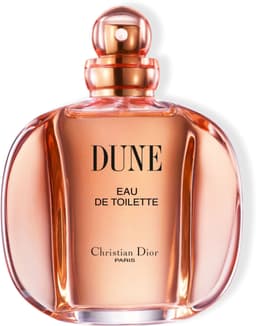
Dune: A fragrance of purity, sand and ocean At the dawn of a new, more natural and more streamlined era in perfumery, Dune and its oceanic and woody reflections arrived in 1991 to overturn the codes of perfumery.
After releasing the sulfurous Poison to international success, the great house of Dior and its charismatic head Maurice Roger wished to offer a serene and natural antidote. It was Dominique Ropion and Jean-Louis Sieuzac who worked to create this peaceful and luminous fragrance, which paved the way for the wisdom of 1990s perfumery.
Dune and its seaside garden, signed by Dominique Ropion and Jean-Louis Sieuzac for Dior
It was Maurice Roger who imagined the concept of Dune while he was still working on Poison. Aware that the perfumery of tomorrow would need to tell its finest stories in order to sell them better, Maurice Roger thus imagined the exact opposite of Poison, as though to answer it more fittingly. To carry out this project, he gave the two talented perfumers already employed on Poison a single instruction: he wanted the sketch of a small garden by the sea. Dominique Ropion and Jean-Louis Sieuzac had only to set their extraordinary imagination to work.
The composition presented by the two great perfumers would unfold like an impressionist painting of absolute serenity. The sea appears there in imaginary form and without overdose, but the perfumers also had the genius to bring in sand, rendered dynamically through the many rare and natural raw materials that make up the fragrance. The freshness of the sea breeze appears from the top notes onward, offering this Dune the most beautiful seaside landscapes.
A true fragrance of rediscovered serenity and soothing natural settings, Dune and its beautiful soft lights have won the hearts of women in search of a pure and feminine fragrance, free of pretense and artifice.
Dune, or the oceanic floral fragrance without a single drop of calone!
1990s perfumery was prolific in marine and saline scents, such as Eau d'Issey or Kenzo Homme. The trend proved so popular that many fragrances set out to conquer marine landscapes in order to better capture them in a bottle. But this beautiful and modern fragrance would go even further. It would evoke sea breezes, salty water currents and sand dunes without using a single drop of the calone so widely used at the time.
Indeed, in order to avoid the by-then very popular calone, Jean-Louis Sieuzac and Dominique Ropion chose to use, for example, liatrix, a plant that is at once green, vanillic and rich in coumarin. To this multifaceted plant they added an oakmoss highly evocative of the iodine note. Likewise, the fresh seaside wind is evoked in Dune in a very symbolic way through an overdose of stemone and laurel.
Delicate and precious white flowers, paired with deeply sensual woody depths, lend a beautiful warmth and a perpetual motion to this Dune, which stands in the lineage of fragrances of timeless beauty.
Dune is a fragrance of harmony, which creates a balance between all the raw materials that compose it. François Demachy, in-house perfumer at Dior, on Dune.