
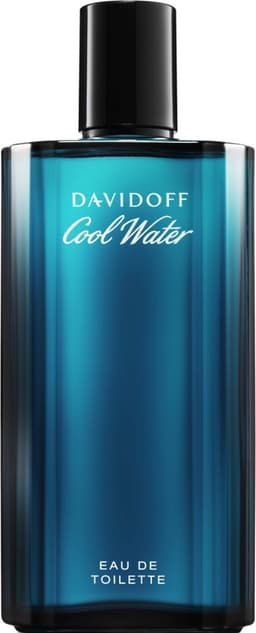
Davidoff launched Cool Water in 1988; Pierre Bourdon composed it. The house sees it as the starting point of the “new freshness”: the eau de toilette opens, it says, on peppermint and lavender, before a heart of oakmoss, geranium and sandalwood and a base of amber and musk. Its blue bottle was designed by Peter Schmidt.
Coty describes a minimalist composition, driven by bold overdoses. The house pairs an aromatic lavender with a shivering mint; in the base, amber coats the fragrance with sensuality and intensity and makes it, it says, even more addictive.
In the list it publishes, peppermint and lavender burst forth at the top like a swell. The heart gains strength with oakmoss, geranium and sandalwood; the base glides into a warm flow of amber and musk.
Its website illustrates this description with three materials: lavender, a marine accord and amber. The marine accord does not appear as a note; the house speaks of an alchemy between a man and the ocean.
What the reviews say
For AlbertCAN, a guest writer at Perfume Shrine in March 2013, Pierre Bourdon took up in Cool Water the framework of Green Irish Tweed, composed, in his account, for Creed three years earlier, and added calone, a molecule with a marine effect.
Calone is not, in his eyes, the key to the fragrance, as its resemblance to the Creed shows. Cool Water balances its freshness with a more assertive base; Luca Turin and Tania Sanchez classify it among aromatic fougères.
What is left out
An earlier text from the house mentioned a Provençal accord of lavender, rosemary and mint, a heart of jasmine, geranium and sandalwood, and a base of musk and ambergris.
Perfume Intelligence classifies it as a floral, fruity masculine fougère, and also cites bergamot, orange blossom, chervil, orris, violet, cedar, juniper and coriander. The house’s current list retains neither rosemary nor jasmine, nor any of these materials.
Similar perfumes
Similar notes and family, from other houses.
- Beau de JourTom Ford
- Green Irish TweedCreed
- Hugo Just DifferentHugo Boss
- LegendMontblanc
- Legend IntenseMontblanc
- Gucci by Gucci pour HommeGucci
- For Him Eau de ToiletteNarciso Rodriguez
- Stronger With You AmberArmani
From the same line
More perfumes from Davidoff
Also composed by Pierre Bourdon
- KourosYves Saint Laurent
- Dolce VitaChristian Dior
- Féminité du BoisSerge Lutens
- MagnetismEscada