
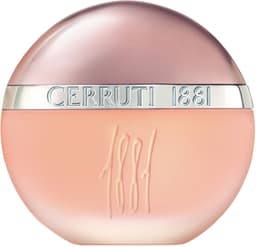
Claire Cain signed in 1995 the feminine counterpart of 1881, five years after the masculine. The whole fragrance revolves around a flax flower note that does not exist: the plant yields no extract, the note is reconstructed from scratch, and it ties the bottle to the house's fabrics. Around it, a very wide bouquet of mimosa, violet, freesia, jasmine, narcissus and tuberose, over a dry base of sandalwood and musks.
Thirty years on the shelf and a modest price have made 1881 pour Femme a fragrance that is given as a gift more than chosen. Its cleanness and a sillage that does not go beyond arm's length are praised; it is criticized for a bouquet so wide that it ends up naming nothing. The longest-standing wearers describe a denser earlier version.
Olfastory’s review
Thirty years on the shelf, a modest price and the label of the fragrance one gives as a gift: 1881 pour Femme carries the image of the safe present. It fits all the more since it has never sought to draw attention to itself.
What it smells like, in order
The opening is powdery from the start, mimosa and violet over a base of white flowers. The middle widens without hardening, and everything closes on a dry woody base of sandalwood and musks, very close to the skin.
Why its loyal wearers keep it
Those who wear it speak of cleanness, measured longevity and a sillage that stays close to the body. It is a daytime fragrance that can be worn for eight hours without anyone nearby having to endure it.
The recurring criticism
It is almost always the same one: anonymity. A bouquet this wide ends up naming nothing, and many find in it the character of a well-made soap rather than that of a fragrance.
Its defenders answer that this is precisely the point. The fragrance does not seek a signature, it seeks the smell of clean skin and fabric, which is consistent for a house that first and foremost sells cloth.
Thirty years of reformulations
Long-time wearers describe an older version that was denser and more floral. The labels recorded today do not all carry the same list either, a sign that at least two formulas are circulating in parallel.