
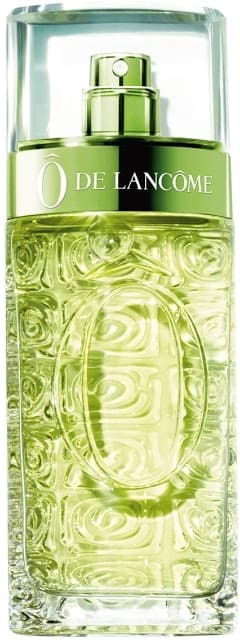
Ô de Lancôme was released in 1969, signed by Robert Gonnon, a perfumer at Firmenich. Lancôme wanted a frank Eau de Toilette, as tonic as the colognes worn by men, without giving up anything of its femininity. Lemon, bergamot and mandarin open the composition, basil and rosemary green it, and oakmoss gives it its chypre base. Beneath its fresh water appearance, this is a green chypre, from which an entire lineage of feminine perfumes of the seventies descends.
The formula rests on a brief contrast: frank citrus, an aromatic and green heart, an oakmoss base. Nothing ornamental, a brief composition, which likely explains why it has aged so little.
The citrus top notes
Lemon opens, zesty and sharp. Bergamot rounds it out with a floral bitterness, mandarin adds a sugary sweetness. The opening is frank, without any material effect, in the manner of classic eaux de cologne.
An aromatic and green heart
Basil and rosemary green the middle of the fragrance, coriander adds a spicy, slightly soapy touch. Jasmine and honeysuckle hold the floral part, white and somewhat honeyed, without ever weighing it down.
Hedione, a jasmine molecule developed at Firmenich and used in Eau Sauvage three years earlier, is found in this heart. It relates Ô de Lancôme to the lineage of fresh waters born from this discovery.
A chypre base rather than a woody one
Oakmoss forms the base, earthy and bitter, and it is this that places the fragrance on the chypre side. Vetiver seconds it with a rooty, dry note, sandalwood adds a discreet milky roundness.
Other lists include carnation, patchouli or Paraguay petitgrain, sometimes even apricot. Nothing independent confirms them, and the formula reads very well without them: the contrast between citrus and oakmoss is enough to carry it.