
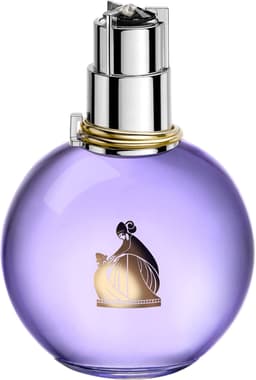
Eclat d’Arpège, the reinterpretation of Lanvin’s legendary perfume. The Lanvin fashion house represents 125 years of elegance, refinement and craftsmanship. A great brand and a great lady, who established herself year after year as a talented designer.
Between delicacy and refinement, “Éclat d’Arpège” is the reinterpretation of Lanvin’s legendary “Arpège”, released in 1927. Originally, “Arpège” is a fragrance that Jeanne Lanvin wished to give to her daughter Marguerite for her 30th birthday. An only child, Marguerite was also Jeanne’s muse. To thank her and prove her everlasting love, Jeanne Lanvin decided to give her a magnificent olfactory composition with “Arpège”. In 2002, the Lanvin house wished to revisit its great classic by giving it more floral and fruity tonalities, resulting in “Éclat d’Arpège”.
Éclat d’Arpège, a revisiting of the perfume signed by Karine Dubreuil
To revisit its legendary fragrance, Lanvin chose the perfumer Karine Dubreuil. Although she was born in Grasse, she does not come from a family of perfumers. After starting out at the Florasynth company (now Symrise), Karine Dubreuil spent time at Drom, before joining Mane in 2002. Karine Dubreuil currently works for the perfume house l’Occitane. On this subject she states that having grown up in Grasse, she had a Provençal sensibility, which surely brought her closer to l’Occitane. Demanding and talented, there is no doubt that Karine Dubreuil is a perfumer of convictions. She is behind magnificent fragrances such as “Mademoiselle Azzaro, l’Eau très belle” by Azzaro, or “Womanity” by Thierry Mugler.
Fruity floral notes brimming with sensuality for Eclat d'Arpège
To revisit Lanvin’s great classic, Karine Dubreuil wanted a composition between femininity and sensuality, between spontaneity and elegance. Because Karine Dubreuil wanted to preserve the soul of “Arpège”, her revisit is also a fragrance of love, a genuine appeal to the emotions. “Éclat d’Arpège” opens on the citrus and ultra-fresh note of Sicilian lemon. These are quickly joined by lilac. The lilac flower comes from the Middle East. It has been cultivated in Europe since the 18th century. Lilac flowers are gathered in more or less dense pyramidal clusters.
In perfumery, noses use lilac flower drawing on other natural essences as well as synthetically. Lilac releases finely floral, balsamic tonalities, sometimes close to the scent of lily of the valley. The heart of “Éclat d’Arpège” is both floral and fruity, combining peach, wisteria and red peony. Coming straight from Japan, wisteria is known for its hardiness, as it withstands temperatures down to -20°. In May and June, wisteria blooms and offers ultra-fragrant clusters, in blue or white. In perfumery, wisteria is considered a “mute flower”, meaning that no essential oil can be extracted from it. Wisteria is therefore reproduced synthetically.
It offers tonalities that are floral, fruity and citrus all at once. Finally, the base of “Éclat d’Arpège” is woody and ambery, combining sensual, enveloping notes such as white musks, amber and Lebanese cedar. The Art Deco-style orb still serves as the bottle, recalling Jeanne Lanvin’s love for her daughter Marguerite.