
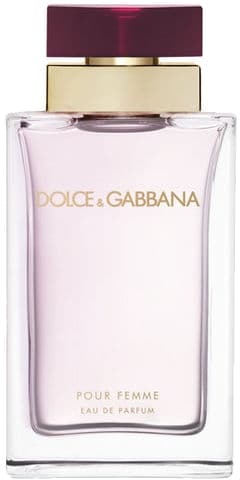
The first fragrance from Dolce & Gabbana, launched in 1992 and composed by Jean-Pierre Mary, Pour Femme changed formula in 2012. The eau de parfum sold today, which the house describes as floral and amber, brings together neroli, raspberry, and green mandarin, jasmine and orange blossom, over a base of marshmallow, vanilla, heliotrope, and sandalwood.
The version on sale is the 2012 eau de parfum, which the house arranges as follows: neroli, raspberry, and green mandarin in the top, jasmine and orange blossom in the heart, marshmallow, vanilla, heliotrope, and sandalwood in the base.
Top, heart, and base
At the relaunch, the house blended neroli oil with hints of raspberry and gave it a tart touch of green mandarin. The jasmine, described as velvety, melts into the citrus sweetness of orange blossom, for a heart of voluptuous flowers.
In the base, the sugary marshmallow calls up the vanilla, rounded by heliotrope and supported by sandalwood. The house sums up the whole as a warm, voluptuous fragrance, lifted by a creamy sweetness, between strength and delicacy.
The 1992 formula
Thomas Dunckley reproduces the 1992 list: petitgrain, mandarin, basil, ivy, aldehydes, and freesia in the opening; rose, orange blossom, jasmine, red carnation, lily of the valley, coriander, and marigold; sandalwood, tonka bean, and musk. Elena Vosnaki smells the marigold in it, reminiscent of apple, over a creamy base of sandalwood and musks.
Jasmine, orange blossom, mandarin, and sandalwood appear in both lists. The aldehydes, carnation, and marigold are no longer named, although Angela detects an aldehydic touch on the raspberry; raspberry, marshmallow, and heliotrope make their entrance.
What the label declares
The list published by the house places benzyl salicylate right after alcohol, fragrance, and water, along with linalool, hydroxycitronellal, and geraniol. Alpha-isomethyl ionone, limonene, benzyl alcohol, citral, citronellol, and benzyl benzoate complete the declared allergens.
Two UV filters, ethylhexyl methoxycinnamate and diethylamino hydroxybenzoyl hexyl benzoate, and an antioxidant, BHT, protect the juice. Four colorants, Red 33, Violet 2, Yellow 5, and Blue 1, give it its pink tint. Neither lilial nor lyral: the list complies with European law.
Similar perfumes
Similar notes and family, from other houses.
- Love Don’t Be Shy Eau FraîcheBy Kilian
- Orbis RosaRasasi
- Born in Roma Donna Rendez-vous IvoryValentino
- Quatre en RougeBoucheron
- Mademoiselle GuerlainGuerlain
- Love Story Eau SensuelleChloé
- Bonbon HolidayViktor & Rolf
- Bonbon Pink BowViktor & Rolf