
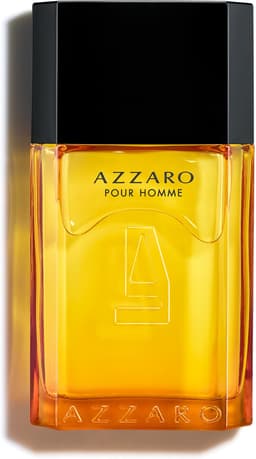
An aromatic fougère from 1978, Azzaro pour Homme opens on a lavender and anise accord of sharp clarity, pulled toward the herbaceous by basil and clary sage. Cardamom and caraway spice this opening; patchouli, sandalwood and vetiver lead to a base of oakmoss, leather and tonka bean. Luca Turin holds it to be the most accomplished of the aromatics. It stayed twenty-five years at the top of French sales.
An anisic lavender, held out in the open
The opening rests on two raw materials that do not hide: lavender and anise. Lemon, bergamot and petitgrain brighten them without softening them, and the attack is frank, without the usual citrus veil of masculine fragrances of the era.
Basil and clary sage pull this opening toward the herbaceous. In 1978, this aromatic rawness came as a surprise: masculine fragrances of the time favored smooth freshness, and bitterness was seen as a flaw to correct.
Luca Turin sums it up in two words, anisic lavender, and gives it five stars in his guide. Collectors' accounts speak of an almost wholesome bitterness, never unpleasant as long as the dose is not overdone.
A spicy heart that tips toward the woods
Cardamom and caraway take over. Caraway is the most unexpected raw material in the formula, and it is also the one that all three independent sources carry, even if they disagree on its tier.
Behind it, patchouli, sandalwood, cedar and juniper berries thicken the structure. This is where the fragrance leaves the aromatic for the woody, and where its reputation for a massive sillage is born.
Vetiver was listed in the base in the reference data. Two independent sources place it at the center, and the fragrance's development supports them: it arrives with the spices, not after them. It has therefore changed tier.
A base of moss and leather, and the question of musk
Oakmoss, leather, amber, tonka bean and musk close the composition. The animalic thread that wearers describe owes to this whole group rather than to any single raw material, and it remains perceptible until the very end.
In 2000, a European regulation on musk forced the house to rework the formula. Oakmoss, often cited as the victim of this revision, appears on the contrary in every later account, without exception.
Wearers of older bottles describe versions that are foamier and heavier than current ones. No instrumental analysis supports the comparison: these are olfactory memories, reported as such.
What the sources do not agree on
Iris appears in only one source, geranium and ambergris in only another. For lack of a second independent witness, all three remain excluded from the retained list, even though the reference database carries all three materials.
Fennel has long circulated in French descriptions. No source carries it: it stems from a tasting impression, where anise and fennel are often confused. White musks, meanwhile, are never described as white by the sources.
The figure of three hundred twenty raw materials comes from the house's own discourse and circulates on retailer listings; no one has verified it. One isolated technical analysis attributes the use of dihydromyrcenol to this formula, with no second source to confirm it.