
Berdoues
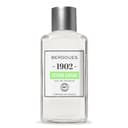
1902 Citron Caviar Eau de Cologne
The name promises an Australian caviar citrus; the formula rests on an ordinary lemon, a verbena and an orange blossom heart that vetiver closes off. It is the most constructed of the colognes in the 1902 collection, the only one that truly leaves the citrus register before fading out, and the one that holds best on a shirt collar.
Where to buy
Finger lime is an Australian citrus fruit, Citrus australasica by its scientific name, which grows in the understory of Queensland and northern New South Wales. Its fruit resembles a small dark green gherkin; opened, it releases round, firm vesicles that roll on the plate and burst under the tooth. Haute cuisine took hold of it at the turn of the 2000s, chefs placed it on oysters and ceviches, and the word caviar did the rest. A name like that, on a bottle, sells an idea of freshness before the cap is even off.
What remains to be seen is what is actually inside. The house, for its part, does not cheat on this point: its page lists lemon, not finger lime, and its ingredients list carries Citrus limon peel oil — common lemon, the one found at the market. Of the Australian citrus, no declared trace. There is nothing objectionable in that; a perfume name has never amounted to a declaration of composition, but it is worth stating clearly: what one smells is a bright, straightforward lemon, not a botanical curiosity.
The juice is also the most constructed of the three colognes the house released on the same day. The Green Tea rests on three materials and a straight line; the Orange Blossom develops a single tree. This one stacks three clearly distinct tiers: a sparkling opening where verbena doubles the citrus, a floral heart where orange blossom settles in without taking up all the space, then a woody, musky base that pulls it out of the citrus register. The house evokes precious woods; its ingredients list carries Virginia cedarwood oil.
Vetiver deserves a mention, because it is rare in this spot. This root of tropical grass, dry, earthy, slightly smoky, usually belongs to masculine woody fragrances and chypres, not to the fresh waters poured over the nape of the neck in summer. Berdoues, incidentally, made it a subject in its own right within the same collection, with a 1902 Vétiver that places it at the center. Here, it works underground: it does not announce itself, it only keeps the whole from evaporating like an ordinary citrus water.
A word on the technical difficulty, too, because it explains the shape of the juice. Lemon is a fleeting material: its most volatile components leave within minutes and oxidize quickly, which long condemned citrus waters to being nothing more than bright openings followed by nothing. All of cologne perfumery consists in delaying that fall, by doubling the citrus with herbs that hold a little longer, then sliding underneath heavier materials that take over without drawing attention. That is precisely the plan of this one.
For anyone looking for a cologne slightly less obvious than average, this is probably the right entry point into the range. It demands a bit more attention than its neighbors, it rewards a bit longer, and its price keeps it in the category of freshnesses used without a second thought. Buyer reviews, on the sites that sell it, circle around the same remark: pleasant, easy, and quickly gone — which describes the category as much as this juice.
Olfactory pyramid
- Top notesThe first minutes
- Heart notesThe heart of the perfume
- Base notesWhat lingers
What the community says
Season
Create an account to keep your votes and find your notebook.