
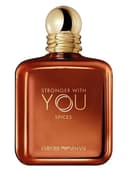
Stronger With You Spices
Stronger With You Spices: From the Silk Roads to Mane's laboratories. Olfactory cartography of ancient trade routes: how black pepper, clove, cinnamon, saffron and dates tell fifteen centuries of conquests, monopolies and wars for control of aromatic luxury
Where to buy
When Stronger With You Spices is sprayed onto skin in 2026, few men realize that they are activating aromatic molecules for which entire empires fought one another for millennia. The five main spices in this composition — black pepper (Piper nigrum, India), clove (Syzygium aromaticum, Maluku Islands, Indonesia), cinnamon (Cinnamomum verum, Sri Lanka / Cinnamomum cassia, China), saffron (Crocus sativus, Iran/Spain), and dates (Phoenix dactylifera, Middle East/North Africa) — are not simple perfumery ingredients chosen at random by Cécile Matton from the catalogs of IFF or Givaudan. They are geopolitical markers, currencies of exchange that shaped world economic history, triggers of geographic discoveries (the route to the Indies around Africa via the Cape of Good Hope, Vasco da Gama, 1498; the Americas, Christopher Columbus, 1492, seeking a westward route to Asian spices), and sources of armed conflict (the Anglo-Dutch wars of the seventeenth century over control of the Moluccas, producer of clove and nutmeg). Understanding Stronger With You Spices first requires understanding why humanity spent two thousand years risking its life on dangerous sea routes and caravans crossing hostile deserts just to bring back a few grams of brownish powder or dried red stigmas.
Black pepper: from the Malabar coast to Roman tables, the chronicle of the spice literally worth its weight in gold
Black pepper (Piper nigrum) is native to the Malabar coast in what is now southwest India (the states of Kerala and Karnataka), where it grows naturally on climbing vines in humid tropical forests. As early as antiquity, pepper was traded via sea routes to the Arabian peninsula and then up into the Mediterranean. The Romans were literally obsessed with it: Pliny the Elder (23–79 AD) marveled in his Natural History that the Romans paid fortunes for a spice with such an “aggressive” taste when they had free access to salt. Pepper was taxed so heavily in Rome that it literally served as currency: during the siege of Rome by Alaric I in 410, the Visigoths demanded as ransom 3000 pounds of pepper in addition to gold and silver. In the Middle Ages, the Venetian monopoly on the spice trade (control of Levant routes, 1200–1500) made pepper a commodity accessible only to the wealthy: giving pepper as a gift was a sign of extreme social status. The expression “as dear as pepper” persists today, a linguistic vestige of an era when pepper was indeed worth its weight in precious metal.
Chemically, the characteristic pungent sensation of pepper comes mainly from piperine (5–9% of the grain), a crystalline alkaloid almost insoluble in water but soluble in alcohol and fats. Piperine activates the TRPV1 receptors (transient receptor potential vanilloid 1) of the tongue and mucous membranes, the same receptors activated by capsaicin from chili — which is why pepper “burns” without actually being hot. But pepper also contains aromatic terpenes: limonene (fresh lemony note), pinene (pine-resinous note), caryophyllene (woody-spicy note also present in clove and cannabis), sabinene (peppery-spicy note), creating a complex olfactory profile well beyond simple “pungency.” In Stronger With You Spices, black pepper as a top note fulfills a vibrant, electric attack function that immediately “wakes up” the nose and prepares the olfactory receptors to receive the spicy complexity that follows. It is the olfactory equivalent of a gong opening a symphony: brief, intense, impossible to ignore, announcing that something important is about to happen.
Clove and cinnamon: bloody Dutch monopolies, massacres in the Spice Islands, and the birth of modern colonial capitalism
If pepper was precious, clove (Syzygium aromaticum) and nutmeg (Myristica fragrans) were literally strategic to the point of triggering wars of extermination. These two spices grew naturally only on a tiny Indonesian archipelago: the Moluccas (notably Banda and Ternate), with a total surface area of about 70 km² for all the producing islands combined. When the Portuguese reached the Moluccas in 1512, they established a brutal monopoly: exporting plants or seeds was forbidden under penalty of death, and clove trees were systematically destroyed on every island except those directly controlled. The Dutch drove out the Portuguese (1605–1621) and intensified the monopoly still further: in 1621, Jan Pieterszoon Coen, governor-general of the Dutch East India Company (VOC), ordered the massacre of Banda: 15,000 inhabitants out of 15,000 were killed or deported into slavery, and the islands were repopulated with slaves controlled by the VOC. The goal: absolute control of the world production of nutmeg and clove, allowing artificially high prices to be maintained in Europe (markups of 1000–2000%).
This monopoly was only broken in 1770 when Pierre Poivre (yes, that is his real name, an irony of history), a French botanist, managed to steal clove and nutmeg plants from the Moluccas and transplant them to Mauritius and Réunion, breaking the VOC monopoly and triggering the collapse of prices. The clove takes its name (French clou, English clove from Latin clavus, meaning nail) from its shape resembling a small nail: these are in fact dried floral buds picked before they open. The powerful smell comes from eugenol (70–90% of the essential oil), a phenolic compound also present in bay leaf, cinnamon, and basil, used in dentistry for its local anesthetic-antiseptic properties (which is why clove was traditionally chewed to relieve toothaches). In Stronger With You Spices, clove at the heart brings a sophisticated medicinal-aromatic warmth, almost “clean” despite its intensity, which immediately distinguishes the composition from basic sweet orientals. It is a marker of olfactory complexity that signals: this is not just a vanilla-cinnamon fragrance for teenagers, there is technical depth here.
Cinnamon has an equally violent history. Two main types exist: Ceylon cinnamon (Cinnamomum verum, true cinnamon, Sri Lanka, thin delicately rolled bark with a sweet, mild taste) versus cassia/Chinese cinnamon (Cinnamomum cassia, China/Vietnam, thick brittle bark with a stronger, sharper taste, cheaper). The Portuguese controlled Sri Lanka, producer of true cinnamon, from 1505 to 1658, replaced by the Dutch (the VOC again) until 1796. The VOC cinnamon monopoly was so strict that possessing an unauthorized plant was a capital crime. Cinnamon's characteristic smell comes from cinnamaldehyde (50–75% of cassia essential oil, 50–60% of true cinnamon), an aromatic aldehyde responsible for the warm, sweet, spicy note, accompanied by eugenol (4–18%), cinnamyl acetate (floral-balsamic note), and linalool (floral-lemony note). In Stronger With You Spices, cinnamon at the heart creates a bridge between the electric vibration of the black pepper top note and the gourmand sweetness of the vanilla-chestnut-date base: it is the intermediate layer that ensures olfactory narrative coherence, preventing an abrupt break between the spicy attack and the sweet drydown.
Saffron and dates: red Persian gold, stigmas harvested at dawn, and desert fruits becoming symbols of millennia-old oriental hospitality
Saffron (Crocus sativus) is the most expensive spice in the world (€2,000–10,000/kg depending on quality) for a simple reason: it takes 150,000–170,000 crocus flowers to produce 1 kg of dried saffron, each flower yielding only 3 harvestable orange-red stigmas, and the harvest must be done by hand at dawn on the very day the flower opens or the stigmas wilt. Probably native to ancient Greece/Persia, saffron was cultivated on a massive scale in Persia (present-day Iran, still the world's leading producer at 90–95% of production), used as a textile dye (the purple-orange of Tibetan Buddhist monks' robes), as medicine (antidepressant properties documented in modern studies, used in Ayurvedic and traditional Persian medicine for 3,000 years), and of course as a culinary spice (Spanish paella, Milanese risotto, Marseille bouillabaisse). Saffron's unique smell comes from safranal (an aldehyde responsible for the characteristic hay-metallic-iodine note, 30–70% of the essential oil), picrocrocin (a glycoside responsible for the bitter taste, which degrades into safranal during drying), and crocin (a carotenoid responsible for the intense yellow-orange color, also used as food coloring E164).
Saffron in Stronger With You Spices brings an extremely sophisticated metallic-iodine-hay facet that keeps the composition from tipping into predictable gourmand syrupiness: it is the “adult” note that recalls that this is a fragrance for a mature man capable of appreciating bitterness, complexity, and non-sweet notes. It is the olfactory equivalent of a gin and tonic with its quinine bitterness versus an all-sugar mojito. Dates (Phoenix dactylifera, the date palm) have been cultivated for 6,000–7,000 years in Mesopotamia (present-day Iraq) and constitute one of the food pillars of ancient Middle Eastern civilizations: rich in natural sugars (60–80% of weight at maturity, made up of glucose, fructose and sucrose), they provide concentrated energy essential for desert populations. In Arab-Muslim culture, the date holds sacred status: mentioned more than 20 times in the Quran, recommended by Muhammad for breaking the Ramadan fast, a symbol of hospitality (offering dates to guests is a traditional welcoming gesture). The smell of fresh dates evokes caramel-honey-toffee with light fermented-alcoholic facets (overripe dates develop notes close to rum or brandy). In Stronger With You Spices, dates in the base bring a natural caramelized sweetness that complements the bourbon vanilla and chestnut, creating an ultra-comforting gourmand base while avoiding the trap of cheap synthetic vanilla thanks to their fruity, fermented depth.
Molecular anatomy of spicy warmth: a technical dissection of the aromatic quintet and of Cécile Matton's chestnut-vanilla signature, which has become the defining thread of the entire Stronger With You line for nine years
Beyond their historical-geopolitical dimension, the spices in Stronger With You Spices 2026 form a technically sophisticated olfactory system built on precise molecular interactions between natural aromatic compounds and modern synthetic accords. The composition of Stronger With You Spices rests on a delicate balance between the pungent, vibrant facets of the top-heart spices (black pepper piperine + clove eugenol + cinnamon cinnamaldehyde + saffron safranal) and the gourmand, enveloping base signature of the whole Stronger With You line (chestnut + bourbon vanilla + amber + leather notes). This structural duality between spice and gourmand character is not accidental but reflects precisely the original concept of the line as formulated in 2017 by Cécile Matton: to create masculine fragrances capable of seducing women (feminine taste for sweet, gourmand notes) while remaining wearable by men (masculine need for virile, spicy notes to avoid the feeling of being “too sweet/too feminine”). It is a couple-like olfactory dialectic inscribed at the very heart of the chemical structure.
Bergamot and mandarin: a Mediterranean citrus duo tempering the peppery attack and creating an elegant transition to the spicy heart
Even before black pepper explodes, Stronger With You Spices opens with a citrus flash of bergamot and mandarin that fulfills a crucial technical function: buffering the potential aggressiveness of peppery piperine by creating a bright, fruity envelope around it. Without this citrus, the pepper would be too harsh, almost violent to the nose — imagine breathing in pure ground pepper directly versus breathing in pepper in a lemony sauce: the difference is immense. Bergamot (Citrus bergamia, Calabria, Italy, used in 95% of world production) brings limonene, linalool and linalyl acetate creating a sparkling, slightly floral freshness, while mandarin (Citrus reticulata, various origins, mainly Brazil/Spain/Morocco) adds methyl anthranilate (a fruity, sugary note almost like candy or bubblegum) and thymol (a light herbaceous-spicy note). The combination of bergamot, mandarin and black pepper creates what is called in perfumery a citrus-spicy accord, a sophisticated variant of classic citrus openings (bergamot alone in traditional eaux de Cologne) that immediately signals: this is a modern designer fragrance, not a grandfather's eau de Cologne.
Provençal lavender: a survival of the original 2017 aromatic fougère DNA and an identity marker of the Stronger With You line unchanged for nine years
A fascinating element of Stronger With You Spices 2026 is the presence of lavender in the heart — a note that might seem incongruous in a spicy oriental fragrance but which is perfectly explained by faithfulness to the historical DNA of the line. When Cécile Matton created the original Stronger With You in 2017, she classified it in the Aromatic Fougère family, a masculine perfumery category defined by the association of lavender, coumarin and oakmoss, first created by Fougère Royale, Houbigant, 1882. Fougère was THE dominant masculinity category of the twentieth century (Drakkar Noir, 1982; Cool Water, 1988; Paco Rabanne Pour Homme, 1973, etc.) but had been progressively abandoned in the 2000s–2010s in favor of sweet, spicy orientals (One Million, 2008; Invictus, 2013) and fresh aquatics (Acqua di Gio, 1996; Light Blue, 2007). By reintegrating lavender into a gourmand-spicy context in 2017, Matton achieved a synthesis of classic fougère and modern oriental that was innovative for its time.
Nine years later, in 2026, lavender remains present in Spices — not out of olfactory necessity (the fragrance would function perfectly without it) but out of identity loyalty: every Stronger With You flanker contains lavender, a signature as recognizable as the intertwined rings on the bottle. Provençal lavender (Lavandula angustifolia, France, the finest quality worldwide, grown on the Valensole plateau in Alpes-de-Haute-Provence) has an aromatic profile dominated by linalool (25–35%, a floral, lemony, fresh note), linalyl acetate (30–45%, a floral, lavender, bergamot note), camphor (trace amounts, a medicinal, fresh note), and terpinene (a herbaceous, spicy note). In Stronger With You Spices, lavender acts as an olfactory mediator between warm spices (clove, cinnamon) and gourmand sweetness (chestnut, vanilla): its aromatic freshness prevents the whole from becoming stifling and heavy and maintains a certain airy lightness in an otherwise very dense, heady context.
Apricot: an unexpected fruity addition creating a bridge between spice and gourmand character, a signature Matton strategy also observable in Viktor & Rolf's Bonbon
Apricot at the heart of Stronger With You Spices is the most surprising element of the pyramid — and probably the most technically brilliant. Why include a juicy, sweet stone fruit in a spicy, woody composition? Because Cécile Matton knows that apricot has milky, almond-like facets that create a natural bridge between two seemingly incompatible worlds: on one side, warm, dry, pungent spices (clove eugenol, cinnamon cinnamaldehyde, saffron safranal); on the other, creamy, sweet, vanilla-laden gourmand character (chestnut, bourbon vanilla, dates and caramel). Fresh apricot contains gamma-decalactone (a lactone with a peach-apricot-cream-butter note, the same molecule present in Valentino's Purple Melancholia analyzed previously), beta-ionone (a violet, powdery, fruity note), damascenone (a rose, plum, apricot note of extreme power, with a detection threshold of 0.009 ppb, parts per billion, one of the most odorous molecules known), and above all benzaldehyde (a bitter almond, cherry, stone, marzipan smell, present in apricot, peach, cherry and almond kernels).
It is precisely this almond, stone-fruit facet of apricot that creates the magic: it resonates with the chestnut in the base (which also has roasted hazelnut-almond notes) and with the vanilla (the slightly almond, marzipan facet of vanillin), creating an almond-hazelnut-pastry continuity that unifies the whole composition from top to bottom. Without apricot, there would be an abrupt olfactory break between the spicy heart and the gourmand base; with apricot, the transition is smooth and natural, as if spice and sweetness had always been meant to coexist. This is exactly the same strategy Cécile Matton used in Viktor & Rolf's Bonbon, 2014 (her other commercial masterpiece, with more than 2 million bottles sold), where she integrated red fruit notes (mandarin, orange, strawberry) into a caramel-praline context to soften what would otherwise have been cloyingly syrupy. Matton is a master of the olfactory bridge, a technique consisting of inserting ambiguous intermediate notes that belong simultaneously to two different families, ensuring overall coherence.
Candied chestnut, bourbon vanilla, soft leather: the founding trio of Stronger With You 2017, still present in 2026, an unchanging DNA despite nine successive flankers
And so we arrive at the absolute identity heart of the entire Stronger With You line, the sacred trio running through every flanker since 2017 and forming the recognizable “sound” among a thousand others: candied chestnut, bourbon vanilla, and soft leather notes. When a man sprays any Stronger With You (the original EDT, Intensely, Absolutely, Leather, Oud, Amber, Tobacco, Parfum, Freeze, Only, and now Spices), after 30 to 60 minutes of development he will always end up smelling this trio — it is the genetic olfactory signature of the line, the equivalent of mitochondrial DNA passed down from generation to generation. Chestnut (Castanea sativa, the fruit of the European chestnut tree, consumed since prehistoric times in southern Europe) was almost never used in perfumery before Stronger With You in 2017 — it was a remarkable Matton innovation. Fresh, chestnut has little smell; it is cooking or roasting that develops complex aromas via Maillard reactions: hazelnut, caramel, butter, pastry, slightly smoky notes. Armani and Matton probably use a reconstructed chestnut accord with lactones (gamma-nonalactone, delta-decalactone, with cream, coconut, peach notes), furaneol (a caramel, strawberry, toasted bread note), maltol (a caramel, biscuit note), and sotolon (a fenugreek, maple, caramel, curry note, used in small doses to add depth).
Bourbon vanilla comes from Madagascar/Réunion (formerly Île Bourbon), considered the finest quality in the world for its creamy, deep, complex notes versus Tahiti vanilla (more floral, anisic) or Mexican vanilla (more spicy, smoky). Bourbon vanilla contains only 1–2% vanillin (contrary to the common belief that vanilla equals pure vanillin), accompanied by more than 250 aromatic compounds including vanillic acid, p-hydroxybenzaldehyde, vanillyl alcohol, and traces of eugenol, giving a depth that synthetic vanillin alone cannot reproduce. In Stronger With You, Armani likely uses a blend of natural Bourbon vanilla extract and synthetic ethyl vanillin (3 to 4 times more powerful than natural vanillin, with formidable longevity of days to weeks on clothing) creating an ultra-performing, gourmand, creamy, persistent vanilla. Finally, soft leather notes bring a slightly animalic, suede-like facet that masculinizes the whole and prevents such a sweet, gourmand fragrance from being perceived as feminine. This leather is not the raw, animalic leather of Tom Ford's Tuscan Leather or Chanel's Cuir de Russie but a clean, smooth, modern leather of the Saffraleine type (an IFF molecule), suederal (suede), or soft quinolines creating an impression of textile comfort rather than aggressive animality.
The female compliment as emotional fuel for the couple: a sociology of a line built on the approval of the other and a mutation in designer masculinity finally accepting sweetness as a marker of shared seduction
But this fragrance gets tons of compliments and women around me loves this fragrance. I don't understand but its okay. Some says in creation of this fragrance, Cecile Matton and Giorgo Armani worked together with some witch in Italy to create the fragrance that boring as f* to men and aphrodisiac to woman :) This sarcastic yet revealing comment from a Fragrantica reviewer about the original Stronger With You, 2017, perfectly captures the unique sociological essence of this line: these are fragrances designed primarily to please women, worn by men. Stronger With You does not fit into the tradition of masculine fragrances built on virile self-assertion (Kouros, 1981, aggressive animality; Drakkar Noir, 1982, dominant fougère; Terre d'Hermès, 2006, austere minerality) but into a logic of heterosexual seduction in which the man wears what pleases his female partner rather than what pleases him personally. It is a quiet revolution in masculine perfumery that reflects deep changes in contemporary gender relations and in the masculine identity construction of Millennials/Gen Z after 2010.
2017 origins: an olfactive embodiment of authentic modern-day love, the casual contemporary couple, and a break with the solitary, conquering masculinities of the twentieth century
When Armani launched Stronger With You in June 2017, the marketing concept was explicit: to create an olfactory couple with a masculine Stronger With You and a feminine Because It's You, representing an olfactive embodiment of authentic modern-day love. This is not just corporate marketing talk — it is a genuine conceptual break with the tradition of masculine perfumery. Historically, masculine fragrances of the twentieth century told stories of triumphant virile solitude: the solitary adventurer (Eau Sauvage, Dior, 1966), the conquering businessman (Fahrenheit, Dior, 1988), the contemplative intellectual (Terre d'Hermès, 2006), the predatory seducer (One Million, 2008). Even when these fragrances seduced women, the seduction was one-sided and imposed: the man wore his fragrance to assert his power and dominance, while women were conquered, seduced, passively won over. The relationship was vertical (active man toward passive woman) rather than horizontal (an egalitarian couple in dialogue).
Stronger With You, 2017, proposes a radically different narrative: a young couple, casual but authentic, the notion of unity symbolized by the intertwined rings of the bottle, the advertising slogan Together we are stronger. The Stronger With You man is not a lone alpha-male wolf but a partner in an egalitarian couple who draws his strength from the relationship rather than from virile isolation. This philosophy translates olfactorily into a fragrance intentionally designed to please women: sweet, gourmand notes (chestnut, vanilla, caramel toffee) historically coded as feminine, an enveloping, non-aggressive sweetness, a moderate sillage allowing intimacy and closeness rather than a dominant projection filling an entire room. One reviewer sums it up: I don't know if I'm the only one who noticed this, but [...] on me it dries down to a beautiful sweet vanilla with slight lavender and spice tones and actually presents very feminine. This partial feminization is not a formulation accident but a deliberate strategy: to create an androgynous, shareable fragrance in which the boundaries between masculine and feminine blur within the intimate context of a couple.
The compliment machine: quantifying seduction, gamifying romantic interactions, and turning fragrance into measurable social capital
The most commented characteristic of the entire Stronger With You line is its ability to generate female compliments. On Fragrantica, YouTube, Reddit's r/fragrance, and TikTok's #FragTok, discussions of Stronger With You revolve obsessively around this metric: how many compliments received? Compliment-to-wear ratio? Spontaneous versus solicited compliments? Where do the compliments come from (girlfriend, female colleagues, strangers in the street)? Compliment performance of the original SWY versus Intensely versus Absolutely? This has become an almost obsessive quantitative science in which the fragrance is no longer evaluated on traditional aesthetic criteria (beauty of the composition, originality of the accord, quality of the raw materials, signature of the nose) but on measurable social efficiency: number of compliments as a KPI (Key Performance Indicator) validating or invalidating the purchase. One reviewer states: SWY absolutely is hands down the best compliment getter in my collection. Another: The amount of unsolicited compliments i got from both men and women with this flanker is just amazing. And another: This is my go-to fragrance for the winter months precisely because compliments are guaranteed.
This compliment obsession reveals a gamification of romantic and social interactions characteristic of a Millennials/Gen Z generation raised with social media: Instagram likes, Tinder swipes, and olfactory compliments all become quantifiable forms of external validation whose accumulation builds self-esteem and social identity. Wearing Stronger With You is no longer simply about smelling good for oneself but about performing a seductive masculinity measured by positive female feedback, exactly as posting an Instagram photo is no longer simply about sharing a moment but about performing a desirable life measured by the number of likes. The fragrance becomes social capital: an investment of €100–120 generating measurable returns in the form of female compliments interpreted as proof of attractiveness, increasing self-confidence, and facilitating social and romantic interactions. This is a perfectly rational economic logic: if Stronger With You Intensely generates 10 compliments a month and those compliments increase the odds of a romantic encounter, then a €100 investment becomes an excellent ROI (Return On Investment) compared with other seduction strategies (a €50/month gym membership, €200 of new clothes, €500 of seduction coaching). The compliment-machine fragrance becomes an optimized seduction technology, a rational tool in the service of a pragmatic objective (pleasing women) rather than an artistic, hedonistic expression.
Sweet masculinity finally accepted: a generational mutation in which the 2017–2026 man no longer fears smelling of vanilla and caramel as long as female compliments validate his virility
The real revolution of Stronger With You is not technical or olfactory but psychological and cultural: the line has normalized, for an entire generation of men (Millennials born 1985–1995, Gen Z born 1996–2010), the idea that a man can wear extremely sweet, gourmand notes (vanilla, candied chestnut, caramel toffee, dates) without compromising his masculinity, provided these notes are validated by external female approval. It is a fascinating psychological system: the man agrees to wear something he personally finds too sweet or almost feminine because female compliments function as a certificate of masculinity, proving that despite the olfactory sweetness, he is still perceived as virile and desirable by his target audience (heterosexual women). One reviewer states it explicitly: Its one of the most boring, usual, sweet and basic fragrance that you could buy. But this fragrance gets tons of compliments and women around me loves this fragrance. I don't understand but its okay. The I don't understand but its okay is crucial: the man admits he does not intellectually understand the fragrance's appeal but pragmatically accepts its social and seductive efficiency.
This pragmatic acceptance marks a profound generational break with twentieth-century masculinities. For men born between 1940 and 1980, raised in traditional patriarchal cultures, wearing sweet, vanilla-laden notes was unthinkable without compromising virility: sweet meant feminine, meant weakness, meant masculine shame. A man was supposed to smell dry and woody (vetiver, cedar, cypress), leathery and animalic (Kouros's musky animality), aromatic and fresh (lavender-rosemary classic fougères), never sweet and gourmand for fear of being perceived as effeminate and therefore unmanly, therefore not legitimately masculine. But men born between 1985 and 2010 grew up in a radically different cultural context: the progressive normalization of homosexuality (gay marriage legalized progressively across the West, 2000–2020), the emergence of metrosexuality (straight men taking care of their appearance with codes previously considered feminine: cosmetics, manicures, hair removal, fashion), gender fluidity (acceptance of a masculine-feminine spectrum rather than strict binarity), and the influence of K-pop/J-pop (Korean and Japanese male idols wearing makeup, sweet floral fragrances, valorizing an androgynous aesthetic). In this new context, wearing vanilla and caramel no longer threatens masculine identity because masculinity is no longer defined in opposition to the feminine but by a multiplicity of coexisting, legitimate masculine performances.
Occasions, seasons, and the sociology of wearers: fall-winter, couple intimacy, evening dates, and the man seeking shareable warmth rather than imposed domination
Stronger With You Spices 2026, like every flanker in the line, is worn primarily in fall and winter (September to March in the northern hemisphere) when cool temperatures (5–18°C) allow the warm, spicy, gourmand notes to unfold without becoming cloying or suffocating. In summer, at 25–35°C, the vanilla, chestnut and spices would become oppressive and heavy, creating a feeling of stifling rather than comfort. Ideal occasions: romantic evening dates (dinner at a restaurant, a movie, a nighttime walk, returning to the apartment), cozy couple weekends (breakfast in bed, Netflix on the sofa, Saturday afternoon shopping), semi-formal social events (dinner with friends, a birthday, an opening, cocktails at a bar). This is NOT an office or corporate fragrance (too sweet for a conservative professional environment in banking, law or consulting), nor really a sport or gym fragrance (too heavy), nor a fragrance for a formal ceremony such as a wedding or gala (it lacks solemnity). It is fundamentally a fragrance for the private, intimate sphere where the man interacts with his close circle (primarily his romantic partner, secondarily close friends) in casual, warm contexts.
Sociology of wearers: (1) Millennials aged 28–38 in a stable relationship looking for a safe fragrance that pleases their partner, having moved past the fragrance-discovery and experimentation phase and simply wanting a functional, efficient fragrance generating predictable positive feedback. (2) Gen Z aged 18–25 discovering perfumery via TikTok/YouTube, influenced by recommendations for compliment machines, buying their first non-Axe/Lynx fragrance after saving money from a part-time job. (3) Men aged 40–55, divorced and back in a relationship, seeking to renew their olfactory identity after a separation, adopting modern, youthful fragrances to signal openness to change and to attract new potential partners (often younger). Psychographically, the Stronger With You wearer values pragmatic efficiency over personal artistic expression: he does not seek a fragrance that expresses his deep soul but one that functions socially, and he prefers external validation (compliments) to internal hedonistic satisfaction (wearing something he personally likes even if others dislike it). This is an other-oriented masculinity rather than a self-centered one, reflecting the relational, collaborative values of Millennials/Gen Z as opposed to the individualism and competitiveness of Boomers/Gen X.
Olfactory pyramid
Share your impressions
Create an account to keep your votes and find your notebook.