
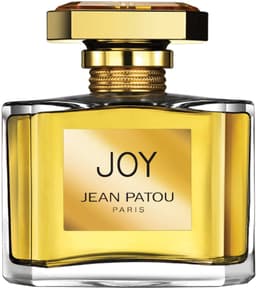
Joy was launched by Jean Patou in 1930, in the wake of the 1929 crash. Composed by Henri Alméras and presented to the world as the costliest perfume in the world, this floral of Grasse rose and jasmine, into which go 10,600 jasmine flowers and 28 dozen roses per ounce of extrait, went out in 2018 when LVMH took its name for Dior.
Joy is built on Grasse rose and jasmine, its two emblematic materials. Angela, of Now Smell This, relays a pyramid in three stages: aldehydes, peach, and a green note at the top; rose, jasmine, ylang-ylang, and tuberose for the heart; sandalwood, musk, and civet in the base.
What Angela perceives
In the eau de toilette, she smells a fizzy, stemmy neroli, and a few minutes later roses tangled with a full-bodied but fresh jasmine; the fragrance stays close to the skin and fades into dull roses and a vague warmth. The extrait opens less crisply, its heart of roses and jasmine is richer, and its base, spicy and animalic, cannot be recognized by anyone who does not already know Joy.
Elena Vosnaki, of Perfume Shrine, sees in it the archetypal example of a smooth, beautiful jasmine, which can be worn without evoking dark tendencies and without being pointless either.
What stays out
Civet, given in the base by the published lists, is not there according to the house’s perfumer, whom Angela says she questioned in 2013; it remains in prose, like the green note and the iris found in other lists.
Similar perfumes
Similar notes and family, from other houses.
- Gabrielle CHANELChanel
- Gabrielle CHANEL EssenceChanel
- L'Air du Temps à Paris chez Antoinette PoissonNina Ricci
- NocturnesCaron
- Boss Nuit pour FemmeHugo Boss
- J'Ador In JoyChristian Dior
- K LoudElla K Parfums
- ArpègeLanvin