
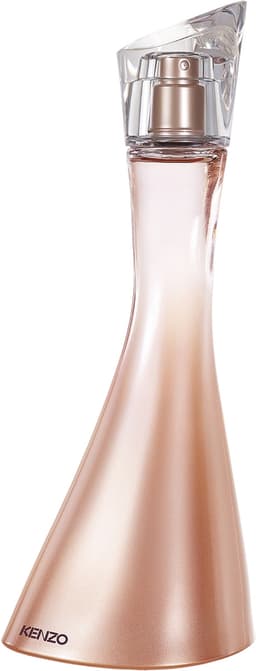
The Kenzo Jeu d'Amour feminine fragrance Perfume is of course an aesthetic ingredient. Nevertheless, it is also erogenous and contributes to establishing seduction. Indeed, although our primary instincts have transformed considerably, our body remains above all a kind of chemical factory, and scents are thus able to stimulate an unsuspected appetite in certain people.
Released in 2014, Jeu d'Amour is the symbol of love reinvented every day. Between laughter, smiles, emotions and seduction, Jeu d'Amour is at the heart of the debate. While Kenzo plays here with feelings, Jeu d'Amour remains a bright and joyful fragrance. To make the game even more fascinating, Kenzo plays with contrasts in the composition. Jeu d'Amour is a cheerful, sparkling essence that reinvents all the pleasures of love. It was created by two talented perfumers.
Jeu d'Amour Kenzo, a game signed Daphné Bugey and Christophe Raynaud
It is two talented perfumers whom the house of Kenzo chose to create Jeu d'Amour, namely Daphné Bugey and Christophe Raynaud. Although Daphné Bugey was born in Grenoble, this did not prevent her from joining the prestigious perfumery school, ISIPCA. As early as 1977, at the end of her training, Daphné Bugey was hired by Firmenich, a company she has never left. Discreet and intuitive, Daphné Bugey is behind fine fragrances such as Classique Betty Boop by Jean-Paul Gaultier and Mugler Aura by Thierry Mugler. Christophe Raynaud is one of the great figures of perfumery. Also a graduate of ISIPCA, Christophe Raynaud works for Givaudan. Regarded as highly talented and creative, Christophe Raynaud has composed major olfactory successes such as 1 Million by Paco Rabanne, and Modern Princess by Lanvin.
Jeu d'Amour Kenzo, a composition sparkling with happiness
Jeu d'Amour takes flight on the freshness of mandarin, paired with that of lemon blossom, as well as the fruity flavor of pear and green tea. The earliest traces of pear date back 4,000 years in Central Asia. Pear arrived in France in the sixteenth century. It was mainly King Louis XIV who popularized pear and introduced it to all his subjects. It was soon eaten cooked or raw, in cakes, or as compote. In perfumery, the pear note is reproduced synthetically in the laboratory, identical to the natural fruit. It gives off fruity, sugary, sweet and also green tonalities. Then, the heart of Jeu d'Amour is meant to be extremely feminine, combining tuberose and freesia. The scent of tuberose resembles that of jasmine, but more opulent. Native to India and Mexico, tuberose arrived in Europe in 1500. These very white flowers are highly fragrant. In perfumery, tuberose is highly prized. To obtain tuberose absolute, it is extracted using volatile solvents. The bottle is truly splendid and features a slender shape resembling a woman dressed in an evening gown. As for the rosy-beige color, it simply recalls the color of feminine skin.