
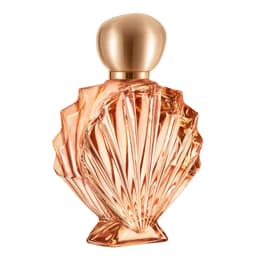
The third installment of the Vénus collection, this 2026 eau de parfum leaves behind the chypre of its predecessors for a summery fruity floral. Pineapple opens, magnolia and orange blossom hold the heart, vanilla and moss close it out. Alexandra Monet signs all three versions, as she did the previous two. The patchouli that carried the original signature has disappeared from the formula, and the blue dye of the first two bottles has given way to red.
The opening belongs to pineapple. The fruit arrives frank, juicy, almost sweet, and occupies the place magnolia held in the original. Mandarin accompanies it without contesting the foreground: it brings the acidity that keeps the sweetness from settling in too quickly. It is, in fact, the only common thread across the line's three openings, present in both 2024 and 2025.
The heart belongs to orange blossom, announced as equal to the fruit. It brings a sun-kissed whiteness rather than a floral opulence, and serves as a hinge between the pineapple and the sweetness of the base. Magnolia does not disappear but recedes: from subject, it becomes support.
The magnolia used across the collection is not the whole flower but a fraction, of which only the bright facets have been retained. In the original, this fraction carried the fragrance on its own. Here it serves as a binder: it gives the fruit-white flower duo a creamy continuity, without which the pineapple and orange blossom would remain side by side without blending.
The base pairs vanilla with a moss. Vanilla extends the addictive effect the house has claimed since the first installment. The moss, absent from its communication, gives the fruit an earthy grounding, without which the whole would tip into syrup.
The fragrance's regulatory list says more than its press kit. It counts thirty-nine entries, and several of the materials it names appear nowhere in the announced pyramid.
It lists a bergamot essence and a lemon essence, which explain the brightness of the opening better than mandarin alone. An orange blossom essence confirms the heart. A ylang-ylang and a Virginia cedar support the base, while methyl ionone adds the powdery facet the fruit would not produce on its own. Coumarin, finally, brings the sweet hay note that rounds out the vanilla.
Three dyes close out the list: a red, a yellow and a violet. They have no olfactory function, but they give the liquid the rosy beige hue the clear glass reveals. The two previous installments carried a blue in place of the red: the color change is recorded in the formula as precisely as in the bottle's design.
The most telling absence is that of patchouli. It held the chypre backbone of the two earlier installments and is not found in this one. Deprived of it, the base loses its earthy depth and its bitterness; the moss reclaims part of that role, but only on the surface. The house has not lightened its fragrance, it has removed its spine.
Classified as an eau de parfum, the juice holds the longevity this concentration promises. Pineapple fades first; orange blossom and vanilla last longer, carried by the musky lactone the list notes toward the end. After a few hours, what remains is a demure vanilla floral, quite far from the spectacular fruit of the opening.