
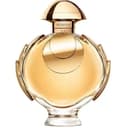
Olympea Elixir
Olympea Elixir: The golden hour captured in a tropical elixir, the solar apotheosis of a goddess turned helio There exists in contemporary photographic vocabulary a magic term that makes every instagrammer, lifestyle influencer, and visual content creator obsessed with the perfect feed aesthetic vibrate with excitement: “golden hour” – that golden hour that occurs twice a day, just after sunrise and just before sunset, when natural light takes on that particular quality of liquid gold that makes any photographed subject instantly sublime, wrapped in a warm, luminous halo that smooths out imperfections, softens contrasts, transforms the ordinary into the magical. It is the light of Terrence Malick's films, the one every director of photography dreams of capturing, the one that makes a selfie taken at 6:47 pm on a July evening instantly get three times more likes than an identical selfie taken at 2 pm under the merciless midday sun.
- Brand
- Paco Rabanne
- Launch year
- 2026
- Gender
- Women
- Olfactory family
- Floral
- Secondary family
- Fruity
- Concentration
- Eau de Parfum
Where to buy
Olympea Elixir, launched by Rabanne at the very start of 2026, presents itself explicitly as the olfactory translation of this photographic golden hour: Unleash your inner diva by capturing the essence of the golden hour in olfactive form, proclaims the marketing copy. The powerful, feminine signature embodies solar warmth as it meets the skin with an awe-inspiring blast of juicy pineapple and warm, radiant medley of lavish jasmine, paired with the tropical edge of monoi. It's a bottled-up ray of sunshine, the scent is made for the goddess within, unveiling her inner power at dusk. This promotional text deserves careful reading, since it condenses the entire conceptual ambition of the fragrance: the goal is not simply to create one more tropical floral-fruity fragrance (God knows the market is already saturated with those), but to synthesize olfactorily a specific visual-temporal sensation – that of this suspended moment when day tips over into night, when light turns golden-warm, when everything seems more beautiful.
From photographic concept to molecular reality: translating light into scent
But how does one concretely translate into aromatic molecules an experience that is fundamentally visual? How does one make light smell? The strategy adopted by Olympea Elixir rests on three synesthetic pillars: first, mobilizing ingredients that culturally evoke tropical solar warmth (juicy pineapple, monoi); second, creating an olfactory impression of luminosity through floral-aldehydic brightness (radiant jasmine); finally, building a warm, enveloping sensory texture that mimics the physical sensation of being bathed in golden light.
The pineapple in the opening fulfills this first function of immediate tropical evocation. Pineapple – the emblematic fruit of the Pacific islands, a symbol of hospitality since colonial times, a central raw material of summer vacation fragrances – instantly activates in our brain an entire network of mental associations: white sand beaches, palm trees, cocktails served in hollowed-out coconuts, vacations in Hawaii, Hawaiian shirts, surfing, ukulele. This associative activation creates the mental backdrop necessary for the fragrance to subsequently build its olfactory discourse of the tropical golden hour.
Jasmine, for its part, brings the dimension of floral luminosity – that quality possessed by certain white flowers of seeming to emit their own light, of glowing almost in the dark, a quality found in sambac jasmine, which blooms at night and whose petals' pure white seems phosphorescent. In Elixir, this jasmine is described as lavish, suggesting a generous concentration, a floral opulence that is neither discreet nor minimalist – this is assumed tropical exuberance.
Finally, monoi – this traditional Polynesian ointment obtained by macerating tiare flowers in coconut oil (copra) – brings the creamy texture, the warm oily wrap that olfactorily translates the sensation of solar warmth on skin. Monoi possesses this extraordinary synesthetic quality of smelling simultaneously of white flower, of coconut, and of tanning – that indefinable odor of skin warmed by the sun mixed with coconut sunscreen that everyone instantly recognizes as the smell of beach vacations. Rabanne transforms this pineapple-jasmine-monoi triptych into an olfactory meditation on golden dusk light.
Dusk goddess: the goddess of twilight as a new mythological figure
The copy insists on a precise timing: unveiling her inner power at dusk. This temporal detail is not incidental: it inscribes Olympea Elixir in a specific mythological lineage, that of the twilight deities who reign over this liminal moment between day and night. In the ancient Greek mythology that inspires the entire Olympea range, Hesperos (or Vesper in Latin) personified precisely the evening star (the planet Venus visible at dusk), and the Hesperides were the nymphs of the sunset who guarded the garden of golden apples at the extreme west of the known world.
This association between the divine feminine and golden dusk has a long iconographic tradition: it is the hour when Aphrodite/Venus emerges from the waves in Renaissance pictorial representations (consider Botticelli's Birth of Venus, where the light possesses precisely that golden-pink quality of dusk), it is the hour of secret romantic rendezvous in romantic literature, it is the hour when film heroines get ready for the evening while looking at themselves in their dressing-table mirror lit by soft lighting.
By positioning Elixir as a fragrance of dusk (rather than of broad daylight or deep night), Rabanne creates a specific olfactory-temporal territory: it is not a fragrance for facing the workday (too tropical, too exuberant), nor is it a deep-night fragrance for clubbing (not dark enough, not heady enough); it is a fragrance for that transitional moment between the professional and the festive, between the everyday and the extraordinary, between the social self and the intimate self – exactly the moment when one transforms for the evening, when one becomes an amplified version of oneself, when one effectively releases one's inner diva.
The attention economy and the tyranny of the Instagram-worthy instant
But beyond revisited Greek mythology, the concept of the bottled golden hour fits into a precise contemporary sociological reality: the dictatorship of the photographically perfect instant imposed by Instagram and TikTok. In today's attention economy, where everyone is expected to continuously produce visual content to feed their social networks, certain moments of the day become more “profitable” than others in terms of likes and engagement. The golden hour reigns as the absolute master of this hierarchy: travel influencers know it well, planning their daily photo shoots around these two magic forty-five-minute windows.
By creating a fragrance that claims to capture this golden hour, Rabanne addresses directly this generation that lives its life through the prism of social networks, for whom creating content has become a daily activity as routine as brushing one's teeth. Wearing Olympea Elixir then becomes a gesture that extends into the olfactory register this quest for the perfect instant – if one cannot perpetually live in the golden light of the golden hour (because the sun has the impertinence of moving across the sky regardless of one's Instagram aesthetic needs), at least one can smell as though one were there, one can wrap oneself in an olfactory aura that evokes this ephemeral visual perfection.
This marketing strategy reveals a fascinating evolution in contemporary perfumery: one no longer sells only a fragrance (an odorous liquid in a bottle), one sells a belonging to a lifestyle, an aesthetic, a tribe. Olympea Elixir does not target women who simply seek something that “smells good”; it targets women who have internalized the Instagram aesthetic, who intuitively understand what a golden hour is, who have already taken a hundred selfies in golden light, who will immediately recognize the reference and say, oh yes, I totally get it, that's exactly it! The fragrance thus becomes an identity marker signaling: I belong to this digital-visual generation that speaks the language of Instagram.
Divine decade: odyssey of an olfactory line from Olympus to the tropics
To understand what Olympea Elixir represents in Rabanne's creative trajectory, one must retrace the extraordinary history of the Olympea line since its initial launch in 2015 – eleven years of frenetic flanker multiplication that transformed a single olfactory concept (salted vanilla) into a shapeshifting universe capable of accommodating radically different interpretations while retaining a recognizable identity. It is a textbook case of line management in commercial perfumery: how to stretch an olfactory DNA over a decade without exhausting it, how to renew without betraying, how to surprise without alienating.
2015: original Olympea, a salty revolution in a sugary market
It all began in August 2015 when Rabanne unveiled Olympea, explicitly conceived as the feminine counterpart to Invictus (a masculine fragrance launched in 2013 that was then enjoying phenomenal commercial success). The mythological concept was established from the outset: if Invictus represents the victorious athlete crowned with laurels, Olympea embodies the modern goddess reigning over Olympus. Three prestigious perfumers were mobilized – Anne Flipo (IFF), Dominique Ropion (IFF), and Loc Dong (IFF) – to create what would become the line's signature olfactory innovation: the salted vanilla accord.
This salted vanilla constituted, in 2015, a relative audacity in mainstream feminine perfumery. At that time, the market was saturated with ultra-consensual sugary-vanilla gourmands (Lancôme's La Vie Est Belle, Viktor&Rolf's Flowerbomb) where vanilla was systematically paired with sugar, caramel, pastry-like gourmand character. Introducing salt – a culinary ingredient that evokes the sea, sweat, the body, the mineral rather than sweet dessert – created a fascinating cognitive dissonance that pulled vanilla out of its gourmand ghetto and projected it toward something more complex, more adult, almost carnal.
The original formula paired this vanilla-salt heart with aquatic-floral notes (hydroponic jasmine grown in water without soil, spicy ginger flower), green mandarin in the opening, and a base of cashmere wood, ambergris, sandalwood. The result? A fragrance that smelled simultaneously of the beach (salt, sun, warm sand), of dessert (creamy vanilla), and of skin (amber musk) – an olfactory hybridization that explains its immediate success and the polarized reactions it provoked (some saw in it the perfect fragrance combining freshness and sensuality, others hated this confusion between salty and sweet registers).
2016–2019: Intense, Aqua, Blossom, Legend – exploring the flankers
Buoyed by this initial success, Rabanne embarked on an intensive flankerization strategy that saw a new version bloom almost every year. Olympea Intense (2017) amplifies the power by adding sun-kissed orange blossom and spicy white pepper – this is the Olympea for women who found the original too discreet, too light. Olympea Aqua (2016) does exactly the opposite: it pares the formula down toward more aquatic freshness with petitgrain and Calabrian bergamot, explicitly targeting summer and warm climates where the original might seem too heavy.
Olympea Blossom explores the floral-springtime dimension with probably more green floral notes (though precise information about its composition is scarce, the name suggests a floral focus). But it is Olympea Legend (2019) that marks the line's first major exotic turn: gone is marine aquatic freshness, replaced by a desert orientalism with palm flower, syrupy candied plum, powdery tonka bean. The copy spoke of a new land at the frontiers of time, of the heat of the burning desert, of a roaring caravan – imagery that evoked Lawrence of Arabia rather than Poseidon, the Silk Road rather than the sea route.
This evolution from sea to desert, from aquatic to exotic, already signaled Rabanne's intention to stretch the Olympea concept beyond its original salty-marine territory to explore broader geographic and olfactory territories. The goddess was progressively leaving her Greek Mediterranean Olympus to travel toward more distant, warmer, spicier lands.
2020–2022: Solar and Onyx, the assumed heliotropic turn
Olympea Solar (2022) accentuates this tropical migration by massively introducing solar flowers: orange blossom, tiare flower (the Polynesian flower used to make monoi), unspecified white flowers, ylang-ylang, all set on a base of resinous benzoin and earthy oakmoss. Testers report an impression of creamy monoi, of Polynesia in a bottle, of mystical warmth – one has clearly left the Greek Mediterranean to land in the South Pacific.
At the same time, Rabanne multiplies collector editions with special bottles that reuse the juice of existing versions in different packaging: Olympea Onyx Collector Edition (2020) presents the original juice in a black onyx bottle rather than a golden one, targeting collectors and artificially creating scarcity. These collector editions attest to a well-honed strategy of commercial maximization: rather than systematically creating new formulas (a costly and risky process), one can also sell the same formula in different packaging that gives the illusion of novelty.
2024–2026: Parfum, Absolu, Elixir – rising concentration and final tropicalization
Olympea Parfum (February 2024) marks another turning point with the arrival of Paul Guerlain (junior perfumer of the Guerlain dynasty) alongside Anne Flipo. The formula breaks radically with the original salted-vanilla DNA: aromatic clary sage, sparkling pink pepper, green vegetal accord in the top; a floral bouquet of jasmine absolute, orange blossom, and rose absolute in the heart; a base of benzoin, musk, and vanilla. The bottle shifts from golden to glossy black – visually, this is a nocturnal, mysterious, more sophisticated, less immediately joyful Olympea.
Olympea Absolu (2025) – again Paul Guerlain but with Caroline Dumur this time – drastically simplifies the pyramid: juicy apricot in the top, jasmine in the heart, vanilla and amber in the base. Only three notes, an assumed minimalism that relies on the quality of the raw materials rather than architectural complexity. Testers report a fragrance that is intentional, feminine, complete, that smells expensive despite its status as a designer rather than niche fragrance.
And here we arrive at Olympea Elixir (2026), which pushes tropicalization to its culminating point with this pineapple-jasmine-monoi that definitively abandons any Mediterranean pretension to fully embrace a Pacific-tropical identity. The goddess has traveled for eleven years, from Greece to Polynesia, from the marble temple to the white sand beach, from salted vanilla to juicy tropical fruits. It is a geographic trajectory as much as an olfactory one, a perfumed road trip that also reflects the evolution of market tastes (tropical having largely replaced aquatic-marine in consumer preferences in recent years).
Golden pineapple and luminous monoi: anatomy of a tropical-solar trio
Unlike complex olfactory pyramids stacking ten to fifteen notes, Olympea Elixir focuses on an almost minimalist simple triptych: juicy pineapple, lavish jasmine, tropical monoi. This economy of means reflects a broader trend in contemporary perfumery toward pared-down formulas in which a few star ingredients are magnified rather than drowned in aromatic cacophony. Let us unpack what lies behind each of these three notes.
Pineapple: synthetic reconstruction of a fantasized tropical juiciness
Pineapple poses a fascinating technical challenge in perfumery: the fruit itself, though extraordinarily aromatic when eaten, cannot be efficiently distilled or extracted to obtain an essential oil or absolute usable in perfumery. The scent of fresh pineapple is too fleeting, too watery, too water-laden to be captured directly. It must therefore be synthetically reconstructed – a high-flying aromatic exercise that mobilizes an entire palette of fruity esters.
Ethyl butyrate and ethyl isobutyrate create the general fruity base with their pineapple-apple-pear facets. Allyl hexanoate specifically brings the characteristic pineapple note with a slight rum nuance evoking caramelized pineapple. Gamma-undecalactone (already encountered in the peach reconstruction) adds a creamy-milky dimension that makes one perceive not simply raw pineapple but something like a pineapple-coconut smoothie, an alcohol-free piña colada. Isoamyl acetate completes the picture with its banana-candy facet, which reinforces the tropical impression.
The result of this molecular assembly? Not the odor of real pineapple (too complex, too subtle, too fleeting) but the odor of fantasized pineapple – the one imagined when one thinks tropical pineapple, the one from fruit juice advertisements, the one from exotic-vacation ambient fragrances. It is a hyperrealistic, amplified version, caricatural in the good sense of the term: more pineapple than pineapple itself, exactly as the saturated colors of an Instagram photo are more vibrant than the reality they are supposed to capture.
Jasmine: from the Mediterranean flower to the Polynesian tropics
Jasmine occupies a central position throughout the entire Olympea lineage since 2015 – it is the floral through-line that runs across all versions (even when other notes change radically, the jasmine persists). But not all jasmines resemble one another, and the jasmine of Elixir must be consistent with the fragrance's tropical rather than Mediterranean territory. One can assume it is either sambac jasmine (Arabian jasmine, with round rather than star-shaped flowers, with a scent more fruity-green than grandiflorum), or a jasmine reconstruction oriented toward exotic rather than European facets.
Natural jasmine absolute (solvent-extracted from hand-harvested flowers) possesses an extraordinary aromatic richness with hundreds of components, but in modern commercial perfumery, reconstructions that simplify and amplify certain facets are often used instead. Hedione (a Firmenich molecule that smells of airy, transparent jasmine) creates the brightness, the luminosity that makes the jasmine perceived as radiant according to the marketing vocabulary. Jasmine lactone brings creamy roundness. Indoles provide floral depth (in minimal doses, since at high concentrations they smell fecal-animalic).
In the context of Elixir, this jasmine must fulfill a bridging function between the fruity pineapple and the oily monoi: it brings the floral dimension necessary for the fragrance to be perceived as tropical floral rather than simply tropical fruity. It is the jasmine that creates the sophistication, that elevates the composition beyond a simple beach cocktail to make it something worthy of the status of fragrance rather than mere scented refreshing mist.
Monoi: from Polynesian ointment to multilayered olfactory accord
Monoi is the signature ingredient that most radically distinguishes Elixir from the other Olympea fragrances. It is an ingredient laden with specific cultural and sensory connotations: French Polynesia (Tahiti, Bora Bora, Moorea), traditional beauty ritual, natural sun protection, golden tan, post-beach massage, relaxed tropical sensuality. Authentic monoi is obtained by macerating tiare flowers (Gardenia tahitensis) in coconut oil (copra) for at least ten days – an ancestral process that imbues the oil with the intense, intoxicating scent of the flower.
But in perfumery, using real monoi poses technical problems: it is an oil, not an alcoholic essence, it is unstable, it can go rancid, it is expensive in large quantities. A monoi accord is therefore generally used instead – a reconstruction that evokes the scent of monoi without actually being it. This accord likely combines: coconut (C14 aldehyde, gamma-nonalactone, which smell of creamy coconut), tiare or gardenia (reconstructed with floral lactones, jasmine, ylang), and a creamy-vanillic base that mimics the smooth texture of the oil.
Monoi in Elixir fulfills a triple function: first, it anchors the fragrance geographically in the Polynesian South Pacific (something Solar had already initiated in 2022); second, it creates that warm, enveloping olfactory texture that translates the physical sensation of the golden hour on skin; finally, it brings a sensual-exotic dimension that justifies the fragrance's goddess positioning – monoi evoking beauty rituals, self-care, the cult of the body as a temple honored with precious ointments.
The laurel bottle: visual metamorphoses of an Olympic crown
Since 2015, all Olympea bottles have shared the same iconic silhouette conceived by designer Marc Ange (a fittingly named designer of celestial objects): a stylized laurel crown that directly evokes the crowns awarded to victorious athletes at the ancient Olympic Games. This shape is immediately identifiable, visually striking, perfectly consistent with the brand's Greek mythological territory. But what distinguishes the different Olympea versions from one another is the chromatic and material treatment of this constant shape.
The original Olympea (2015) came in translucent golden glass that let the amber liquid inside show through – an evocation of gold, of the sun, of victory, of divinity. Olympea Intense (2017) amplified this gilding toward a more saturated, more intense gold (consistent with the name). Olympea Aqua (2016) opted for crystalline transparency evoking water. Olympea Parfum (2024) broke radically with the golden tradition by offering a matte glossy black bottle – a transformation that visually signaled the radical change in formula (out with salted vanilla, in with a sophisticated green floral).
For Olympea Elixir, one can reasonably assume (though official images are not yet widely available at the time of its very recent release) a treatment that visually evokes the golden hour: perhaps a golden-orange gradient like a sunset, perhaps a particularly luminous amber-gold glass, perhaps iridescent reflections that mimic the changing light of dusk. The cap and metallic finishes will likely remain in the brand's classic golden tones, thus preserving visual consistency with the Olympea identity while allowing sufficient differentiation to be identified at a glance on a perfumery shelf.
This constancy of shape (the crown) combined with variation in treatment (colors, finishes, materials) constitutes a perfect example of what designers call a “declinable visual identity”: one creates a strong, recognizable visual territory (here, the sculpted laurel crown) that can then be endlessly declined by playing with secondary parameters, thereby allowing the multiplication of product references while maintaining a range consistency that reassures the consumer and facilitates navigation through an overabundant offering.
Goddesses of dusk: sociology of the wearers of liquid golden hour
Who is Olympea Elixir aimed at in early 2026? Who are these women likely to invest €70–100 (a presumed price range based on the other Olympea fragrances) in a fragrance that promises to capture the essence of the golden hour? To answer this, several axes of analysis must be crossed: demographic (age, geography), psychographic (values, lifestyle), and behavioral (when and how they wear a fragrance, what other fragrances they already own).
Tropical Gen Z: from Bali to Tulum, the island-hopping generation
The first obvious profile is that of the woman born between 1997 and 2012 (so between fourteen and twenty-nine years old in 2026) who grew up with Instagram as the dominant medium and for whom the concept of the golden hour is a shared cultural given. This generation travels differently from its elders: rather than classic tourist circuits (Paris–Rome–London), it favors photogenic tropical destinations that have gone viral on social media – Bali and its terraced rice fields, Tulum and its cenotes, the Maldives and their overwater bungalows, Thailand and its golden temples.
These destinations share several characteristics: they offer spectacular natural settings perfect for Instagram photos, they are relatively affordable (especially Southeast Asia), allowing millennials and Gen Z to travel even without a fortune, and they embody a certain ideal of a disconnected, zen, spiritual life that this generation values (sunrise yoga, meditation, healthy eating, life in harmony with nature). Olympea Elixir, with its tropical pineapple-jasmine-monoi, speaks directly to these women by offering them a portable olfactory souvenir of these paradisiacal trips – exactly as Estée Lauder's Bronze Goddess had, in the 2000s, captured the olfactory essence of luxurious tropical vacations.
The lifestyle influencer: when the fragrance becomes a photographic prop
The second important profile is that of the influencer or lifestyle content creator for whom the fragrance is not merely a product one wears but an accessory one photographs, stages, and integrates into one's Instagram aesthetic feed. For these women, the bottle matters as much as, if not more than, the juice – it is a decorative object placed on the dressing table alongside scented candles, crystals, succulents, thus creating what is called in industry jargon a shelfie (a blend of shelf and selfie): a carefully styled shelf photo that generates engagement and likes.
The Olympea crown bottle lends itself perfectly to this decorative-photographic use: its strong sculptural shape creates a visual focal point, its golden treatment catches the light and shines in photos, its relatively generous size (Olympea bottles are rather imposing) gives it a physical presence that reads well even in a photo taken from a distance. In a flat lay (a composition of objects photographed flat from above) typical of Instagram, Olympea Elixir can visually dialogue with other objects in the same golden-tropical chromatic register: gold jewelry, a fresh pineapple cut in half, exotic tropical flowers (anthurium, bird of paradise), a fashion magazine open to a swimwear ad page.
The working girl in search of urban tropical escape
The third significant profile is that of the urban professional who does not necessarily travel to tropical destinations several times a year but dreams of doing so, and who uses the fragrance as an olfactory escape from her daily commuter grind. For this woman who spends her days in air-conditioned offices at constant temperature under artificial neon lighting, wearing Olympea Elixir constitutes a form of poetic resistance – a way of mentally treating herself to sensory micro-vacations even while stuck at her computer processing emails.
This escapist function of tropical fragrance is well documented in psychology: smelling pineapple and coconut activates in our brain the areas associated with vacation memories, triggering a cascade of pleasant recollections (beach, sun, relaxation, freedom) that can indeed improve mood, even temporarily. It is emotional aromatherapy with no scientific pretension – wearing Elixir on a rainy Tuesday morning in February in Paris or London or New York does not magically teleport one to Bora Bora, but it can create a small olfactory bubble of exotic comfort that makes the day marginally more bearable.
Seasonality and occasions: an eternal summer fragrance?
The crucial question for a fragrance as ostensibly tropical as Elixir is that of its seasonality: is it a fragrance worn only in summer, or can it transcend seasons? The answer largely depends on the climate one lives in and one's personal tolerance for olfactory-meteorological dissonance. In Nordic countries where winter is long, dark, and cold (Scandinavia, Canada, the northern United States), wearing a tropical fragrance in January may seem absurd or, on the contrary, beneficial – absurd because completely disconnected from external climatic reality (it's -15°C and I smell of pineapple?), beneficial for precisely that same reason (it's -15°C, so I need some virtual olfactory warmth to keep my spirits up).
By contrast, in regions with a more temperate or outright warm climate year-round (Southern Europe, California, Australia, the Middle East, tropical Asia), Elixir can reasonably be worn over a much wider window. In the United Arab Emirates, for example, where it is hot twelve months a year and indoor air conditioning is systematic, tropical-floral fragrances are worn year-round without any hesitation. The same holds true in Southern California or Florida, where the subtropical climate allows for an olfactory wardrobe less rigidly seasonal than in Boston or Chicago.
In terms of occasions, Elixir is clearly positioned in the festive-social register rather than the professional-discreet one. It is a fragrance for the weekend, vacations, evenings with friends, Sunday brunches on a terrace, rooftop bars at sunset – all those leisure moments when one can afford to be olfactorily expansive without fear of offending colleagues stuck in an open-plan office or conservative clients in a meeting. The golden hour marketing reinforces this positioning: it is the fragrance for the moment when the workday ends and time for oneself begins, time for pleasure, time when one becomes oneself again rather than a professional role.
The solar apogee of a lineage that has traveled for eleven years from the Greek Mediterranean Olympus to the turquoise Polynesian lagoons, Olympea Elixir embodies a triple ambition: to capture olfactorily the photographic golden hour that has become a generational Instagram obsession, to complete the progressive tropicalization of Olympea begun with Legend and Solar, and to offer modern urban goddesses an exotic escape elixir they can carry everywhere in their handbag. By pairing juicy pineapple and creamy monoi, radiant jasmine and dusk warmth, on a crown-shaped bottle that shines like the setting sun, Rabanne creates less a fragrance than a hybrid cultural object – at once an olfactory travel souvenir, a photogenic decorative accessory, and a liquid promise that somewhere, perpetually, the golden hour continues to bathe the world in its perfect golden light, and that a single spray on the wrist is enough to mentally teleport there.
Olfactory pyramid
Share your impressions
Create an account to keep your votes and find your notebook.