
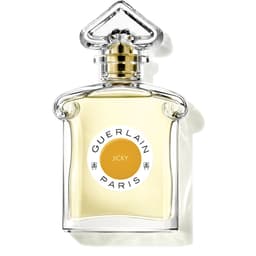
Jicky is the fragrance Aimé Guerlain created in 1889, which the house presents as the first modern perfume, one of the first to use vanillin and coumarin. This amber fougère sets the freshness of a lemony lavender and an accord of bergamot, lavender and rosemary against the warmth of woods and vanilla, and blurs the line between feminine and masculine.
Guerlain describes Jicky through its contrasts: a lemony lavender and a fougère accord bring freshness, notes of wood and vanilla bring warmth, and spicy notes unfold in its amber facet.
The fougère accord
The house builds this accord from bergamot, lavender and rosemary blended with woody notes. It specifies that its lavender blooms in the south of France, harvested in summer and steam-distilled on site.
Vanilla and coumarin
The base rests on vanilla, a material Guerlain places at the center of the Guerlinade, its signature. Vanillin and coumarin, synthetic molecules that were new at the time, make Jicky one of the first perfumes to combine chemistry with natural materials.
The notes listed
The notes listed bring together lavender, rosemary and bergamot in the top, rose, jasmine and rosewood among the heart notes, and coumarin, tonka bean, vanillin and civet in the base.
What the label declares
The ingredient list has seventeen entries. After alcohol, fragrance and water come a solubilizer, PEG-40 hydrogenated castor oil, a UV filter, butyl methoxydibenzoylmethane, and an antioxidant, pentaerythrityl tetra-di-t-butyl hydroxyhydrocinnamate.
Eleven regulated allergens are declared: linalool, limonene, coumarin, citral, geraniol, citronellol, eugenol, cinnamal, benzyl benzoate, alpha-isomethyl ionone and benzyl alcohol. The list contains no colorant.
Similar perfumes
Similar notes and family, from other houses.
- Dahlia Divin Le NectarGivenchy
- LegendMontblanc
- The One Eau de ParfumDolce & Gabbana
- La ReligieuseSerge Lutens
- ValentinaValentino
- Fils de joieSerge Lutens
- Ungaro IIIEmanuel Ungaro
- LunaNina Ricci