
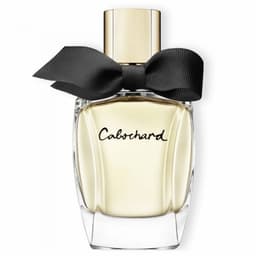
Cabochard, a fragrance of character by Alix Grès, whose real name was Germaine Krebs, entered the world of haute couture in 1934 and won, that same year, the first prize for haute couture at the Paris World's Fair.
Between modernity and tradition, Cabochard was born in 1959. Because its chic is timeless, Cabochard is regarded as a great classic by the world of perfumery. Cabochard is also the first fragrance of the Grès house and unmistakably expresses Mme Grès's strong character. In her image, her first fragrance is intended for assertive, self-assured women. Regarded as a luminous chypre, the composition of Cabochard is signed Bernard Chant.
Cabochard, an audacity signed by perfumer Bernard Chant
To create her first fragrance, Alix Grès, whose real name was Germaine Krebs, called upon Bernard Chant. He spent his entire career within the company IFF (International Flavors and Fragrances). With a strong and daring personality, Bernard Chant managed to work with several houses, such as Estée Lauder or Clinique, and to create fragrances very different from one another. His adaptability would also lead Bernard Chant to create Clinique's first and great success, Aromatics Elixir.
Cabochard, olfactory notes both green and chypre
Cabochard is thus a chypre essence, and a tremendously daring one. Cabochard opens with the fresh, citrus notes of lemon and bergamot, paired with an aldehydic accord. Then, its heart develops toward tonalities that are both very green and floral, such as galbanum, Grasse jasmine, Bulgarian rose, Italian iris, geranium and ylang-ylang.
Galbanum essence is drawn from a plant native mainly to Iran and Afghanistan. Galbanum gum is harvested by incising the plant's roots. This gum is then distilled to obtain a resinoid. In perfumery, galbanum is highly prized in green, woody, chypre and herbaceous compositions. The base of Cabochard is seductive, sensual, even animalic, as it is composed of castoreum, oakmoss, sandalwood, patchouli and vetiver. Castoreum is an ingredient of animal origin. Its substance, which resembles an oily, odorous secretion, comes from the beaver. To harvest castoreum, however, the animal had to be killed.
Widely used in the 19th century, the castoreum note is today reproduced identically in the laboratory. In perfumery, castoreum gives off powerful, sensual, even sexual tonalities, but also soft and very feminine ones. As for oakmoss, it is a lichen that grows on the trunks and branches of oak trees native to Europe or North America. Its atypical scent, which blends marine and earthy tonalities, is in fact the result of a cross between a fungus and an algae. In perfumery, oakmoss is highly favored in woody, mossy, sensual fragrances of character.
Cabochard is without doubt a composition of character, in the image of the great Mme Grès. The house's first fragrance, Cabochard is the one that has managed to endure through eras and time, keeping its timeless chic.