
Aramis
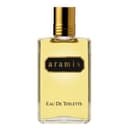
Aramis Classic Eau de Toilette
Launched in 1966, Aramis is the leathery chypre that brought prestige men's fragrance into department stores. Bernard Chant reworked the skeleton of his Cabochard here and hardened it: sharp aldehydes, bitter mugwort, then a massive leather propped against oakmoss and patchouli. A frontal classic, one that never learned to apologize.
Where to buy
In 1966, the house of Aramis — founded three years earlier by Estée Lauder within her group — put on sale a juice bearing both the name of the brand and that of one of Dumas's musketeers. The idea was new. Until then, men's fragrance was sold at the barber's or over a pharmacy counter, rarely at a department store's beauty section. Aramis entered through the front door, settled in, and became the reference against which all American men's perfumery would measure itself for two decades.
Bernard Chant did not start from nothing. Seven years earlier, he had signed Cabochard for Grès, a leathery chypre that the era classified as feminine and that would be heard quite differently today. Aramis took up its structure and shifted it: the aromatics rose, the florals receded, tarragon gave way to mugwort. The leather heart still rested on the same material, patchouli remained the pivot, and even that strange coconut note running through both formulas never let itself be identified for what it was. Chant worked this way, through successive derivations: one composition would call for another, from which he would remove or add an element.
The opening spares no one. The aldehydes snap, waxy and almost metallic, immediately doubled by a bitter mugwort and a thyme that smells of dry grass. Bergamot is present, but it softens nothing: it sharpens. Behind it, myrrh lays down a dark resin, clover a crushed greenness, and gardenia a creamy whiteness that keeps the whole from turning into a simple aromatic water. This is outdoors, at the end of winter, and it is cold.
The heart is briefer than expected, because its main task is to make the transition. Sage and cardamom extend the bitterness of the top; jasmine provides the composition's only truly floral moment, and it is unruly, almost dirty. Iris root, for its part, produces no powder: it installs an earthy, slightly gray coldness, over which patchouli is already beginning to rise. At this stage, the fragrance has stopped being an herbal accord and is not yet a leather.
Then the leather takes over entirely. It is blunt, smoky, tanned, without the honey or tobacco that soften it elsewhere, and oakmoss grounds it in a full-fledged chypre. Vetiver and sandalwood provide the woody framework, amber a warmth that does not sweeten, musk an animalic trail that many enthusiasts consider the fragrance's true subject. Coconut, finally, never announces itself as such: it rounds the leather from underneath, strips it of its varnished edge, and this is probably why Aramis remains recognizable among a thousand others.
Aramis is not a discreet fragrance and never claimed to be. It calls for a light hand, two sprays at most, and it performs better on a winter garment than on bare skin in summer. Successive reformulations have lightened the whole, to the point that those who knew the older versions find the current one far lighter than the dense eau de toilette of the past. Still, few masculine compositions have lasted sixty years without disguising themselves, and this one still reads like a document.
Olfactory pyramid
Share your impressions
Create an account to keep your votes and find your notebook.