
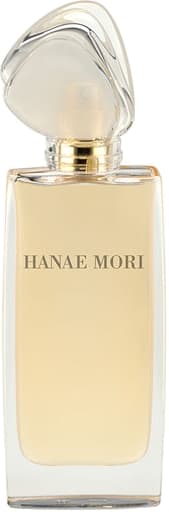
Hanae Mori Butterfly — the butterfly as Hanae Mori's lucky charm was born in 1926, in Shimane, a small provincial town near Tokyo. Her childhood was marked by her mother's Japanese traditionalism and her father's modernism.
The first fragrance from the house of Hanae Mori, Butterfly was born in 1995. Its name Butterfly is self-evident, since it is a butterfly that has protected her since childhood and that inspires her… Born in a small provincial town near Tokyo, Hanae Mori grew up caught between the tradition instilled by her mother and the modernism of her father. Butterfly has an olfactory architecture different from other perfumes. Indeed, rather than enclosing the fragrance within an olfactory pyramid, the nose created layered beds of scent that overlap and blend from the very start.
Bernard Ellena, a perfect imagination for Hanae Mori Butterfly
Bernard Ellena is the brother of the famous Jean-Claude Ellena, perfumer for Hermès until 2016. Born in Grasse, Bernard Ellena was exposed to the world of scents from a very young age. His father, Peter, was also a perfumer. It was at Symrise that Bernard Ellena began his career. Delicate and discreet, Bernard Ellena has created numerous perfumes, including Legend pour Femme by Montblanc and Oriens by Van Cleef & Arpels.
The notes of Butterfly, between fruits and flowers
Butterfly opens with deliciously sweet fruit notes, such as blackberry, blackcurrant, and wild strawberry. Native to Europe, wild strawberry grows in forests in the wild. It was in the Middle Ages that people began cultivating wild strawberry. During the Renaissance, women ate strawberries with cream, while men ate them with wine. The large, beautiful strawberries we know today first appeared in Europe in 1713. In perfumery, the strawberry note is reproduced synthetically in the laboratory. It gives off red, floral, and green tonalities. Next, the second bed of scent in Butterfly combines magnificent floral tonalities, namely rose, jasmine, ylang-ylang, and peony, given pride of place here by Hanae Mori. Native to the Far East, peony symbolizes the return of spring through its delicate scent. Like an object of fantasy, peony seduces through the multiplicity of its petals. Initially, the Chinese used peony for its medicinal properties. The famous Greek physician Hippocrates used peony to treat epileptic seizures. Peony has inspired many painters, such as Édouard Manet. In the language of flowers, peony symbolizes sincerity and shyness. In perfumery, peony is reproduced synthetically. It gives off floral, airy, rosy, and green tonalities. Finally, Butterfly evolves toward more sensual notes such as vanilla, cedar, and sandalwood. Understated and refined, the Butterfly bottle offers the transparency of an imposing glass. The cap is meant to be highly original, shaped like butterfly wings and crafted from crystal.