
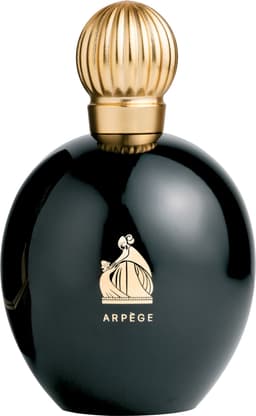
Arpège, like an eternal myth rooted in the world of perfumery. The story of the Lanvin house is the story of an outstanding and incredibly talented woman. Jeanne Lanvin represents a century of elegance and expertise. Passionate about fashion and hats, this young Parisian opened her shop on rue du Faubourg St Honoré in Paris in 1889.
Released in 1927, Arpège is the expression of a maternal love that Jeanne Lanvin dedicated to her daughter, Marguerite, for her 30th birthday. Arpège is a true floral symphony, and since Marguerite, who preferred to go by Marie-Blanche, was a musician, Jeanne chose the name Arpège. With this sumptuous bouquet of flowers, sandalwood largely dominates the composition, and this was the first time it was used to such an extent, especially in a feminine composition. Signed by André Fraysse and Paul Vacher, the composition was a genuine triumph from its release.
A duo of perfumers to create Arpège by Lanvin
To create this perfume so special to her, Jeanne Lanvin chose a duo of perfumers, namely André Fraysse and Paul Vacher. André Fraysse was born in 1902 and was the exclusive perfumer of the Lanvin house. He created Eau de Lanvin, Rumeur, and Scandale. André Fraysse, who died in 1976, is primarily known for having created Arpège. As for Paul Vacher, he was a highly creative perfumer. Because he loved to evoke emotions, Paul Vacher put his whole soul into his perfumes. Paul Vacher is also known for having co-created Miss Dior, the first perfume by Christian Dior.
The dazzling floral fragrant bouquet of Arpège
Arpège is an aldehydic floral fragrance that has been revisited by Lanvin since 1927. Arpège opens with a combination of ultra-fresh notes, those of bergamot, aldehydes, and neroli. Aldehyde C11 is a molecule derived from organic research. Nevertheless, some aldehydes are genuinely derived from citrus fruits. It was Chanel with its legendary N°5 that first incorporated aldehydes into a perfume. Today, aldehydes are highly prized in niche perfumery. They release floral, orange-like tones, similar to the smell of candle wax. The heart of Arpège is very feminine, being ultra floral. It is composed of rose, jasmine, ylang-ylang, and lily of the valley. Ylang-ylang is a tree native to Southeast Asia. In the Philippines, its name means flower of flowers. Ylang-ylang essence is obtained through steam distillation of fresh flowers. These are used no more than two hours after picking. There is no perfume as sensual, floral, and exotic as ylang-ylang. In compositions, ylang-ylang offers floral, sensual, sweet, and suave tones. The base of Arpège is both woody and vanilla-laden, combining vetiver, patchouli, vanilla, and sandalwood used here in an overdose. In 1990, Lanvin reformulated the fragrance to bring it up to date, while retaining its essence: love.
A fragrance symbolizing eternal love par excellence, Arpège was dedicated to Marguerite for her 30th birthday. In this perfume, one finds a wonderful floral bouquet paired with sandalwood, in very large quantity. Though it was revisited in 1990, Arpège remains one of the greatest successes of the Lanvin house.