
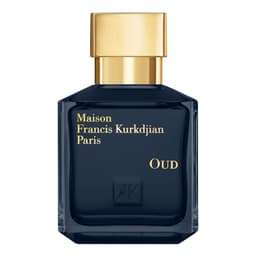
With Oud, Francis Kurkdjian built in 2012 an eau de parfum around the oud wood of Laos, which he approaches with a Western sensibility. This amber woody opens with saffron and elemi, brings together oud and Atlas cedar at its center and closes on patchouli. The house intends it to be at once masculine and feminine.
Saffron and elemi
Saffron and elemi open the composition; the house entrusts them with sparks of light around the wood. Elemi, a gum resin from the same botanical family as incense and myrrh, brings a lemony, peppery facet.
A review published when the fragrance launched found these two materials of similar intensity, with saffron clashing against elemi in the manner of oranges studded with cloves.
Oud from Laos and Atlas cedar
The oud comes from Laos; the house lends this material an animalic, woody, leathery, smoky and honeyed character. The same review described it as more leathery than woody or medicinal, and saw Atlas cedar join the heart to restore wood to it.
Patchouli
Patchouli, which the house says originates from Indonesia, closes the composition. The reviewer judged it not very earthy and well linked to the oud and cedar that persist. The declared ingredients include oils of patchouli, geranium flower, Atlas cedar and Virginia cedar.
A note list that has remained stable
The house's original presentation already cited saffron, elemi from the Philippines, oud from Laos, patchouli from Indonesia and Atlas cedar, the five materials the house still cites today.
What the label declares
The label places Iso E Super, declared under its chemical name, at the top of the odorant substances. The list also declares oils of Virginia cedar and Atlas cedar and a patchouli oil, which confirm two of the announced notes.
Vanillin and a geranium flower oil also appear on the label, without being named among the notes; geranium and rose ketones give floral support to the intense flowers the house speaks of. A UV filter protects the juice, and no colorant is declared.