
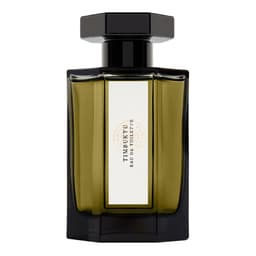
Timbuktu appeared in 2004, the second stop in L’Artisan Parfumeur’s travel collection. Bertrand Duchaufour composed it on returning from a stay in Mali, after the wusulan, a scented ritual Malian women pass from mother to daughter. Green mango and pink pepper open onto a karo karounde flower rare in perfumery, which incense, papyrus and vetiver fill with smoke.
Ten materials and three tiers, among them a flower no other fragrance had used. The house puts forward only three of them on its page; Wikiparfum gives the whole list.
Green mango, incense, vetiver
Green mango, pink pepper and cardamom open. Karo karounde holds the middle with the incense and the papyrus. Vetiver, myrrh, patchouli and benzoin close the composition.
Three materials put forward out of ten
The page of the house keeps the pink pepper, the karo karounde and the vetiver, which it names by their botanical names: Schinus molle, Leptactina senegambica, Chrysopogon zizanioides. The tiering across ten materials comes from Wikiparfum, which the European market repeats without change.
Smoke for a subject
Burnt papyrus, incense and patchouli hold the idea of smoke on which the house built its story. Green mango and pink pepper keep the opening tart, and the cardamom adds a spiced coolness to it.
What the label declares
Fourteen entries: denatured alcohol, fragrance, water, hydroxycitronellal, an ultraviolet filter, eight regulated allergens — linalool, benzyl benzoate, eugenol, alpha-isomethyl ionone, limonene, coumarin, geraniol, isoeugenol — and benzyl alcohol to finish. No substance banned in the European Union appears there.