
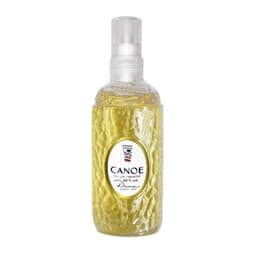
Canoé is an eau de toilette composed by Jean Carles for the house of Dana, in Paris, in 1935. Dana now describes it as an aromatic fougère and a true expression of masculinity: bergamot and petitgrain at the top, a heart of lavender, fougère accord and geranium, and a base of patchouli and musk. Brought to America by U.S. soldiers, the fragrance is part of the Smithsonian’s collections.
Dana classifies Canoé among the aromatic fougères: a classic blend of fresh citrus and herbs over sweet, resinous undertones. The house now divides the composition into three tiers, from bergamot to musk, by way of lavender.
Top
Bergamot and petitgrain open the fragrance. The house places here the citrus freshness that, together with the herbs, forms one of the two sides of its fougère, the other lying in the sweet, resinous undertones that support it.
Heart
Lavender, a fougère accord and geranium form the heart. The fougère accord, which gives the family its name, is not a material but a perfumer’s construction, which the house nonetheless names among the heart notes.
Base
Patchouli and musk make up the base of the version sold today. They answer the sweet, resinous undertones that Dana attributes to its fougère, beneath the freshness of the citrus and herbs that open the composition.
What stays out
Lemon, clary sage, jasmine, cedar, carnation, vanilla and heliotrope, long associated with Canoé, do not appear in the composition Dana publishes today. The formula sold at its birth, in 1935, is not documented by the house.
Similar perfumes
Similar notes and family, from other houses.
- IndividuelMontblanc
- La Cuvée SecrèteGuerlain
- Obsessed for WomenCalvin Klein
- LaytonParfums de Marly
- LovemongerAlendor Perfumes
- Hugo Just DifferentHugo Boss
- Eternity Cologne For MenCalvin Klein
- LegendMontblanc
More perfumes from Dana
Also composed by Jean Carles
- Miss Dior Esprit de Parfum OriginalChristian Dior
- Miss Dior Eau de Toilette OriginaleChristian Dior