
Forever Wanted Absolu
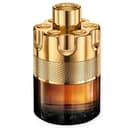
Forever Wanted Absolu: virile intensity pushed to its paroxysm, when sacred incense meets profane whisky in a black-and-gold barrel flacon. In early 2026, Azzaro launches Forever Wanted Absolu – the tenth iteration of its Wanted line initiated in 2016, and whose name deserves attention for how strategically it condenses several marketing promises that have become nearly obligatory in contemporary men's perfumery. Forever: permanence, duration, eternity – a promise of olfactory longevity in a market saturated with fleeting fragrances that vanish after two hours. Wanted: desire, covetousness, being actively sought – the male fantasy of becoming the object of desire rather than the desiring subject. Absolu: maximum intensity, ultimate concentration, pure essence – a term borrowed from perfumery's technical vocabulary (where an absolute designates an extract obtained through solvents, more concentrated than an essential oil) but diverted here as a mere marketing superlative meaning the strongest of all our Wanted.
Where to buy
But Absolu also carries interesting philosophical connotations: the Absolute with a capital letter designates, in several philosophical traditions (Hegel, Schelling), ultimate reality, fundamental essence, the first principle from which everything flows. Naming a fragrance Absolu is therefore to claim a form of ontological radicalism – it is not simply a stronger fragrance, it is THE fragrance in its very essence, stripped of all compromise, of all dilution. It is masculinity carried to its incandescence, concentrated until it becomes almost intolerable in its power. This rhetoric of absolute intensity runs through all of Azzaro's communication around this launch: addictive trail, magnetic masculinity, lasting impression, unforgettable – vocabulary of the extreme that promises not simply to smell good but to brand olfactory memories with a hot iron, to leave an indelible mark.
Absolu as concentration versus Absolu as concept: calculated semantic ambiguity
In the professional jargon of perfumery, the term absolute has a precise technical definition: it refers to a type of aromatic extract obtained through extraction with volatile solvents (generally hexane or ethanol) followed by evaporation, producing a material highly concentrated in odorous molecules, richer and more complex than an essential oil obtained through distillation. A jasmine absolute, for example, contains not only the volatile compounds of the flower but also certain less volatile molecules (waxes, pigments) that contribute to its olfactory richness. Absolutes are considered noble, costly raw materials, reserved for high-end fragrances because of their olfactory fidelity to the natural material and their high concentration.
However, when Azzaro names its fragrance Forever Wanted Absolu, it is not referring to this technical definition – the fragrance does not claim to be composed solely of natural absolutes (which would moreover be economically nonsensical for a designer fragrance sold at around €90–110 for 100 ml). The term functions here as a pure metaphor of intensity: it is an absolu in the figurative sense, simply meaning the most intense, strongest, most concentrated version of the Wanted line. This polysemy is obviously not accidental: it allows the brand to benefit from the luxurious-professional connotations of the technical term while using it much more loosely as a mere marketing superlative. This is a linguistic strategy found throughout commercial perfumery: Parfum (which should designate a concentration of 20 to 30 percent but is often used as a simple product name), Elixir (which designates no specific concentration but evokes alchemy), Essence (likewise).
This ambiguity, however, creates consumer expectations that must be managed: if a fragrance is named Absolu, buyers will expect exceptional olfactory intensity and longevity. This is precisely why Azzaro claims 24 hours longevity – an astronomical promise (most designer fragrances last a maximum of six to eight hours) that can only be justified by a name like Absolu. Performance then becomes the product's central obsession: it is no longer just a beautiful scent, it is a scent that lasts, that projects, that clings to skin and clothing with an almost aggressive tenacity. This performance-centric orientation reflects a heavy trend in 2020s men's perfumery where online discussions (Reddit, Fragrantica, YouTube) revolve obsessively around longevity and projection – as though olfactory quality mattered less than scientifically measurable duration.
The race for intensity: genealogy of an escalation in the Wanted line, 2016–2026
To understand the arrival of Forever Wanted Absolu, one must briefly trace the trajectory of the Wanted line since its 2016 launch. The original Wanted (Eau de Toilette) offered a relatively classic woody-spicy-citrus composition (lemon-ginger-cardamom-vetiver-tonka) in a spectacular barrel flacon but with rather moderate intensity – it was an accessible, everyday, youthful fragrance. Commercial success was immediate (the revolver flacon created massive visual differentiation on shelves), triggering a frenzy of flankers that systematically explored two axes: olfactory variation (Wanted By Night 2018, nocturnal oriental-cinnamon-tobacco; Wanted Girl 2019, the feminine counterpart) AND an escalation of intensity.
This escalation follows a classic industry pattern: Wanted → The Most Wanted (2021, moving to the higher Eau de Parfum concentration) → The Most Wanted Parfum (2022, where Parfum probably designates an intense EDP rather than a true 25 to 30 percent extract) → The Most Wanted Eau de Parfum Intense (2023, a semantic redundancy revealing the confusion) → Forever Wanted Elixir (2025, Elixir supposedly even more concentrated) → Forever Wanted Absolu (2026, the ultimate superlative?). Each new flanker must prove it is more than the previous one: stronger, longer-lasting, more intense. Here one reaches the logical limits of the system: after Absolu, how does one name the next flanker? Wanted Ultime? Wanted Quintessence? Wanted Infinite? The one-upmanship becomes comical but it works commercially because it answers a masculine psychological need: to own the most extreme version, not to settle for the basic one.
This collection logic also creates an implicit hierarchy among wearers: whoever wears the original 2016 Wanted is a casual; whoever wears The Most Wanted Intense shows they know the line; whoever wears Forever Wanted Absolu demonstrates that they are at the forefront of 2026 releases, that they have access to novelties before their mass distribution. The fragrance becomes a marker of cultural capital within the subculture of fragheads (fragrance enthusiasts) who collect flankers, compare batches (production lots), and debate reformulations online. For this niche-within-the-mainstream audience, Forever Wanted Absolu represents a grail: it is designer but with a niche pretension (leaning niche, as one reviewer put it), financially accessible but temporally rare (potentially a limited edition, not immediately available everywhere).
Extreme masculinities: what Absolu reveals about the shifting codes of gender marketing
Beyond commercial strategies, the name Forever Wanted Absolu and its magnetic masculinity positioning say something interesting about contemporary representations of masculinity in perfumery. Historically, men's fragrances operated on two main registers: the fresh-sporty-dynamic (aromatic fougère type, Azzaro Pour Homme 1978, Cool Water 1988) or the woody-spicy-elegant (Terre d'Hermès 2006 type, Bleu de Chanel 2010). These registers conveyed relatively tempered masculinities: the active-clean-shaven man of the morning OR the distinguished-mature-Western-cultured man of the evening. But over the past decade a third register has emerged that could be described as hedonistic hyper-masculinity: very sweet-gourmand (caramel, vanilla, red fruits), very intense and long-lasting, openly seductive-sexual.
This new olfactory masculinity paradoxically borrows feminine codes (sweet gourmand character was historically feminine) while claiming them aggressively as virile through projection power and marketing symbolism (weapon-shaped flacons, military-conquest vocabulary, hypersexualized male models). It is a masculinity no longer afraid of being sweet-soft so long as it is strong-dominant. Forever Wanted Absolu partakes of this shift by offering a composition that is certainly amber-vanillic (traditionally feminine-oriental) but marketed as magnetic masculinity, daring composition, dangerous extremes. The danger here does not lie in an austere leather-tobacco-vetiver dryness (old-school masculinity) but in an excessive sweetness, a sugary intensity that becomes almost violent through its refusal of discretion.
This absolute masculinity translates olfactorily into a spiritual-hedonistic-eternal triptych (incense-whisky-vanilla) that paradoxically reconciles the sacred and the profane, asceticism and intoxication, creating a signature at once mystical and decadent that materializes the impossible synthesis between a Buddhist monk and a jet-setting playboy – a chimerical figure of the 2026 man who meditates in the morning and parties at night, drinks outrageously expensive Japanese whisky while talking about spirituality, and treats his contradictions as proof of complexity rather than incoherence.
Olfactory trinity: sacred incense, profane whisky, eternal vanilla – or how three notes create a paradoxical masculinity
Forever Wanted Absolu stands radically apart from all other Wanted flankers through its deliberate formulaic minimalism: officially only three main notes – Incense (top), Whisky (heart), Vanilla (base). Three. In a market where olfactory pyramids stack fifteen ingredients to impress (five citrus fruits plus four spices plus three flowers plus two woods plus one gourmand accord), this stripping-down constitutes a bold gamble: each note must carry considerable olfactory weight, fully occupy its space without being able to hide behind a multitude of other ingredients. It is an almost conceptual composition, ascetic in structure but opulent in rendering – exactly like brutalist architecture, which uses few materials (concrete, glass) but creates impressive volumes.
This incense-whisky-vanilla triptych also tells a fascinating symbolic story: it is the meeting of the spiritual (incense burned in temples for millennia), the hedonistic (whisky, an alcohol of luxury-pleasure-intoxication), and the eternal (vanilla, a universally loved scent, archetypal of comfort). In other words: the monk, the libertine, and the child. The ascetic, the pleasure-seeker, and the innocent. This collision of apparently incompatible worlds (how can one be simultaneously religious and drunk? spiritual and materialistic?) creates a productive tension that keeps the fragrance from settling into a single register. It is neither a spiritual-meditative fragrance (too sweet-vanillic for that), nor a gourmand-festive fragrance (too smoky-resinous for that), nor a comforting-cozy fragrance (too alcoholic-spicy for that). It inhabits the in-between, the liminal, creating a troubled identity that destabilizes easy categorization.
Incense: from religious offering to marker of masculine olfactory sophistication
Incense (from the Latin incensum, meaning burned) designates aromatic resins derived from various trees (chiefly Boswellia for olibanum/frankincense, but also Commiphora for myrrh) that are burned to produce fragrant smoke. This practice dates back to the most remote Antiquity: ancient Egypt (incense in funerary rituals, mummification), Mesopotamia (offerings to the gods), Greece and Rome (sacrifices), and above all the Judeo-Christian and Buddhist traditions where incense symbolizes prayer rising to heaven, spiritual purification, the presence of the sacred. For millennia, incense was literally more precious than gold: the incense trade routes from Yemen and Oman to Rome built the fortunes of entire empires (the kingdom of Sheba, the city of Petra), and the Magi offering incense, myrrh, and gold to Jesus attest to its status as the supreme royal gift.
In modern Western perfumery, incense has a paradoxical fate: it remains associated with the religious-solemn (the smell of a Catholic church, a Buddhist temple) but simultaneously becomes a marker of sophistication and avant-garde status in niche perfumery of the 2000s and 2010s. Houses such as Comme des Garçons (the Series 3 Incense collection, 2002–2004: Avignon, Kyoto, Jaisalmer, Ouarzazate – each fragrance exploring incense in a different geographic context), Monocle (Scent One Hinoki, 2009), Le Labo (Labdanum 18), or even Tom Ford (Sahara Noir) make incense their olfactory signature, synonymous with intellectualism, Japanese minimalism, urban secular spirituality. Wearing incense signals that one does not want to smell like everyone else, that one accepts a certain olfactory austerity, that one values contemplation over ecstasy.
But Forever Wanted Absolu does not use incense in this ascetic-minimalist manner. Here, the incense is smoldering, opulent, commanding according to the copywriting – it is a theatricalized incense, amplified, almost aggressive in its presence. Reviewers speak of an incense bomb that explodes upon opening and then persists for hours: this is not the discreet incense of a zen temple but the thick incense of a baroque cathedral during a pontifical mass, where kilos of resin are burned until a dense smoke invades the entire nave. This intensity turns the religious into the sensual: when incense becomes too present, it no longer elevates the spirit but saturates the senses, creating a kind of olfactory intoxication close to dizziness. It is an incense that has already crossed almost into decadence, having crossed the border between the spiritual and the sensual.
Chemically, incense in perfumery is reconstructed with several molecules: para-cymene (a camphoraceous-spicy note), alpha-pinene and limonene (resinous-turpentine facets), olibanum/frankincense resinoid or absolute (a balsamic-ambery, slightly lemony note), often supplemented with smoky-woody molecules such as cashmeran, cistus labdanum, or guaiac wood. The effect sought is not fidelity to the smell of a commercial incense stick (which often contains cheap synthetic materials) but the recreation of the atmosphere of a smoke-filled place where pure incense burns: this blend of resinous smoke, warmth, burnt wood, with the slight lemony acidity characteristic of olibanum. In Forever Wanted Absolu, this incense base constitutes the fragrance's architecture, its load-bearing structure onto which the other notes attach.
Whisky: the boozy accord as a rising masculine trend and marker of maturity
The heart of Forever Wanted Absolu introduces a whisky accord – a note that deserves analysis given how much it fits within a much broader trend of 2020s men's perfumery: the explosion of boozy accords. Historically, alcohol in perfumes served only as a solvent to dissolve and carry odorous molecules; it was not meant to be smelled per se. But over the past decade, perfumers have deliberately created accords evoking various alcoholic drinks: rum (Kilian Black Phantom, Mugler A*Men Pure Malt), cognac (Creed Aventus's pineapple-smoky-boozy facet), gin (Penhaligon's Juniper Sling), beer (CB I Hate Perfume Beer), absinthe (Guerlain Arsène Lupin Gentleman Cambrioleur), and hence whisky.
Whisky carries very specific cultural connotations in the Western masculine imagination: it is the drink of the English gentleman's club (single malt Scotch sipped in leather Chesterfield armchairs), of the American private detective (bourbon in an Old Fashioned glass, cigarette at the corner of the lips, film noir), of the Japanese businessman (Suntory whisky after a day's work, Lost in Translation). It is a drink that signals maturity (teenagers drink cheap vodka, mature men drink expensive whisky), sophistication (knowing how to appreciate the differences between peaty Islay and fruity Speyside requires education), tempered masculinity (not the aggressive virility of beer or vodka-Red Bull but a contemplative, introspective, almost melancholic virility). To smell of whisky is to smell of professional success, of economic power, but also of a certain existential solitude (the man alone at the bar drowning his sorrows).
How does one create a whisky accord in perfumery? Real whisky possesses an extraordinary aromatic complexity arising from multiple sources: the initial grain (malted barley for Scotch whisky, corn-rye-barley for bourbon), fermentation (which creates fruity esters and cereal aldehydes), distillation (which concentrates aromas and creates copper notes), and above all aging in oak barrels (which contributes vanillin, woody lactones, tannins). A good perfumed whisky accord must therefore combine: a malty-cereal facet (cyclohexyl propionate, maltol), an alcoholic-sharp facet (aldehydes, sharp citrus notes), a woody-vanillic facet (vanillin, oakmoss, cedar), a caramel-butterscotch facet (ethyl maltol, furaneol), and possibly a smoky-peaty facet if aiming for an Islay style (guaiacol, smoky phenols). The result smells less like whisky in a glass than the atmosphere of a distillery or a whisky bar: damp wood, alcohol vapors, malty sweetness.
In Forever Wanted Absolu, reviewers describe the whisky as manifesting through sweet hay, honey, spices, and above all butterscotch facets. This last point is fascinating because butterscotch is not a typical whisky note but rather a British sweet (a mixture of brown sugar and butter cooked to caramelization) – its presence suggests that Azzaro chose to create a fantasized whisky, more gourmand-sweet than a real whisky, almost a dessert whisky. This gourmandization of alcohol makes it less adult-austere and more accessible-pleasant, sacrificing authenticity for hedonism. Some reviewers indeed complain of finding no alcohol at all in the accord, suggesting that this is a very sweetened whisky, almost a caramel-whisky rather than a pure whisky. This tension between claimed sophistication (whisky equals class) and gourmand reality (butterscotch equals candy) creates a revealing ambiguity: the fragrance wants to be mature but remains sweet, wants to be serious but remains hedonistic.
Vanilla: the universal anchor that turns the intellectual into the sensual and the masculine into the unisex
The base of Forever Wanted Absolu rests on vanilla – the most widely used ingredient in commercial perfumery (present in roughly 80 percent of women's fragrances and increasingly in men's), and for good reason: vanillin (vanilla's main molecule) is probably the most universally appreciated scent in humanity. Studies show that even newborns react positively to the smell of vanilla (even though they have obviously never tasted vanilla ice cream), suggesting that this preference may be innate or acquired in utero through maternal diet. Vanilla evokes mother's milk, comfort, sweetness, security – it is an archetypal scent of happy childhood. It is also intensely gourmand (pastry, custard, white chocolate) and slightly erotic (vanillin activates the same olfactory receptors as certain pheromones).
In Forever Wanted Absolu, vanilla fulfills several crucial functions. First, it softens the potential austerity of the incense: without it, the fragrance would risk being too dry-smoky-resinous, too cerebral. Vanilla adds a creamy roundness, a sensuality that counterbalances the spiritual-abstract side of the incense. Then it sweetens the whisky: reviewers speak of a vanilla that emerges after several hours, creating a chocolatey amber vanilla drydown (final development) – that is, a gourmand-comforting base that progressively erases the more difficult facets (incense smoke, the alcoholic sharpness of the whisky) to make way for a universally pleasing sweetness. This evolution from the intellectual-difficult toward the sensual-easy is characteristic of many modern men's fragrances that want to appear sophisticated (complex opening) while remaining commercially viable (gourmand-accessible base).
Vanilla also possesses a paradoxical masculinization effect: historically considered feminine-sweet (Angel Mugler 1992, an icon of feminine gourmand character with vanilla-patchouli-caramel), it was progressively adopted by men's perfumery in the 2000s and 2010s (Givenchy Pi, Prada Amber Pour Homme, A*Men), creating a new register of masculinity that was less dry-woody and more soft-enveloping. But this softness is only acceptable for men if it is offset by projection power: a man can wear sweet vanilla provided it projects strongly, lasts a long time, is massive. This is exactly the deal offered by Forever Wanted Absolu: yes, it is vanillic-sweet (almost feminine), but it is so powerful and tenacious (20-plus hours according to reviewers) that it becomes virile again through sheer force.
Chemically, the vanilla accord in commercial perfumery relies almost exclusively on ethyl vanillin (ethylated vanillin, a synthetic molecule three to four times more powerful than natural vanillin and much cheaper), often supplemented with coumarin (tonka bean-hay-vanilla scent), benzoin (vanillic balsamic resin), heliotropin (heliotrope flower, almond-vanilla-powder scent), and sometimes a touch of natural Bourbon vanilla from Madagascar for marketing credibility. Ethyl vanillin possesses formidable tenacity (it persists for days on clothing), which partly explains the legendary performance claimed by Azzaro. But it also carries a slightly chemical-sweet character that can become cloying when overdosed – hence the importance of the smoky incense that tempers this excessive sweetness, creating a sweet-smoky, comforting-mysterious, childlike-adult balance that defines the troubled identity of Forever Wanted Absolu.
Black-and-gold barrel: the semiotics of a revolver turned masculine lifestyle icon and symbol of armed seduction
It is impossible to discuss the Wanted line without analyzing its revolver flacon, which has become since 2016 one of the most recognizable visual signatures in contemporary men's perfumery. When Azzaro launched Wanted in 2016, the men's fragrance market was dominated by relatively conventional flacons: elegant rectangles (Bleu de Chanel), sporty-ergonomic shapes (Invictus's trophy), or reprises of couture codes (Dior Homme's tie-shaped flacon). Azzaro's revolver barrel created a radical visual break: this was no longer a fragrance flacon to be discreetly tucked away in a cabinet but a decoration-conversation object to be proudly displayed on a shelf. It is a trophy, a masculine accessory on par with a luxury watch or a Dupont lighter, an identity marker that says: I am a man who loves fine mechanics, controlled danger, virile elegance.
The choice of the revolver as a shape is obviously not innocent: it is the handgun par excellence of the gentleman-gangster, more noble than the utilitarian semi-automatic (Glock, Beretta) used by police and the military. The revolver evokes the nineteenth-century duel of honor, the American Wild West (Colt .45, Winchester), film noir (the private detective), James Bond (the Walther PPK in the early films), the casino (Russian roulette) – in short, an entire imaginary of elegant-dangerous masculinity where violence is stylized, aestheticized, ritualized. To own a revolver (or its perfumed simulacrum) is to place oneself in this lineage of men who take risks, who play with fate, who can be dangerous while remaining distinguished. Azzaro's copywriting explicitly spins this metaphor: the Wanted man is a man wanted (sought by the police, on a wanted notice), potentially an outlaw, a rebel who defies social rules through charisma and audacity.
Anatomy of the barrel: from watchmaking mechanics to a symbol of fate and chance
The Wanted flacon precisely reproduces a revolver's cylinder – the rotating cylindrical part that holds the cartridges (generally six in a classic .38 or .357 Magnum revolver). On the flacon, these six chambers are represented by six gilded discs engraved with a sun motif, each disc symbolizing a bullet of seduction. The flacon's cap takes the shape of the revolver's barrel, even bearing an Azzaro engraving on top exactly as a gunsmith engraver would inscribe the maker's name on a collector's weapon. The metallic finishes (gold-toned metal, silver-toned metal, or, in the case of Forever Wanted Absolu, a spectacular black-and-gold gradient) reinforce this illusion of a precision mechanical object, almost horological. This is far from a simple glass flacon: it is a piece of masculine jewelry, a technical-aesthetic object that references the world of luxury manufactures.
But beyond the gunsmith reference, the barrel also carries a playful-fatalistic symbolism tied to chance and destiny. The top of the flacon bears a circular gilded medallion that explicitly evokes a poker chip or a coin flipped for heads or tails. This reference to gambling is not incidental: Loris Azzaro, the house's founder in the 1960s and 70s, was known for his Mediterranean hedonism, his sumptuous parties, his taste for risk and games of chance. The Azzaro man is a gambler who bets big, who takes risks, who can lose everything or win everything on a roll of the dice. The barrel then becomes a metaphor for existential Russian roulette: every day is a wager, every encounter a poker hand, every seduction a draw of lots where one stakes one's reputation, ego, heart. Wearing Wanted is playing one's life on a coin toss and accepting the consequences.
This aesthetic of chic danger, of elegant risk, runs through the entire Wanted line since 2016. Each flanker keeps the barrel shape but varies the color treatments to signal different moods: the original Wanted (2016) in luminous silver-gold metal evokes daytime, solar energy; Wanted By Night (2018) in matte black metal with chrome details obviously evokes nighttime, nocturnal mystery; The Most Wanted (2021) in bright chrome metal evokes ostentatious luxury, bling; Forever Wanted Elixir (2025) in solid gold-toned metal evokes liquid gold, precious alchemy; and now Forever Wanted Absolu (2026), in a black-and-gold gradient, creates a dramatic day-night, light-shadow, visible-invisible synthesis. This gradient carries an almost cosmological dimension: gold represents the sun, light, the manifest; black represents night, darkness, the hidden. The Absolu man inhabits this twilight border between two worlds.
The Wanted collection: ten flankers in ten years, saturation or a strategy of visual domination?
In 2026, Forever Wanted Absolu becomes the tenth flanker of the Wanted line launched in 2016 – representing an average of one new flanker per year over a decade. This frenzy of variations raises a legitimate question: at what point does a line lose its coherence and become a mere cash machine? The full list is dizzying: Wanted (2016), Wanted Girl (2019), Wanted By Night (2018, discontinued then relaunched), The Most Wanted (2021), The Most Wanted Eau de Parfum Intense (2021), The Most Wanted Parfum (2022), Wanted Girl Tonic (2022), Forever Wanted (edition and date uncertain), Forever Wanted Elixir (2025), Forever Wanted Absolu (2026) – not counting limited editions, travel-size concentrations, and gift sets with shower gel and deodorant. This reaches levels of complexity comparable to a wine cellar where every vintage, every cuvée, every plot has its own bottle.
This multiplication strategy answers several commercial logics. First, shelf-space domination: in a perfume store, the Azzaro Wanted shelf now occupies an entire linear meter with its ten aligned flacons creating a visual wall impossible to ignore – whereas a brand with a single fragrance must make do with a few centimeters. Then, niche capture: each flanker targets a slightly different profile (Wanted equals young-dynamic-daytime, By Night equals mature-mysterious-evening, The Most Wanted equals gourmand-sweet-festive, Absolu equals intense-spiritual-connoisseur), allowing the brand to rake broadly across the spectrum of male consumers. Finally, perpetual renewal of interest: a collector who already owns three Wanted fragrances will be tempted to buy the fourth to complete the collection, creating an addiction similar to that of sneaker collectors buying every new colorway of a model.
But this saturation also carries risks: dilution of identity (if everything is Wanted, nothing is truly Wanted), consumer confusion (which one to choose?), sales cannibalization (Forever Wanted Absolu stealing sales from Forever Wanted Elixir, released just three months earlier). Azzaro's solution is to create a clear hierarchy through names: basic Wanted is the affordable entry-level; The Most Wanted is the popular mid-range; Forever Wanted Elixir/Absolu are the top-tier for connoisseurs. This stratification allows ten references to coexist without stepping on each other, exactly as Apple simultaneously sells the iPhone SE (entry level), the iPhone 16 (mid-range), and the iPhone 16 Pro Max (premium). The fragrance becomes a technological product with its models, its versions, its upgrades – a logic foreign to perfumery-as-craft tradition but perfectly consistent with contemporary consumerist culture, where planned obsolescence and perpetual renewal have become the norm.
Absolute men: a typology of wearers of this radical olfactory masculinity and a social mapping of a 24-hour sillage
Who is Forever Wanted Absolu addressed to in early 2026? Who are these men ready to invest (probably €90 to €120 for 100 ml, a presumed price range based on Forever Wanted Elixir) in a fragrance whose main promise is neither olfactory originality nor artisanal rarity but extreme performance (a claimed 24 hours of longevity) and radical intensity? To answer, several axes must be crossed: demographic (age, situation), psychographic (values, lifestyle), cultural (references, symbolic capital), and behavioral (use, occasions). Let us sketch a few archetypal portraits of potential wearers of this masculine absolute.
The collector fraghead: when fragrance becomes an object of obsessive passion and cultural capital
The first obvious profile is that of the fraghead – slang for fragrance enthusiasts, mainly active on Reddit (r/fragrance, r/fragranceswap), YouTube (review channels such as Jeremy Fragrance, Gent Scents, Brooklyn Fragrance Lover), and specialized forums (Basenotes, Fragrantica). For this audience, fragrance is no longer simply a hygiene-seduction product but a hobby in its own right, comparable to collecting wines, whiskies, watches, or sneakers. The fraghead typically owns a collection of 20 to 200-plus bottles (some extremists exceed 500), methodically organized by season, occasion, mood. They know olfactory pyramids by heart, debate reformulations (discreet formula changes made by brands to cut costs), compare batches (different production lots of the same fragrance), and track down limited editions and discontinuations.
For this collector, Forever Wanted Absolu represents a near-obligatory purchase if they already own other Wanted fragrances: not acquiring it would create a hole in their collection, a frustrating incompleteness. But beyond this completionist compulsion, Absolu interests them for its legendary performance: in fraghead communities, longevity (how long a fragrance lasts) and projection (the distance at which a fragrance can be perceived) have become obsessive metrics, discussed with almost scientific precision. People time how many hours a fragrance lasts, measure how many meters away it can be smelled, count how many compliments they receive when wearing it. Forever Wanted Absolu, with its claimed 20 to 24 hours (some reviewers report still smelling the fragrance on their wrist after showering the next day), falls into the mythical beast mode category – fragrances so powerful they become almost embarrassing.
This performance obsession reflects a profound sociological shift: in an era where authenticity and naturalness are rhetorically valued (clean beauty, less is more), a masculine subculture paradoxically cultivates deliberate excess. To wear a fragrance that lasts 24 hours and projects three meters is to refuse discretion, to aggressively occupy public olfactory space, to turn one's body into a permanent aromatic transmitter. It is also a form of masculine optimization: with a single morning spray, one is covered all day without needing touch-ups. The fraghead appreciates Forever Wanted Absolu precisely because it is excessive, because it exceeds the norms of olfactory politeness, because it turns fragrance into a performance rather than a whisper.
The mature-hedonistic thirtysomething: whisky, cigars, and Instagram spirituality between decadence and a quest for meaning
The second relevant profile is that of the man between thirty and forty-five, an established professional (executive, entrepreneur, member of a liberal profession), who has moved past the juvenile-festive masculinity of his twenties (clubbing, hard liquor, one-night stands) without adopting the traditional paternal-domestic masculinity. He is a man who cultivates a sophisticated form of hedonism: he drinks outrageously expensive Japanese whisky (Yamazaki, Hibiki) rather than beer, occasionally smokes Cuban cigars, practices yoga or meditation, takes an interest in Stoic philosophy, travels to exotic-spiritual destinations (Bali, South India, Japan), and displays on Instagram a lifestyle blending material luxury with an existential quest for meaning. He is the archetypal audience of podcasts such as Tim Ferriss, Joe Rogan (certain episodes), or School of Greatness.
For this man, Forever Wanted Absolu resonates perfectly with his paradoxical identity: the incense evokes his spiritual dimension (he has gone on a vipassana meditation retreat, owns Tibetan malas, reads Buddhist texts), the whisky evokes his hedonistic-masculine dimension (he owns a collection of single malts, frequents upscale speakeasies, appreciates tasting rituals), the vanilla evokes his sensual-soft dimension (he practices tantra, values emotional vulnerability, embraces his feminine side). This is exactly the impossible synthesis he seeks to embody: to be simultaneously the monk and the playboy, the ascetic and the pleasure-seeker, the sage and the seducer. Wearing this fragrance becomes an identity statement: I refuse to choose between spirituality and materiality, I embrace both, I am a complex-contradictory man and that is my richness.
This profile uses Forever Wanted Absolu mainly in the evening: business dinners at gourmet restaurants, contemporary art openings, private parties in lofts, speakeasy cocktail bars, perhaps even Tinder dates with cultured thirtysomething women who will appreciate the sophistication of the incense as much as the sensuality of the vanilla. It is a fragrance of slow seduction, not nightclub pickup. It projects a mature masculinity that has moved past the need to prove its virility through loud signals (muscles, sports cars, aggression) and now signals it through subtler codes: the quality of the suit, the discreet but outrageously expensive watch, and of course the perfumed sillage that lingers in a room even after his departure, leaving a memorable olfactory trace that people will try to identify (but what was he wearing? it was incredible).
The occasional wearer for special occasions: fragrance as olfactory armor for critical moments of social performance
The third significant profile is that of the man who wears fragrance only occasionally, for specific moments perceived as requiring olfactory armor: decisive job interviews, important first dates, major professional presentations, weddings, formal events. For these men, fragrance is not a daily practice but a tool of social performance activated strategically when the stakes are high. They generally own only one or two bottles that they make last for years, purchased following a recommendation (a friend, a perfume shop assistant, a YouTube video) and worn exclusively during these critical moments. The fragrance then becomes a talisman, a ritual of psychological preparation: by spraying it on, one transforms, becomes an amplified-idealized version of oneself, summons the confidence needed to face the situation.
For this profile, Forever Wanted Absolu appeals precisely through its promise of intensity and longevity: when playing an important card (a decisive romantic encounter, a salary negotiation, an investor pitch), one does not want a fragrance that disappears after two hours and forces a discreet reapplication in the restroom. One wants a fragrance that holds up all evening, even until the following morning if the night runs long (an obvious sexual subtext: the fragrance lingering on the pillow after a shared night). The claimed 24 hours of longevity turn Absolu into an infallible olfactory shield: any duration of event can be faced without ever losing one's aromatic aura. It is a fragrance insurance policy, a performance guarantee that justifies the high price through its absolute reliability (that word absolute again: reliable absolutely, incapable of failure).
This occasional wearer also appreciates that Forever Wanted Absolu is immediately recognizable as a high-end men's fragrance thanks to the spectacular revolver flacon displayed on his bathroom shelf. Even if he knows nothing about perfumery, even if he could not tell a chypre from a fougère, he knows that this black-and-gold barrel flacon makes an impression, signals a certain standing, and is unlikely to be mistaken for a basic fragrance. It is a masculine decorative object on par with a collector's video game controller, a pair of Beats headphones, or a superhero figurine – it furnishes the home of a single man or young couple without falling into the cliché of a sports car poster or a beer flag. The flacon becomes a prop, a self-staging accessory for home visits (friends, potential partners, parents) who will see this object and infer: this man takes care of himself, values quality, has sophisticated taste.
Twenty-four-hour performance and occasions for wear: myths, realities, and the limits of the olfactory absolute
Let us speak frankly about the central promise of Forever Wanted Absolu: the famous 24 hours of longevity. Is this realistic? Partially. A fragrance's longevity depends on multiple factors: concentration of perfume oils (an EDP at 15 to 20 percent lasts better than an EDT at 5 to 15 percent), the nature of the molecules used (polycyclic synthetic musks such as Galaxolide or Celestolide persist for days; citrus notes evaporate within an hour), individual skin chemistry (oily skin retains scent better than dry skin), ambient temperature (heat accelerates evaporation), and above all olfactory habituation (the nose becomes accustomed to one's own scent and stops perceiving it after 15 to 30 minutes even though it is still objectively present). Reviewers of Forever Wanted Absolu indeed report exceptional longevity: one reviewer mentions still smelling the fragrance on his wrist 20 hours after application AND after showering (meaning it had deeply impregnated the stratum corneum), another speaks of clothing retaining the scent for several days.
This extraordinary performance is explained by the massive presence of tenacious molecules: ethyl vanillin (ultra-persistent synthetic vanilla), Iso E Super / Ambroxan / Timberol (woody-amber musks that cling for hours), incense resins (olibanum, benzoin, which possess high substantivity), and probably an overall overdose in concentration. But this power comes with drawbacks: several reviewers find Absolu too intense, writing that after three sprays their entire apartment smells of the fragrance for hours, that it can become headache-inducing in enclosed environments, that it is difficult to wear in a professional open-plan office without bothering colleagues. The line between good projection and olfactory pollution is thin – and Forever Wanted Absolu sometimes seems to cross it cheerfully, embracing an aesthetic of excess that polarizes: one loves it or hates it, but does not remain indifferent.
In terms of occasions for wear, this is clearly a fragrance for evening and nighttime rather than office and daytime. The smoky-resinous incense possesses a solemnity, a gravity that fits poorly with the relaxed atmosphere of a Sunday brunch or the harsh light of a summer afternoon. It is an autumn-winter fragrance (incense and vanilla pair perfectly with cold weather, with thick clothing that retains the sillage, with heated interiors), preferably worn from 6 p.m. onward when night falls and one takes on a nocturnal persona. Ideal situations: a gourmet dinner, a cocktail bar, a jazz concert, an art gallery, a romantic date in a dimly lit restaurant, a poker night among friends, a private club – all these spaces and times where a hushed-sophisticated atmosphere calls for an assertive but not vulgar olfactory presence, intense but not garish. It is the fragrance of the modern gentleman who has kept from the classic gentleman a taste for beauty and rarity, but has added a dose of hedonistic irreverence that distinguishes him from the dusty dandy: he wears a three-piece suit but listens to hip-hop, drinks eighteen-year-old whisky but occasionally smokes cannabis, practices meditation but loves sports cars. Forever Wanted Absolu is his fragrance because it embodies exactly this contradiction: spiritual AND materialistic, wise AND pleasure-seeking, classic AND transgressive, absolute in its excesses as in its refinements.
Olfactory pyramid
Share your impressions
Create an account to keep your votes and find your notebook.