
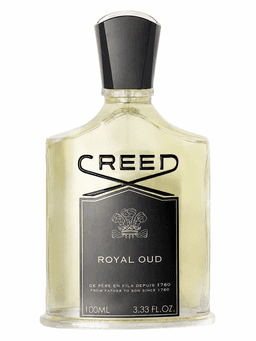
Oud, a wood with hints of incense and animalic warmth, lends its name to Royal Oud, created by Creed in 2011. Olivier Creed and Julien Rasquinet are the perfumers; the Eau de Parfum, of the woody family, opens with citrus and spices, moves through cedar, angelica and galbanum, and ends on sandalwood and musk surrounding the oud.
Citrus and spices
The opening combines three citrus fruits: bergamot, fruity and slightly sweet, lemon, sour and tangy, and grapefruit, fresh and fruity. Cardamom brings a fresh spice, while pepper adds a dryness tinged with greenery.
Heart tier
Cedar evokes the wood of a pencil, with a resinous edge. Angelica, herbaceous and green, keeps a woody thread, and galbanum adds a fresh vivacity heightened by an anise nuance, coming from this gum resin with very green tones.
The base
Sandalwood is recognized by its velvety, warm wood. Oud, a dark and dense wood, carries facets of incense and an animalic touch. Musk completes the accord with an animalic warmth with woody undertones.
Woody family
Royal Oud is classified as woody. Cedar in the heart, sandalwood and oud in the base carry this family, which angelica supports through its woody thread. Woody compositions are built around dry, resinous or velvety woods, registers found here from one tier to the next.
What the label declares
Among the declared odorous components are limonene and citral, common constituents of citrus, eugenol with its clove scent and cinnamal, typical of cinnamon. Linalool, citronellol, geraniol, hydroxycitronellal, coumarin and benzyl benzoate complete the list, without indicating their dosage.
Similar perfumes
Similar notes and family, from other houses.
- Oud & Bergamot Cologne IntenseJo Malone
- REPLICA Lost EdenMaison Margiela
- Star OudMontblanc
- Infusion VanillePrada
- Sauvage ExtraitChristian Dior
- Boss Bottled Oud SaffronHugo Boss
- L'Eau d'Issey Homme Shade of LagoonIssey Miyaké
- Reef 33Reef Perfumes