
 Oriental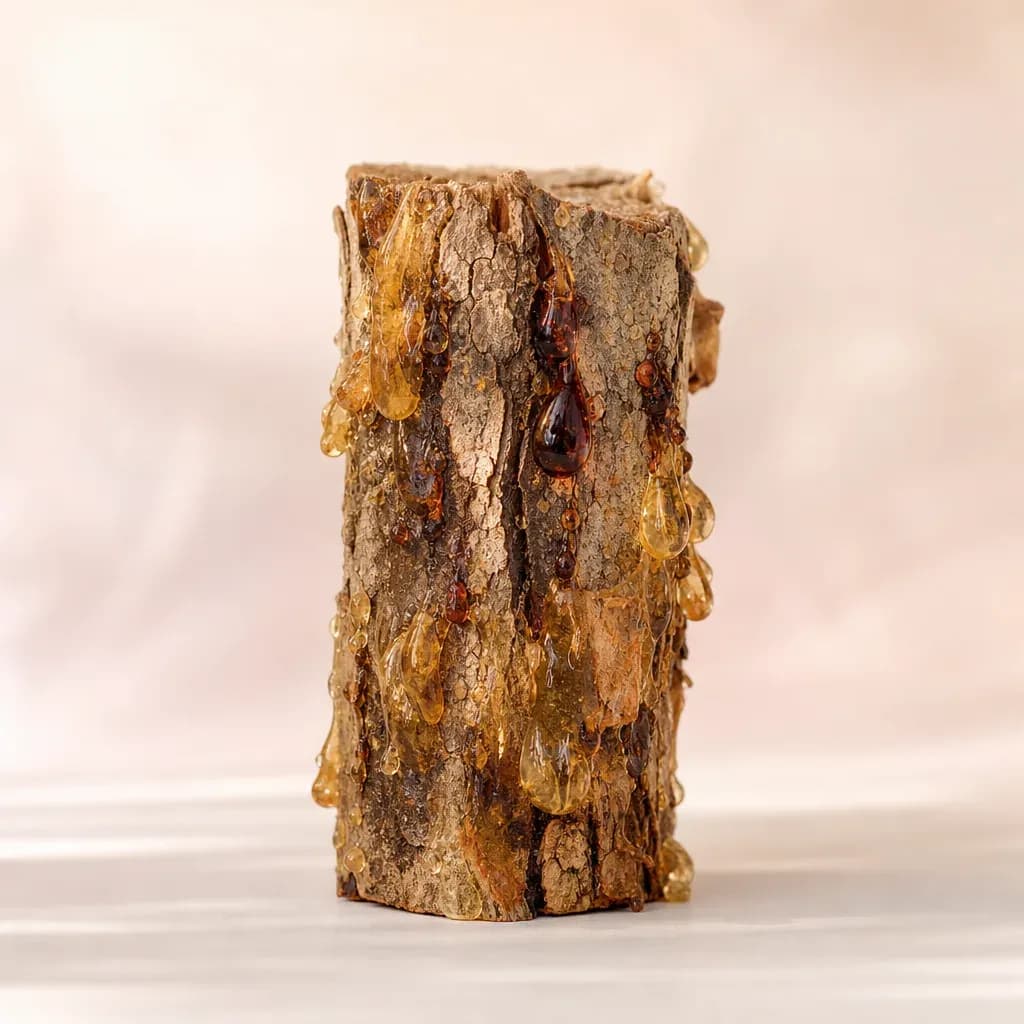
Styrax
When it comes to perfumery, popular belief often makes one think of flowers. Yet they are far from being the only element incorporated into fragrances. In fact, numerous bark secretions are part of compositions. As such, just like Peru balsam, Tolu balsam, benzoin or incense, styrax comes to enhance many compositions.
The origin of styrax
Styrax is a tree that grows mainly in warm regions of the globe and belongs to the Styracaceae family. Although it has an elegant crown, styrax remains very little known in France. It includes various species, some of which are more used in pharmacy while others are highly valued in perfumery. Nevertheless, generally speaking, styrax remains, although it is very elegant, a tree that is fairly little known in France. The tree from which styrax comes is also called the “snowbell tree.” The two best known types of styrax in perfumery are the one from Asia Minor (mainly from Turkey) and the one from South America (notably from Honduras, Guatemala and Mexico). These two products are not obtained in the same way. Styrax from Asia Minor is extracted through a pathological secretion of the sapwood produced following the hammering of the bark of the liquidambar orientalis tree from which it comes. American styrax, on the other hand, comes from an exudation of the liquidambar styraciflua tree. Although somewhat different, these products share many similarities. They reveal a resin with a beautiful yellow color and can be used just as much in perfumery as burned as incense. Overall, styrax has attractive green foliage and takes on magnificent red and orange hues in autumn. Its flowering, meanwhile, occurs in late spring.
Styrax in the form of perfume
Once the styrax resins are obtained, they are purified using volatile solvents or by vacuum distillation. Most of the time, styrax resin is mainly used as a fixative. It is mostly introduced into feminine fragrances and was particularly used in the 1920s, featured in perfumes such as Shalimar by Guerlain or, later, Opium by Yves Saint-Laurent. Its scent is at once leathery, warm, animalic and spicy. Styrax only heightens the sensuality of the fragrances that contain it while considerably reinforcing their longevity. It is most often paired with chypre and oriental fragrances.
Moreover, styrax also has other medicinal virtues. In China, it is used against coughing, epilepsy and skin problems. In the American West, on the other hand, it is known as a remedy for diarrhea and dysentery.
Identity card
- Latin name : Liquidambar styraciflua ou orientalis
- Origin : Arbuste
- Country : TR
- Part used : Gommes
- Type : Naturel
Perfumes with the Styrax note
Oriental Oriental
 Floral
Fougère
 Oriental