
Extraction
Manufacturing technique
The different steps of extraction
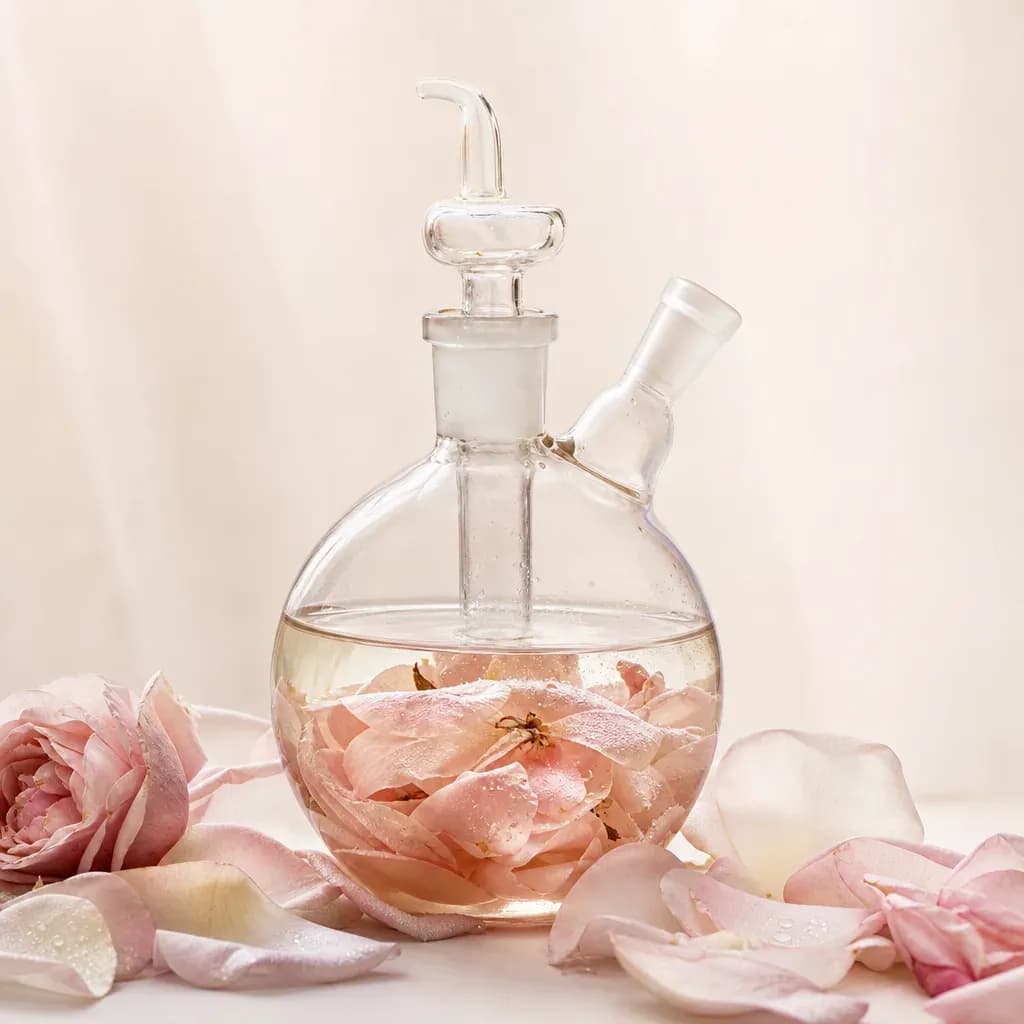
Initially, the solvent used for extraction was ether. However, it is an expensive and highly flammable product. Today, it has been replaced by ethanol or hexane. The choice of solvent depends primarily on the desired boiling temperature and its solubility. First, the solvent is placed in a tank, called an extractor, along with plant material. The plants are placed on stacked plates, pierced with a multitude of holes allowing the free circulation of the solvent. This bath lasts several days and ends with the removal of the few plant residues that have resisted this maceration. At this point, the solvent is thus laden with scent. If necessary, the operation is repeated two to three times. The resulting mixture is then boiled in order to remove the solvent. Indeed, the solvent evaporates at a temperature lower than that of the essential oil. The residual mixture is called concrete essence. Finally, the concrete is washed and purified with alcohol. This process is carried out in large maceration tanks over several days or even a few months. A fatty precipitate forms and is removed through a succession of chilling and filtration steps. What remains is a pure, clear essence known as the absolute.
The advantages and disadvantages of extraction
First, extraction is a process carried out at very low temperature. As such, it is a method perfectly suited to fragile plants that classic distillation would tend to damage. This is why solvent extraction is widely used for processing rose, violet, orange blossom, jasmine, tuberose or jonquil. In this sense, it shares the same advantages as enfleurage. However, it proves to be a much more cost-effective process. That said, it remains a more expensive technique than classic distillation. On the other hand, it requires a large quantity of solvent and therefore involves a high risk of fire as well as increased pollution. It also requires exceptional expertise to ensure no residual trace of solvent remains in the final essential oil, which would otherwise alter the quality of the finished fragrance. Lastly, extraction is a method that requires extraordinary patience, as it takes several weeks to several months of work before the absolute can be obtained.
As can be understood, perfumery is not merely a creative art. It is a craft combining age-old techniques with modern chemistry. What is more, it entails very significant manufacturing costs, which undeniably justifies the high price of perfume, the ultimate luxury product born of age-old expertise.