
 Woody
Woody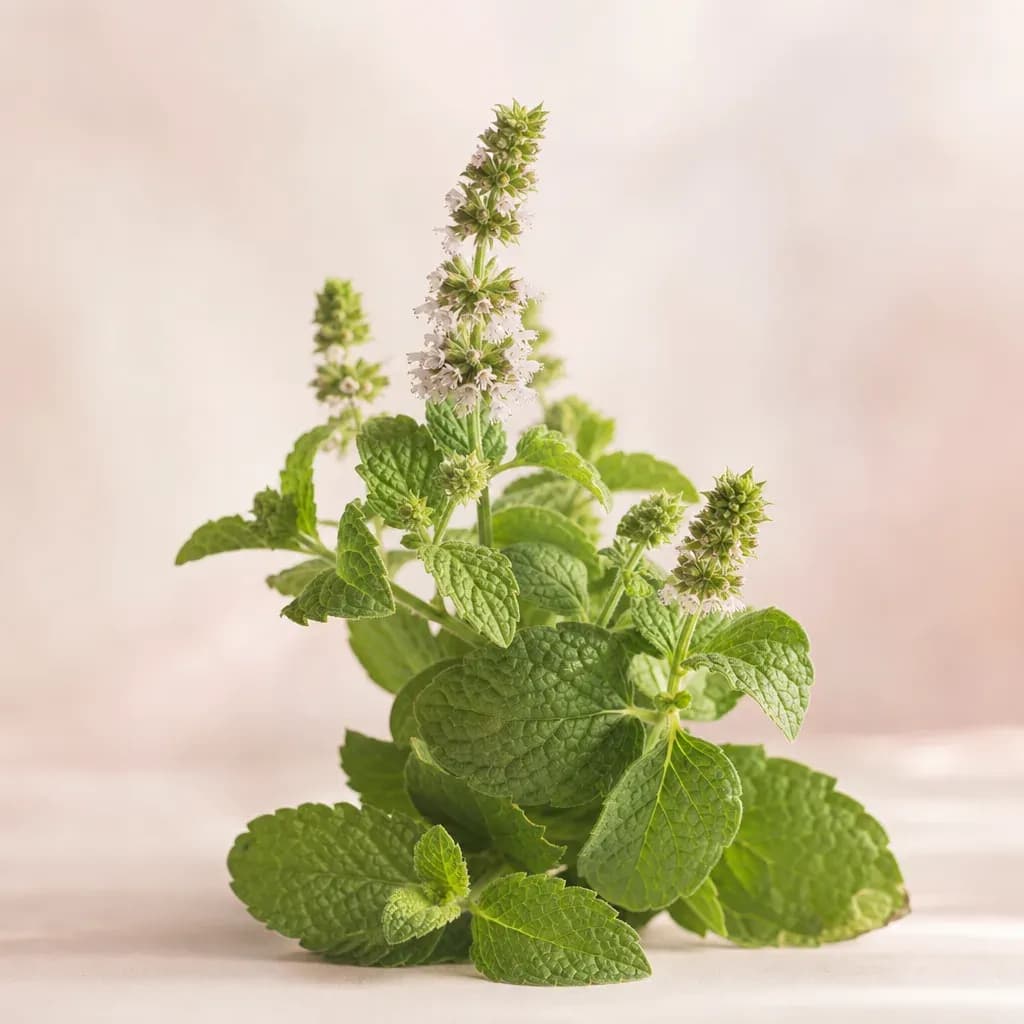
Mint
The freshness and green scent of the many mint varieties. Mint fragrances are etched in our memories. Chlorophyll and mentholated flavors carry us back to childhood and to traditional hygiene products, or even to the era of Eaux de Cologne. This is precisely why mint is one of the most widely used raw materials in masculine perfumery: it is reassuring! Today the long-established order of masculine perfumery attempts to overturn the codes with new accords elevated by a mint that remains just as powerful!
When mint entered history with “l’Eau Impériale”
The many varieties of mint have been known since Antiquity for their medicinal, culinary or aromatic properties. Given the multitude of mint species, it is quite difficult to know with certainty the origin of this small, highly fragrant aromatic plant. The name mint, which appeared in the language in 1275, is said to be linked to the legend of the nymph named Menthe. Pursued by the wife of the God Hades, who was jealous of her attachment to her husband, the young Menthe was transformed into a plant by Hades in order to save her life! Thus the different mints would have developed multiple properties simply highlighted by the origin of their name.
Among the 18 varieties of mint recognized by botany, the two main varieties used today are said to be spearmint and, one of its hybrids, peppermint. In perfumery, mint made a highly noted appearance in the mid-19th century thanks to Pierre-François Pascal Guerlain. Fond of Eaux de Cologne and their citrus scents, Guerlain created for Empress Eugénie a fresh, rustic water that delicately scented her while easing her terrible migraines thanks to the virtues of mint notes.
This “Eau Impériale,” an enormous success for Guerlain, would go on to inspire many imitators. This indeed prompted the celebrated house to create a more modern version of the Eau Impériale in 1974 to celebrate this magnificent success.
Mint as the essential touch of freshness in masculine perfumes!
Given the dazzling success of “l’Eau Impériale,” originally created for women, one might have thought that mint-based fragrances or aromatic notes would long have remained dedicated to them. Wrong! While Eaux de Cologne were a classic of perfumery in the early 20th century, women eventually grew tired of them, as they were now being offered more opulent perfumes.
Thus, for several decades, aromatic notes have been almost exclusively reserved for men, who cultivate them with elegance in woody and fougère fragrances. Mint (along with basil or rosemary), on the other hand, helped displace the ever-present lavender in the chic sporty men’s fragrances of the 1970s. In 1978, Ralph Lauren launched “Polo,” with green and mentholated notes that perpetuated the blend of fougère and aromatic accords while creating new, more invigorating and innovative accords. A long string of fragrant successes would follow this innovation…
Today, mint-based fragrances are mainly valued for their refreshing properties in top notes. Among today’s best-selling men’s fragrances featuring mint notes are “Ck Be” by Calvin Klein, a woody floral aromatic, and “1 Million” by Paco Rabanne, a spicy woody fragrance with aromatic top notes.
It must be said that since Eaux de Cologne fell out of favor for women, fragrances built on fresh or peppery mint have become rather rare. Yet the precious fragrances that do feature mint notes do so in a highly original way. Thus, the woody and very natural “Nuit Etoilée” by Annick Goutal innovates by transporting us on a forest walk filled with multiple scents. Treading the same pure, green paths, “Aqua Allegoria Herba Fresca” by Guerlain delicately blends aromatic and citrus scents. Finally, even more surprisingly, mint notes have been paired with floral notes to create “Eau de Givenchy” by Givenchy, with its fresh and understated charms… Does mint, then, inspire boldness?
Identity card
- Latin name : Mentha
- Origin : Plante
- Country : FR
- Part used : Feuilles
- Type : Naturel
Perfumes with the Mint note
Woody Oriental
 Woody
Woody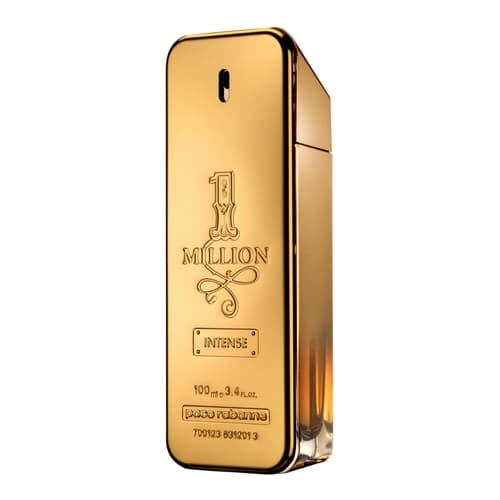 Oriental
 Citrus
 Aromatic
 Oriental
 Floral
 Woody
Woody Citrus
 Oriental
 Citrus