
 Floral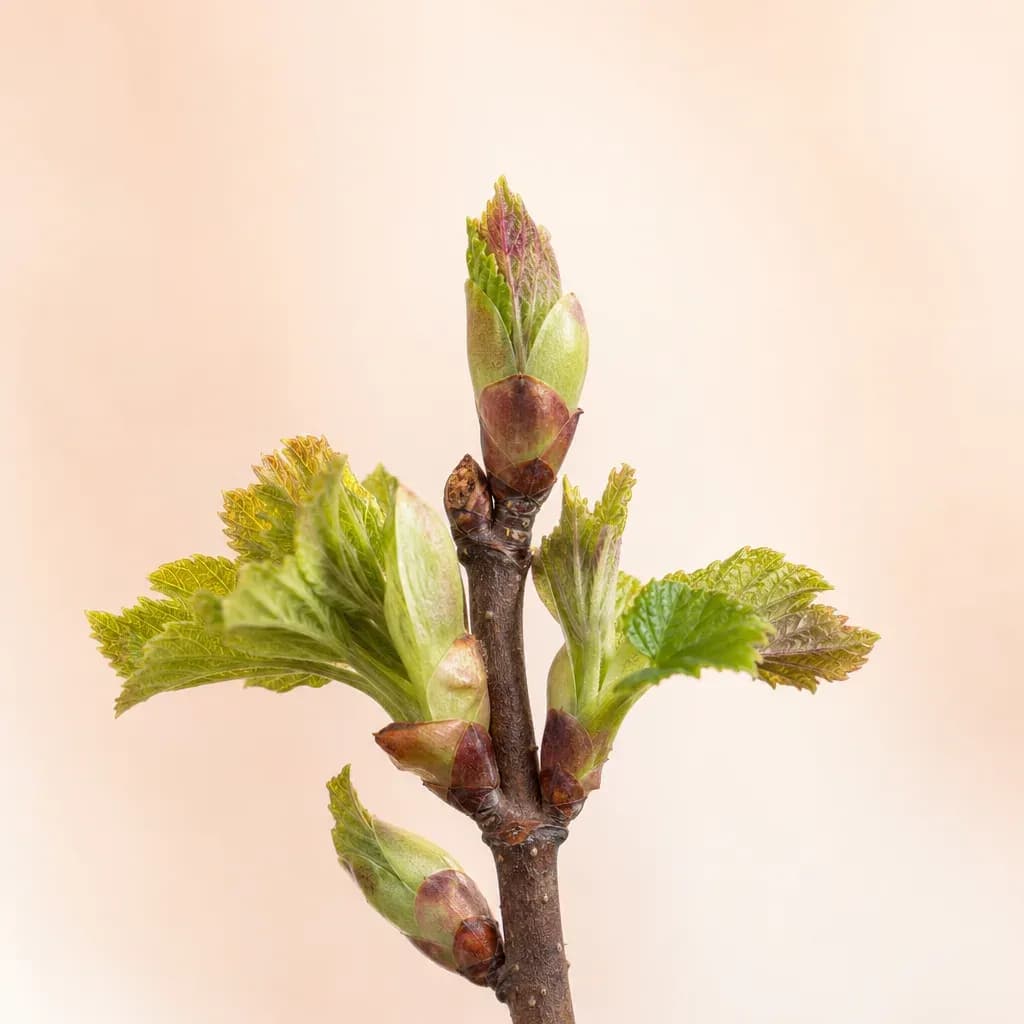
Blackcurrant bud
Blackcurrant bud: natural, 100% French scents for our fruity fragrances! Blackcurrant has been renowned in France since the 16th century, when it began to seduce the palates of the canons who created the famous crème de cassis behind the “kir”. While today this delicate small red fruit is familiar from our desserts and confections, its use in perfumery is relatively recent. Nevertheless, the green and tangy scents of blackcurrant bud won over perfumers who, in the 1990s, began using blackcurrant bud absolute to give power and longevity to their green, floral or fruity notes.
The cultivation of blackcurrant bud and its transformation for perfumery
For several centuries, blackcurrant was mainly used for its gustatory qualities rather than for any olfactory facets in perfumery. The cultivation of blackcurrant bud is nevertheless a production that already has a century of history in Burgundy, but noses discovered it late. The perfumers of Grasse were the first to see exceptional olfactory qualities in the cultivation of blackcurrant bud, and encouraged producers to harvest these blackcurrant fruits in bud form on a large scale to dedicate them to perfumes.
Today blackcurrant buds are cultivated and harvested almost exclusively in Burgundy, which has made it one of its specialties. 85% of the annual blackcurrant bud production is now dedicated to perfumers, who turn it into an absolute that is particularly remarkable in today's gourmand and floral fragrances.
Floral and fruity fragrances in search of green notes
The 1990s saw the emergence of new feminine fragrances created from natural raw materials, or rather natural olfactory notes, since fruits, for instance, are precious in being usable as such in perfumery. Blackcurrant bud is therefore one of the rare fruity materials in perfumery that allows scent to be released without resorting to a synthetic molecule. What is more, blackcurrant bud is an entirely French specialty!
Tangy and irresistibly green and fruity, blackcurrant bud pairs delightfully with our finest floral and gourmand compositions. Its green facet propels florals and aldehydic notes toward floral paths in which we love to be enveloped. Chamade by Guerlain, created in 1969, was thus one of the first floral fragrances to feature blackcurrant bud in the top notes, paired with floral and then warm notes. First by Van Cleef & Arpels would, in 1976, place blackcurrant bud in the heart notes to enhance its green, refreshing softness.
Then the 1990s saw the emergence of the famous fruity florals such as Dune by Christian Dior, or the sublime bottle of Féérie by Van Cleef & Arpels, and more recently a reissue of the immensely famous Trésor by Lancôme as Trésor Edt Inédite.
As can be seen, the green facet offered by blackcurrant bud is currently mostly feminine. This may seem surprising given the current trend for green scents and the fresh new direction running through the men's perfumery shelves. Fortunately, proving this wrong, Cerutti nonetheless used blackcurrant bud in 1990 in one of its greatest successes: Cerutti 1881.
Identity card
- Latin name : Ribes nigrum
- Origin : Arbuste
- Country : FR
- Part used : Bourgeons feuilles
- Type : Naturel
Perfumes with the Blackcurrant bud note
Floral Floral
 Floral
 Floral