
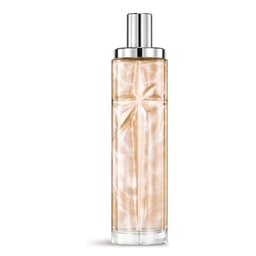
Three declared notes, not one more: an opening pineapple, a creamy coconut at the heart, a veil of musks to finish. This is the sun-kissed one of the Starlicious trio released by Mugler in 2026, sold as an eau de toilette in France and as a body mist in the United States. Light, made for layering, debated over its longevity.
The opening is bold and tangy. Pineapple arrives all at once, greener than candied, with the almost sharp edge the fruit keeps when bitten into slightly underripe. No citrus accompanies it, though: this bite comes from terpenes and ketones, limonene, pinene and carvone, which give the sharpness of the first seconds without going through a zest. It is vivid, it is brief, and it does not linger.
The shift happens within a few minutes. Coconut rises from underneath and absorbs the acidity. Vanillin lays down a sweetness that does not quite reach pastry but comes close, while benzaldehyde, the smell of bitter almond and cherry pit, brings the syrup and hard-candy facet found in many reconstructed fruits. Benzyl salicylate adds a slightly waxy floral sweetness that inevitably evokes sunscreen.
One curiosity in this list deserves mention: it contains a UV filter, butyl methoxydibenzoylmethane, the very one that protects against the sun in most sunscreens. Its presence here is technical rather than cosmetic, a clear juice sold in a clear bottle degrading under light. Mica and titanium dioxide are also present: these are the shimmering particles that give the juice its distinctive look. The coincidence remains telling nonetheless in a fragrance that sells the pool and the month of August.
The base is quickly described, so deliberately discreet is it. The musks settle in without a marked transition, and beneath them works a synthetic woody amber, the tetramethyl acetyloctahydronaphthalenes on the label, a transparent and widely used material that gives volume without giving wood. The label, however, holds a surprise the house does not mention anywhere: Virginia cedar, patchouli, santalol and Peru balsam all appear, all four of them. A woody, balsamic foundation therefore does exist, discreet but real, and a customer who claimed to smell sandalwood was not mistaken. Damascones are added to this, fruity and rosy molecules that perfumery uses everywhere to round out a fruit, plus a coumarin that slips a note of hay and almond beneath the whole. None of these materials stands out on its own; they form the floor on which the coconut leans to last a little longer.
The trajectory is short, and it is presented as such. Pineapple occupies the first quarter of an hour, coconut the first hour, and what remains afterward stays within a few centimeters of the skin: a clean, sweet, slightly powdery base, which one quickly stops perceiving oneself but which others catch when coming closer. On clothes and in hair, it survives much longer, typical behavior of light, highly alcoholic juices, and the reason it lends itself so well to layering.