
 Citrus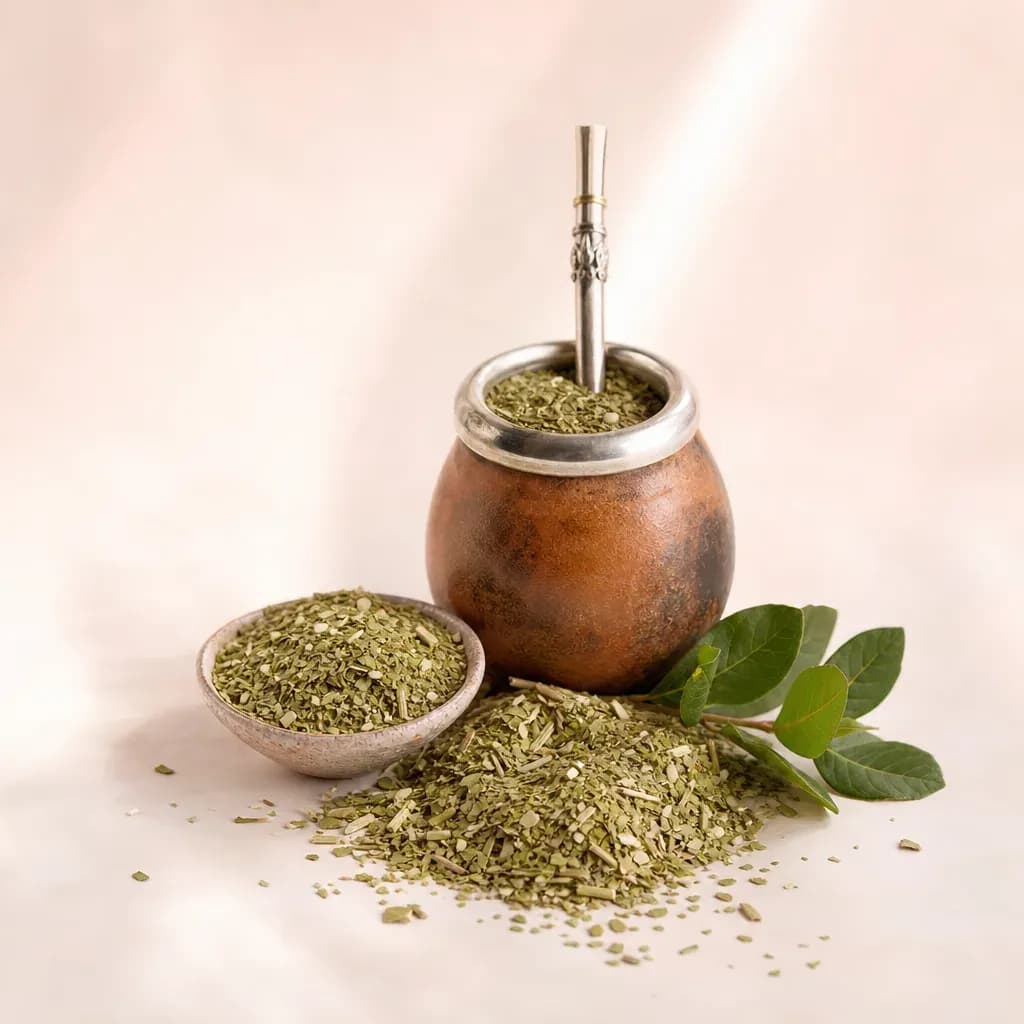
Yerba mate
Today, technical advances in perfumery make it possible to use all sorts of ingredients in our fragrances. While some of them are fairly common, others are quite novel. Yerba mate is one such raw material, still relatively uncommon yet endowed with numerous qualities.
The origins of yerba mate
Much like our traditional coffee or tea in Asia and England, yerba mate has long been the most popular beverage in southern Latin America. It is a product that was introduced to Europe in the sixteenth century, a period particularly rich in discoveries and one that considerably shaped modern perfumery. While mate refers to an infusion, it is a beverage prepared from a plant called Yerba Mate, which is widely found in Paraguay and Uruguay. The populations of South America widely extol its virtues, such as its richness in vitamins and minerals. Likewise, mate is a natural appetite stabilizer and an antioxidant. However, it should be noted that mate contains caffeine. As such, it counters physical and mental fatigue, improving cognitive performance. Yet, much like our familiar coffee, it creates a certain dependency and requires increasing consumption to maintain a stable level of benefits. Its name comes from the Quechua word mathi, which designates a type of gourd, the vessel traditionally used to drink mate.
Yerba mate as a fragrance ingredient
In perfumery, mate is obtained through alcohol extraction. Its scent comes directly from its dried leaves, much like tea. However, mate cultivation causes severe damage to the rainforest. This is why various pilot projects are currently being developed with the aim of finding less harmful production methods for this product, for the benefit of the local wildlife of Paraguay and Uruguay. Mate is thus at the heart of the concerns of small regional businesses in South America, which are constantly seeking sustainable development and cultivation methods. As such, mate could well soon enter a fair trade system. In the meantime, mate comes in two forms, either liquid when diluted, or compact when pure. It delivers an herbaceous scent somewhere between hay, tobacco, and tea. As such, it can be found equally in the top notes of fragrances when paired with fresh citrus, or as a base note, accompanying enveloping ingredients such as vanilla, sandalwood, or benzoin.
Although still relatively uncommon in Europe and in perfumery, mate features in a few well-known fragrances such as La Treizième Heure by Cartier, Love Chloé L’Eau Florale by Chloé, Majestic Rose by Yves Saint-Laurent, and Nina Fantasy by Nina Ricci.
Identity card
- Latin name : Ilex Paraguarensis
- Origin : Arbre
- Country : BR
- Part used : Feuilles
- Type : Naturel
Perfumes with the Yerba mate note
Citrus Fougère
 Floral
 Citrus
 Woody
Woody Floral
 Musky
Musky Woody
Woody Woody
Woody Fougère
 Oriental
 Citrus